
Glass
Waterford marks
The name “WATERFORD GLASS LIMITED / HANDMADE IN REPUBLIC OF IRELAND” appears among Waterford marks on crystal glass.
- Active years
- From 1951
- Country
- Ireland
- City / region
- Waterford
- Products
- cut crystal, stemware, decanters, bowls, vases, lighting, presentation pieces
- Marks
- 9
Original glasshouse 1783–early 1850s (closure disputed 1851/1853); revival founded 1947. Old-factory manufacture stopped in 2009; smaller Waterford city facility opened June 2010. The brand continued with Irish and overseas production.
What to look for
- Inspect the underside and foot in good light. The Gothic Waterford name and the later name-and-seahorse etching are different layouts.
- Read all the label wording. WATERFORD GLASS LIMITED, WATERFORD CRYSTAL and HANDMADE IN REPUBLIC OF IRELAND distinguish the illustrated label designs.
- Read the origin statement separately from the brand. Later Waterford includes both Irish manufacture and glass made overseas.
- Compare the bowl shape, stem, foot and cutting pattern as well as the name. A pattern name identifies a design rather than a single manufacturing year.
Marks & lettering
9 marks

Undated
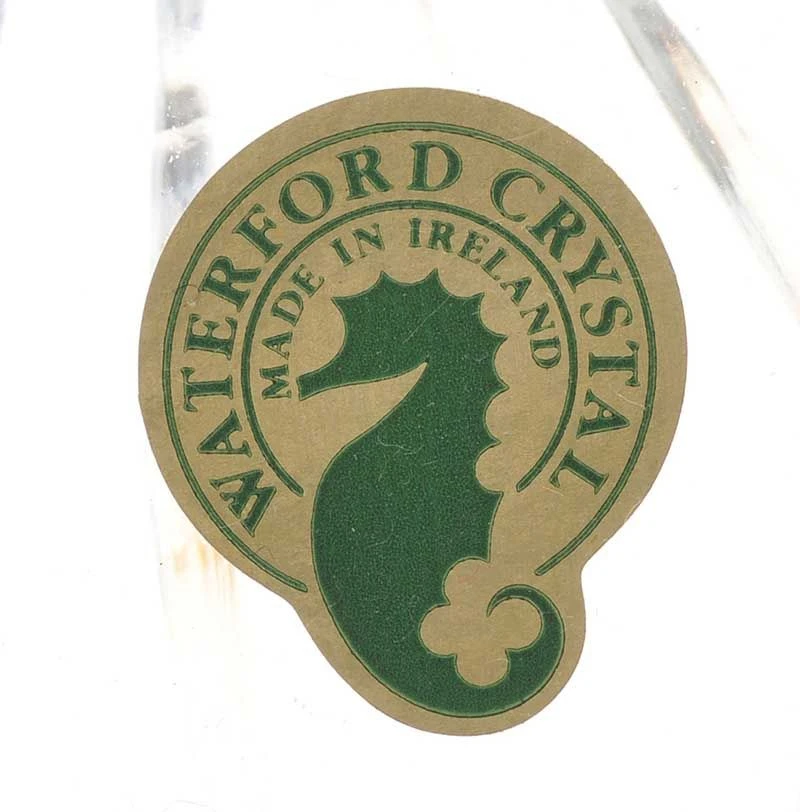
WATERFORD CRYSTAL / MADE IN IRELAND
Compact filled seahorse is enclosed by a round name band, with MADE IN IRELAND above the head.
label · green and gold · crystal glass
Undated
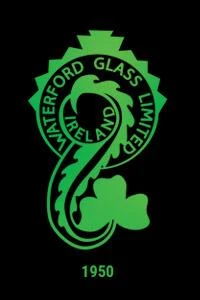
WATERFORD GLASS LIMITED / IRELAND
Long outlined seahorse with the maker name around its head and IRELAND inside the curve.
label · crystal glass
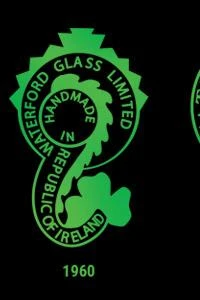
Undated
WATERFORD GLASS LIMITED / HANDMADE IN REPUBLIC OF IRELAND
Outlined seahorse adds HANDMADE IN and the longer REPUBLIC OF IRELAND wording.
label · crystal glass
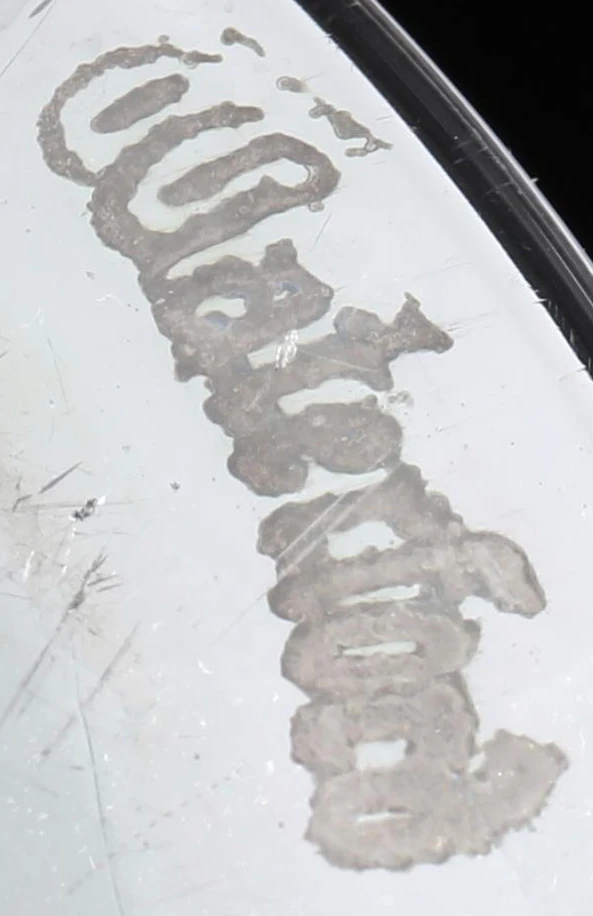
Undated
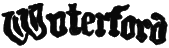
Waterford
Gothic-style name etched on a glass foot, without an accompanying seahorse.
etched · crystal glass
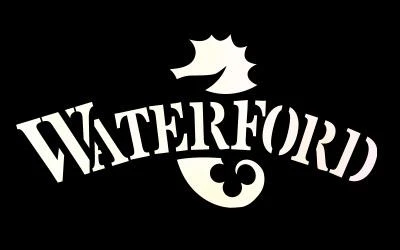
Undated
WATERFORD
Arched name crosses a stylized seahorse with an open circular tail.
etched · crystal glass
About Waterford Crystal
George and William Penrose established a glassmaking business in Waterford, Ireland, in 1783. Its drinking glasses, decanters and decorative wares developed a reputation for clear glass and cut ornament. Jonathan Gatchell and other investors acquired the business in 1799. The original factory closed in the early 1850s, ending the first period of Waterford manufacture.
Glassmaking resumed in 1947 when Karel, also known as Charles, Bacik helped establish a new factory. Czech glassmaker Miroslav Havel became its chief designer. He studied earlier Waterford glass and pattern books at the National Museum in Dublin, adapting traditional cutting ideas for the revived company. His Lismore design, introduced in 1952, became one of Waterford’s best-known patterns. The range grew to include stemware, bowls, vases, lighting and presentation pieces.
Waterford expanded during the later twentieth century, with factories at Kilbarry and Dungarvan. Financial difficulties brought receivership and the end of production at the old Waterford factory in 2009. A smaller manufacturing and visitor facility opened in the city centre in June 2010, while much of the wider range was made overseas. Paper labels, Gothic name etchings and later seahorse etchings identify different parts of the revived brand’s output.
Also known as: Waterford Glass · Waterford Glass Limited · Waterford Flint Glass Works · Waterford Crystal / Waterford Glass Limited
Look-alikes & how to tell them apart
Marquis by Waterford
This related line carries MARQUIS BY above the Waterford name. Keep that complete mark when identifying the piece rather than shortening it to the main Waterford signature.