
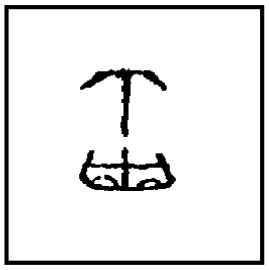
c. 1800–1899
impressed · faience
impressed · faience · Japan
XIX century. Name tag is embossed in the mass.
Ware & regional marks
Satsuma pottery marks can name Kinkozan, Yabu Meizan or Ryozan; the circle-and-cross Shimazu crest is shared across makers and decorators.
Approximate origin of a tradition, not the life of a company. No shared closure date applies to the group.
c. 1800–1899
impressed · faience · Japan
XIX century. Name tag is embossed in the mass.
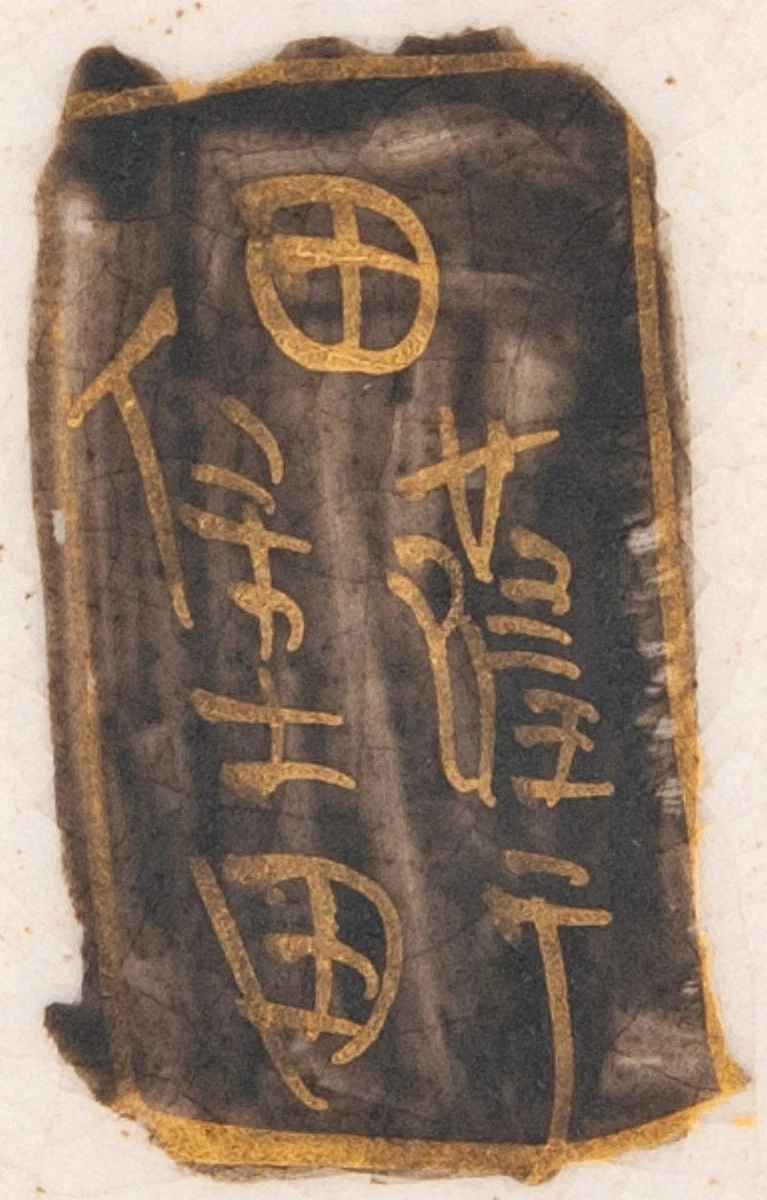
Hododa
Undated
This black-panel format dates to about 1900; the name can identify commissioned work.
painted · gold on black · earthenware · Yokohama, Japan
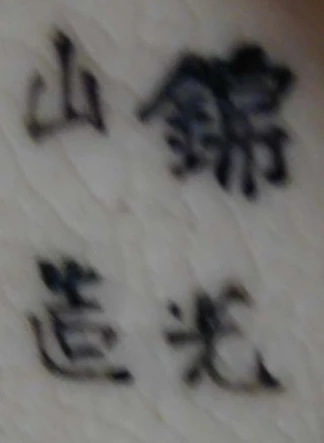
Kinkozan
Undated
This four-character brush mark dates to the Meiji era and differs from later printed labels.
painted · black · earthenware · Kyoto, Japan
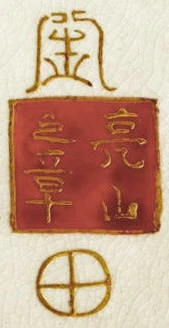
Okamoto Ryozan; Yasuda trading company
Undated
Yasuda emblem supplies a proposed post-1896 limit; a different Ryozan spelling need not identify Okamoto.
painted · gold and red · earthenware · Japan
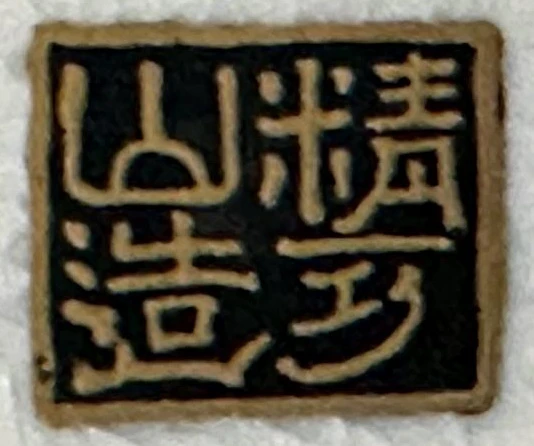
Seikozan
Undated
Four-character square signature without the Yasuda emblem or Shimazu crest; the handwritten number is a collection mark.
painted · gold and red · earthenware · Japan
Gold characters read right-to-left in vertical columns as Seikozan zo.

Taizan
Undated
An impressed body mark differs from painted Taizan signatures; the kiln closed in 1894.
impressed · earthenware · Japan
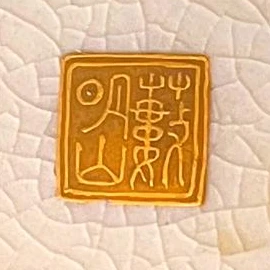
Yabu Meizan workshop
Undated
Gold square seal with the full Yabu Meizan name; the same seal format appears in a 1904 advertisement.
painted · gold · earthenware · Osaka, Japan
Satsuma ware originated in the Shimazu domain of southern Kyushu, now Kagoshima Prefecture. Korean potters brought to Japan at the end of the sixteenth century played a central role in establishing its kilns. Early production included everyday vessels with dark glazes as well as white-bodied wares and utensils for tea. Over time, coloured enamels and gilding became part of the regional ceramic repertoire.
The ivory ground, finely crackled glaze and detailed enamel decoration familiar on export Satsuma developed into an international trade. Satsuma attracted attention at the Paris exhibition of 1867. During the Meiji period, workshops in Kyoto, Osaka and other centres supplied decorated wares for overseas buyers. Subjects included flowers, birds, landscapes and scenes of Japanese life, often arranged in panels bordered with gold.
Kinkozan was a major Kyoto producer. Yabu Meizan directed an Osaka decorating workshop, while Ryozan worked with the Yasuda trading company. Separate names on a base can identify a painter and a merchant. The Shimazu family crest, a cross inside a circle, also appears on many pieces. It identifies a shared regional association rather than one factory or decorator.
A circle containing a cross is associated with the Shimazu crest. It occurs in the Satsuma tradition but does not by itself identify one workshop. Look for the painted characters beneath or beside the crest.
Compare the body and glaze as well as the signature. A porcelain object carrying Satsuma wording needs a different body reading from finely crackled earthenware. Keep a decorator’s name separate from the place or crest.
Also known as: Satsuma-yaki · 薩摩焼 · Kyō-Satsuma (later Kyoto-style export ware; a related subtype, not a factory alias) · Satsuma ware (Satsuma-yaki)
Decoration can resemble Satsuma export earthenware. Check the body as well as the mark; porcelain alone does not identify a specific kiln.
Satsuma wording and decoration also appear on Chinese decorative pieces. Country wording and body matter.
Similar romanizations and variant kanji can represent different studios; do not merge on an English reading alone.