
bottleinfo.historicbottles.com
From 1954
Owens-Illinois Glass Company
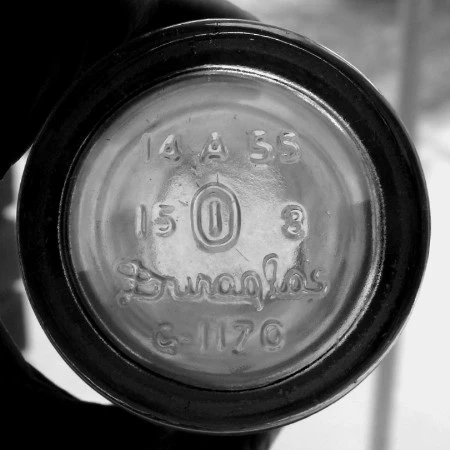
Upright I enclosed by an oval, with the diamond removed. This Pepsi bottle illustrates the later logo, alongside separate customer, date and mould codes.
Read the stamp
Antique bottle identification starts with the closure, seams, base, shape and embossed wording, followed by the glasshouse mark.
A pontil scar records an attachment method. Mould seams show how the body was formed, while the finish or closure identifies the mouth construction. A company name embossed on the body can identify the contents seller rather than the bottle maker.
Photograph the base and heel marks as well as the mouth. Compare a glasshouse logo with its own plant and date-code system. Retain capacity wording and a patent date separately; neither is automatically the bottle’s manufacturing year.
bottleinfo.historicbottles.com
From 1954
Upright I enclosed by an oval, with the diamond removed. This Pepsi bottle illustrates the later logo, alongside separate customer, date and mould codes.
bottleinfo.historicbottles.com
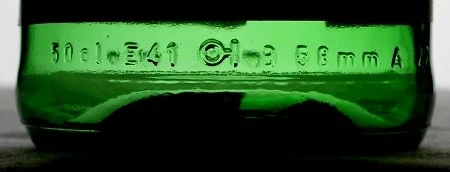
From 1997
O and I joined by a short horizontal line; the I is outside the O rather than enclosed within it. Shown on a green bottle heel.
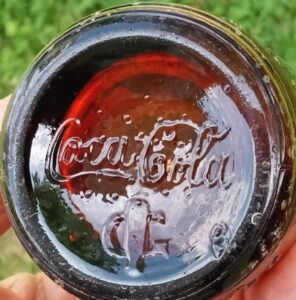
c. From 1913
glass · Evansville, Indiana
The source identifies Graham Company’s inverted-bottle-over- logo, introduced . The image caption shows it on an amber straight-side Coca-Cola bottle.
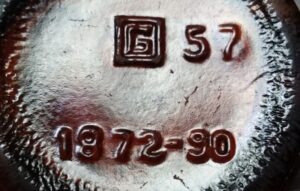
From 1932
The illustrated amber bottle is captioned as made in 1957; 1872-90 is a style code.
glass · Glenshaw, Pennsylvania
The source reports that Glenshaw Company’s -in-square mark has been used . In the caption, is a factory code for the bottle style, not a date.
From 2014
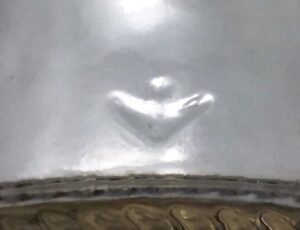
The illustrated Yoo-Hoo bottle has a 2022 date code; this dates the example.
glass
The image caption identifies the stylized anchor or downward arrow as Anchor Container Corporation, introduced in , on the heel of a clear Yoo-Hoo bottle.
Undated
glass · Essen, Germany
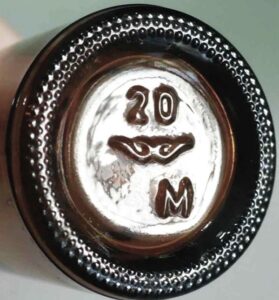
The image caption identifies on a miniature sampler whiskey bottle made by Wisthoff & Company Glashutten, .
Undated
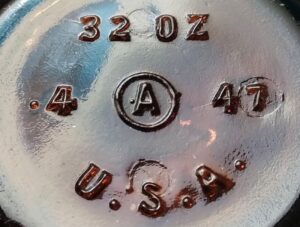
The caption identifies 47 as a 1947 date code on the illustrated bottle; this is an object date.
glass
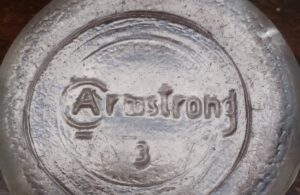
The image caption identifies in circle on 32-ounce chemical bottle made by Armstrong Cork Company.
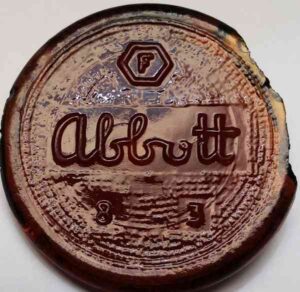
Undated
impressed · glass
The image caption identifies on an amber bottle-base shard made by Fairmount Company.
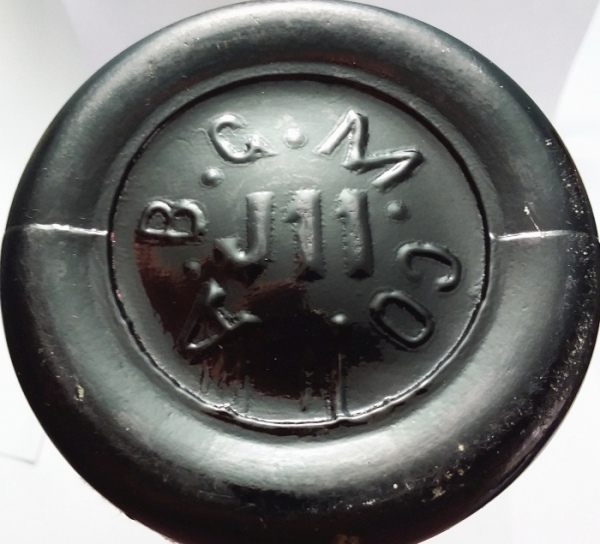
Undated
glass
The caption identifies on a dark amber export beer bottle as Adolphus Busch Manufacturing Company; J 11 is a mould identifier.
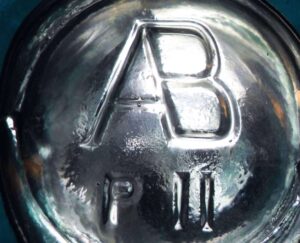
Undated
glass
The caption identifies connected on a light aqua beer bottle with P 11 code. The source entry concerns unconnected A B and is uncertain between American Bottle Company and Adolphus Busch Manufacturing Company.
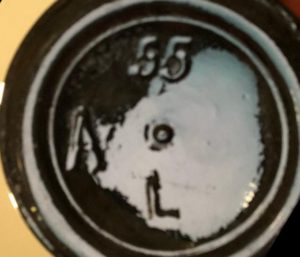
Undated
incised · glass
The image caption identifies A / L / 55 on a dark olive green bottle as unknown.
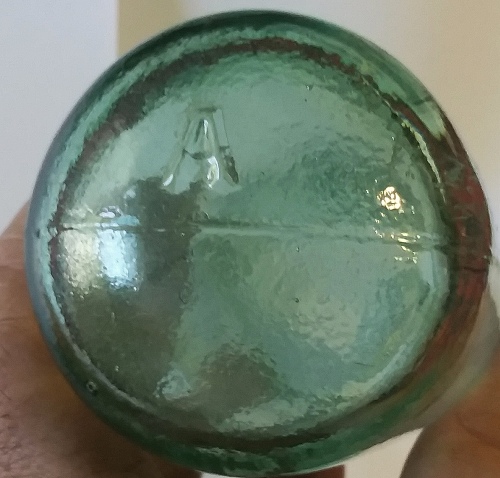
Undated
glass · United Kingdom
The caption describes alone on the rounded base of light green torpedo mineral-water bottle with an applied crown lip, made in ; Alloa Work is suggested but explicitly unconfirmed.
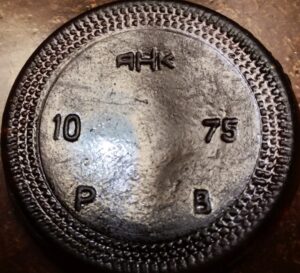
Undated
The illustrated shard is captioned as dated 1975; this dates the example.
glass
The image caption identifies as Alexander H. Kerr on an amber beer-bottle shard.
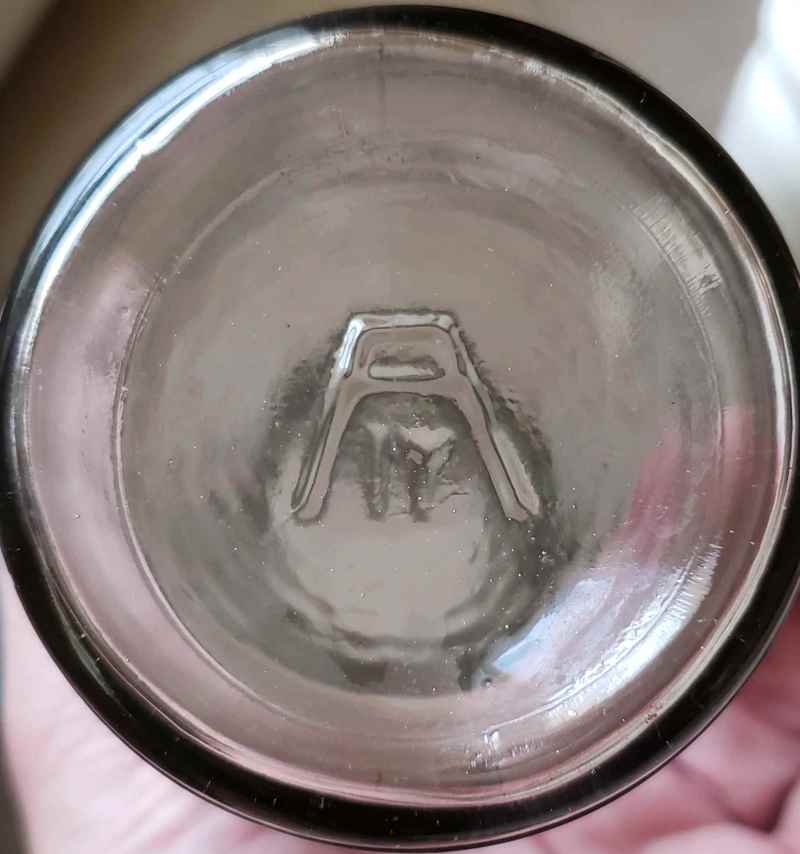
Undated
glass
The image caption describes stylized or sawhorse with IT or IY below on clear ketchup-bottle base.
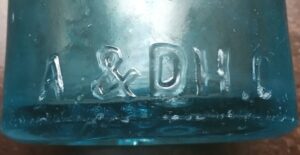
Undated
glass
The image caption identifies on the heel of a blob-top squat Schanzenbacher mineral-water bottle from Louisville, Kentucky.
Undated
The caption dates the illustrated bottle to around 1970; this is an object date.
impressed · glass
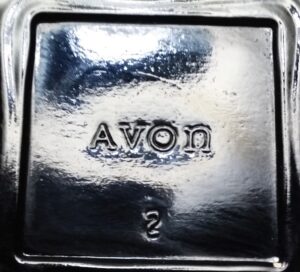
The image caption describes embossed on a black- Pot Belly Stove men’s cologne bottle, around 1970.
Undated
The illustrated Orange Crush bottle bears a 1964 date code.
glass
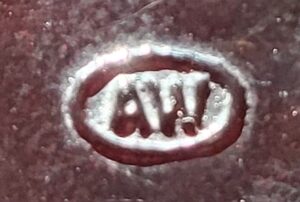
The image caption identifies inside an oval on an amber Orange Crush bottle.
Undated
The caption tentatively dates the illustrated bottle to the 1970s or 1980s; no use interval is established.
glass · Germany
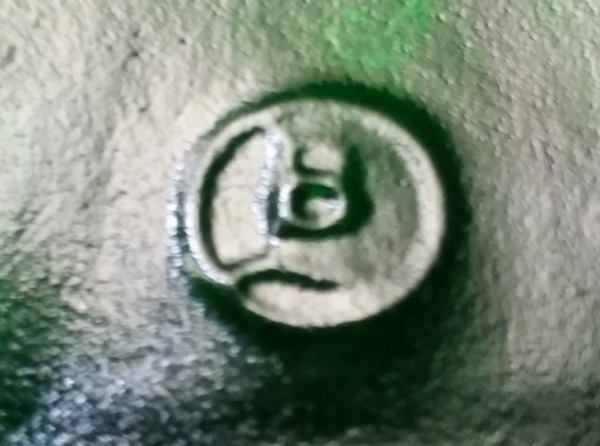
The image caption identifies with a wavy underline inside a circle as Glashutte-Budenheim GmbH, , on a green Jägermeister bottle.
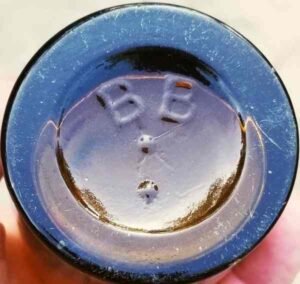
Undated
glass
The image caption describes on an unidentified applied-lip yellow olive amber mineral or soda-water bottle, probably from Great Britain.
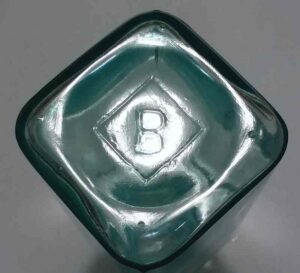
Undated
glass
The image caption identifies inside a diamond on a blue-aqua horseradish or pickle bottle made by Binghamton Company.
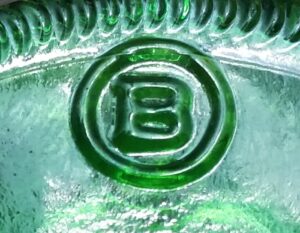
Undated
glass
The image caption identifies Brockway Company’s in a circle on an emerald green soda bottle.
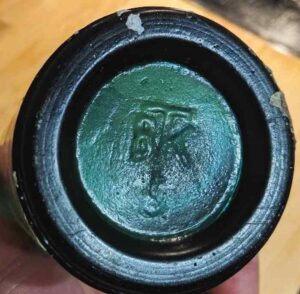
Undated
impressed · glass
The image caption describes on a teal aqua-green bottle without identifying its maker.