
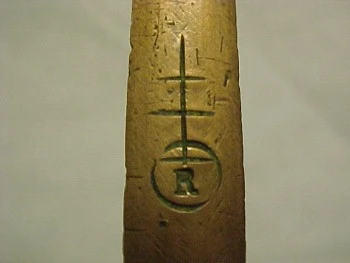
c. 1906–1908
R
The seriffed, typewriter-like R and irregular cuts precede the regular die-stamped orb.
hand cut · copper · East Aurora, New York, United States
Other maker marks
Roycroft marks are associated with books and bindings and furniture from East Aurora, New York, United States. Roycroft was active until 1938.
Enterprise founded in the 1890s: University at Buffalo dates it 1895; the Campus corporation dates the campus and first purpose-built print shop 1897. Original enterprise closed 1938. Modern revival is separate.
c. 1906–1908
The seriffed, typewriter-like R and irregular cuts precede the regular die-stamped orb.
hand cut · copper · East Aurora, New York, United States
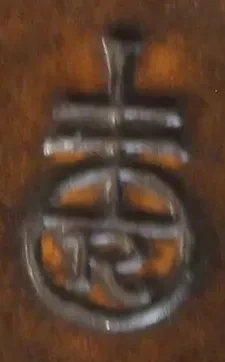
c. From 1909
Curled terminals distinguish the early R from the straight-ended middle-period R.
stamped · copper · East Aurora, New York, United States
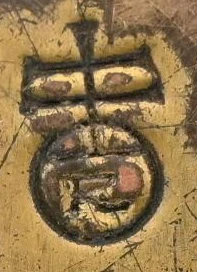
c. From 1920
The R has straight terminals; the absence of ROYCROFT below separates it from the late named stamp.
stamped · brass-finished copper · East Aurora, New York, United States
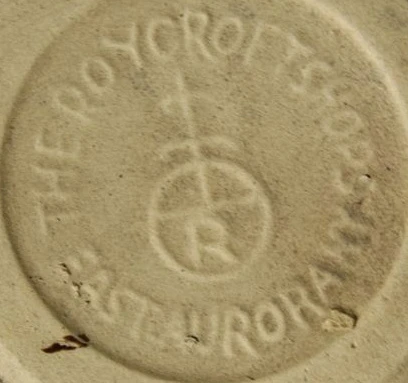
Undated
Full circular THE ROYCROFT SHOPS and EAST AURORA wording distinguishes this ceramic customer stamp from the small metal dies.
impressed · brown-glazed ceramic jug · East Aurora, New York, United States
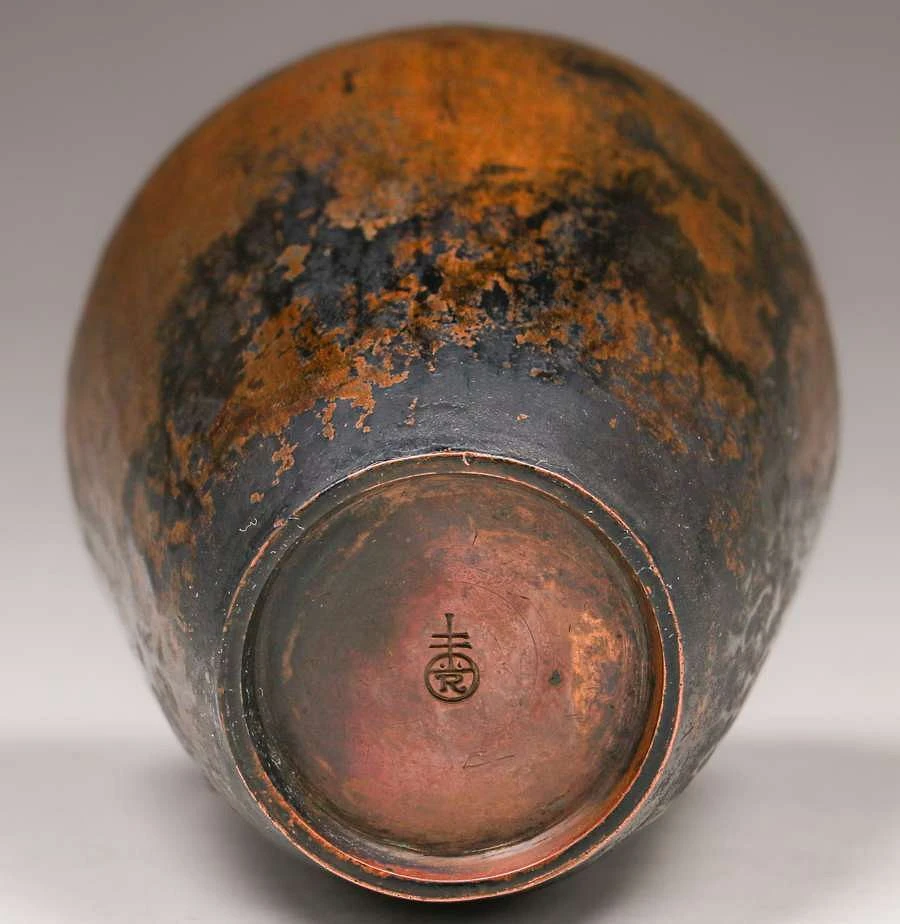
Undated
Two additional dots inside the orb distinguish this die from the ordinary early stamp. The personal Jennings attribution remains qualified.
stamped · copper · East Aurora, New York, United States
Roycroft was an Arts and Crafts enterprise established by Elbert Hubbard in East Aurora, New York, during the 1890s. A former Larkin Soap Company executive, Hubbard developed a private press inspired by William Morris and the Kelmscott Press. The Roycrofters printed and bound books, made furniture and leather goods, and later produced decorative metalwork. A growing campus brought these activities together with an inn for visitors.
Metalworking first served the buildings and their furnishings. Small copper objects appeared around 1906, followed by a wider decorative range from 1909. Vases, trays, candleholders, bookends and desk accessories became important products. Karl Kipp, Dard Hunter, Walter Jennings and Victor Toothaker contributed to the shop’s development. Copper finishes included dark brown, brass-coloured and silver-plated surfaces. The orb-and-cross emblem with a single R identified Roycroft work, while individual craftspeople sometimes added their own signatures.
Elbert and Alice Hubbard died in the sinking of the Lusitania in 1915. Elbert Hubbard II continued the business through the 1920s, but declining demand and the Depression weakened it. Bankruptcy closed the original enterprise in 1938. Ceramic goods bearing Roycroft names also include commissioned wares; a Roycroft customer stamp does not by itself identify their factory. The later Roycroft Renaissance and Roycroft Pottery belong to a separate revival beginning in the 1970s.
Also known as: Roycroft Copper Shop · Roycroft Press · The Roycroft Shops · The Roycrofters / Roycroft Shops
The revival uses a double-R version and, on pottery, a rectangular enclosing border. It is separate from the original single-R enterprise that closed in 1938.
Kipp’s independent work may carry a KK or Tookay mark without the Roycroft orb. Genuine combined signatures also exist, so read both stamps.
An R in a circle made from individual punch strokes can be a Gregorian registration mark. Roycroft’s identifying emblem has the orb and double cross.