
Country guide
Bavaria backstamps
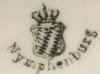
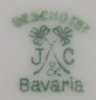
BAVARIA on porcelain names a region of Germany, shared by many manufacturers. It appears on table services, cups, vases and figures, often beneath a factory name or crowned emblem. Northern Bavarian towns such as Selb, Hohenberg, Arzberg, Weiden and Mitterteich became important porcelain centres, while Nymphenburg in Munich represents an older court-manufactory tradition.
Key makers’ marks
12 marks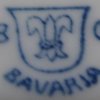
Rosenthal
1927
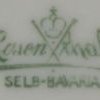
Rosenthal SELB-BAVARIA
1927 variant distinguished by a dot below the crown and a dot above B.
porcelain · Germany
Rosenthal mark with a dot below and a dot above B.
Heinrich & Co
1949–1980
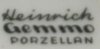
The Gemmo porcelain was produced by Heinrich during
Gemmo porcelain was produced by Heinrich in 1949–1980; no separate mark-use interval is stated.
porcelain · Germany
Gebrüder Winterling
1950–1990
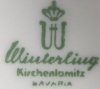
Winterling Kirchenlamitz Bavaria
green · porcelain · Kirchenlamitz, Bavaria, Germany
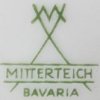
Mitterteich Bavaria
c. 1950–1999
MITTERTEICH BAVARIA
mark used circa in the second half of 20th century.
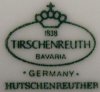
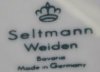
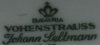
About Bavaria backstamps
The industrial names have separate histories. C. M. Hutschenreuther began work in Hohenberg in 1814 and obtained a factory concession in 1822; Lorenz Hutschenreuther’s Selb business followed in 1857. Rosenthal began as a decorating business near Selb in 1879. Schumann’s porcelain factory in Arzberg dates from 1881, and Christian Seltmann founded his Weiden works in 1910. The shared regional inscription does not merge these businesses.
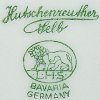
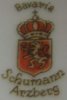
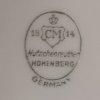
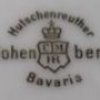
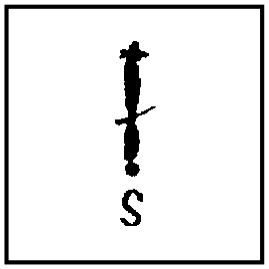
A crowned monogram, lion, shield or factory name is more specific than BAVARIA. Hutschenreuther’s Selb lion-and-LHS formats differ from Hohenberg’s CM devices; Rosenthal’s script and crossed strokes form another identity. Town wording helps distinguish companies with similar surnames or crowns.
BAVARIA, GERMANY and combinations of the two occur in different stamp versions. Read the complete layout before assigning a period. A separate decorating mark or retailer’s name may accompany the porcelain maker. Anniversary years and founding dates within a backstamp can commemorate the company’s history rather than date the individual cup or plate.
How to read the marks
Copy the company name and every letter inside or below the crown.
Read the town separately from BAVARIA and GERMANY; retain spellings such as SELB and HOHENBERG.
Compare the entire device, including lion, shield, crossed strokes and enclosing frame.
Separate factory, decorating and retailer stamps when several appear on one base.
Treat 1814, 1838 and other historical dates within a logo as company-history wording until the exact stamp is identified.
Compare individual pieces in a service for mixed factories, later replacements and different backstamp periods.
Key makers
Rosenthal
Selb, Bavaria, Germany · Founded as a decorating business in 1879; continuing.
Porcelain tableware, figures and decorative objects.
C. M. Hutschenreuther, Hohenberg
Hohenberg an der Eger, Bavaria, Germany · Early activity 1814; factory concession 1822.
Table and ornamental porcelain, including decorated luxury wares.
Lorenz Hutschenreuther, Selb
Selb, Bavaria, Germany · Selb business from 1857.
Porcelain services, figures and decorative wares.
Carl Schumann
Arzberg, Bavaria, Germany · Porcelain factory founded as Schumann & Riess in 1881; later company names changed.
Decorated porcelain tableware, including pierced ornamental pieces.
Seltmann Weiden
Weiden, Bavaria, Germany · Founded 1910; continuing.
Domestic and hospitality porcelain tableware.
Nymphenburg
Munich, Bavaria, Germany · Founded 1747; continuing.
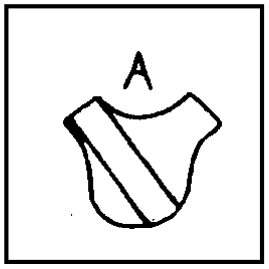
Porcelain figures and tableware with shield-based marks.
Look-alikes & fakes
Schumann Arzberg and Schumann Moabit
The shared surname belongs to different factory histories. Read ARZBERG or BAVARIA with the full emblem rather than using Schumann alone.
Hohenberg and Selb Hutschenreuther marks
CM and LHS devices distinguish separate Hutschenreuther businesses. The family name and an 1814 date do not make every mark the same factory format.
Johann Haviland Bavaria and French Haviland
Johann Haviland’s Waldershof business was Bavarian. Read the forename and origin line before assigning Limoges.
Generic or copied crown marks
Several Bavarian factories used crowns. Compare the complete initials, town and decoration; a crown or BAVARIA alone does not identify the manufacturer.
Related marks
403 marks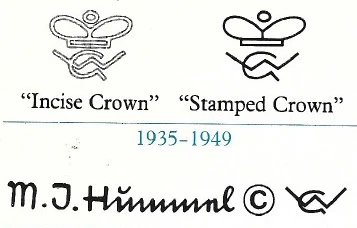
c. 1935–1950
W. Goebel, used on M. I. Hummel figurines
Crown over interlaced WG precedes the bee-with-V families.
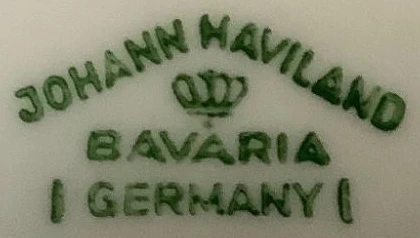
Undated
Johann Haviland / Waldershof successor brand
Crown above Bavaria and a separate Germany line; differs from the crowned-monogram example.
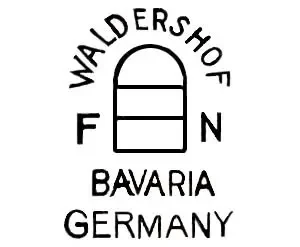
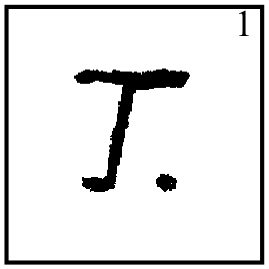
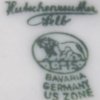
Undated
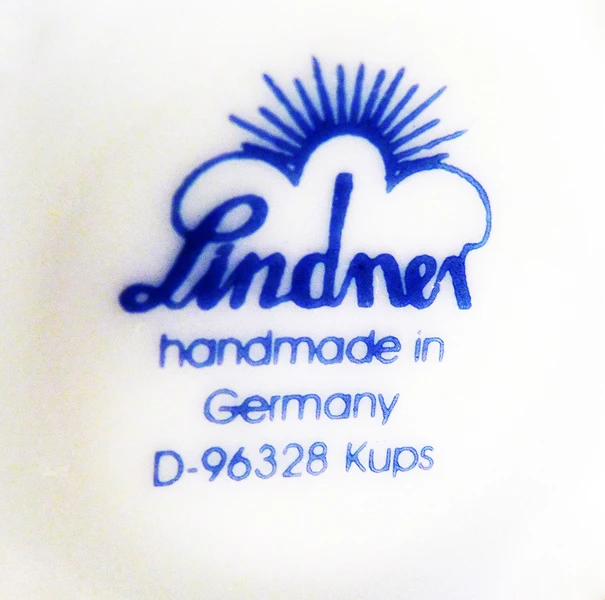
Lindner Porzellan, Küps
Five-digit 96328 address uses the postcode system introduced in 1993; exact stamp introduction remains unproved.
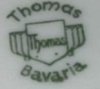
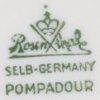
Browse makers
41 makersM. I. Hummel figurinesGermany5 marksJohann HavilandGermany5 marksWaldershof — Franz NeukirchnerGermany6 marksTettauGermany13 marksHutschenreuther12 marksLindnerGermany5 marksThomas13 marksRosenthalGermany40 marksNymphenburgGermany32 marksMitterteich BavariaGermany11 marksTirschenreuth9 marksHeinrich & CoGermany11 marksGerold21 marksSchönwaldGermany14 marksHutschenreuther Hohenberg13 marksBerlinGermany23 marksLudwigsburgGermany62 marksFrankenthal60 marksKPM Berlin31 marksAnsbachGermany28 marksMarkredtwitz Jaeger28 marksNuremberg15 marksBayreuthGermany14 marksBauscher Weiden mark12 marksJohann Seltmann12 marksJosef Kuba11 marksHertel JacobGermany10 marksPorzellanfabrik RosenthalGermany10 marksSelbGermany10 marksGebrüder Winterling7 marksHohenbergGermany6 marksRetschGermany6 marksGräf & Krippner5 marksKrautheim & Adelberg4 marks“Rosenthal” concernGermany3 marksEdelsteinGermany3 marksLudwigsburg in WurttembergGermany3 marksPlankenhammer3 marksGeingenGermany1 markMeiningenGermany1 markRieber1 mark