
Undated
Karen Karnes
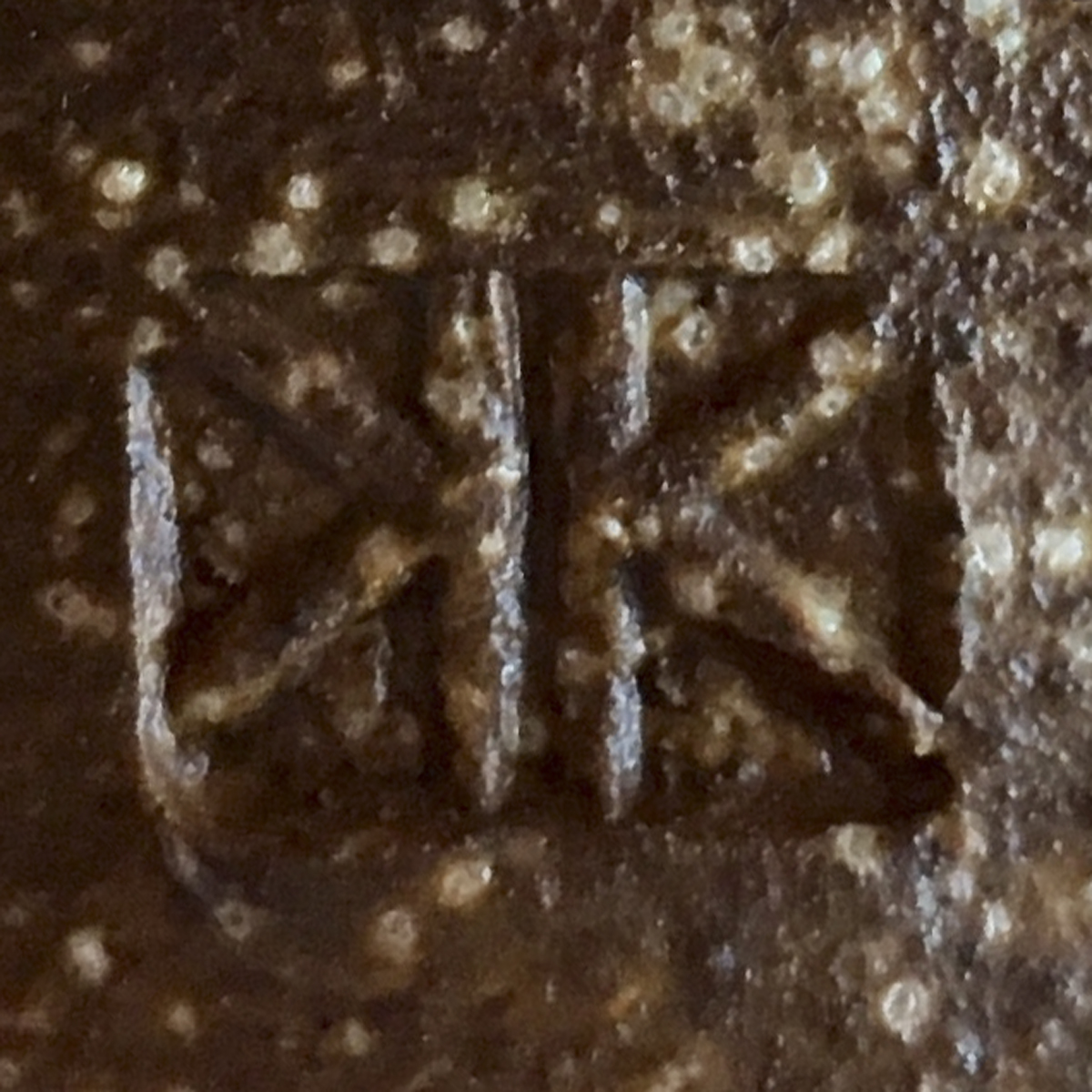
Karen Karnes: impressed KK seal with an enclosing outline, rather than a freely written name.
The illustrated example is captioned 2000.
Read the stamp
Ceramic signatures include impressed seals, incised names and painted lettering that can identify a potter or workshop. Read separate marks together: one can name the studio while another identifies the person who made or decorated the pot.
An impressed seal is pushed into soft clay and produces a repeatable design. An incised signature is drawn or scratched into the surface, so the individual strokes follow the writing tool. Painted lettering sits on the surface rather than forming a cut groove. Compare the actual technique as well as the apparent letters. Glaze can partially fill an impressed seal, while a flowing painted monogram may look like a single symbol. Photograph it with light from the side as well as straight above.
A pot can carry more than one valid identity mark. At the Leach Pottery, the St Ives seal identifies the workshop, while Bernard Leach’s BL seal identifies him. A 1970 bottle bears both the personal and St Ives seals. Read such marks as a combination instead of assigning the workshop seal to every individual potter who worked there. Equally, a hand-painted signature may name the person who decorated a pot rather than the business that supplied the body.
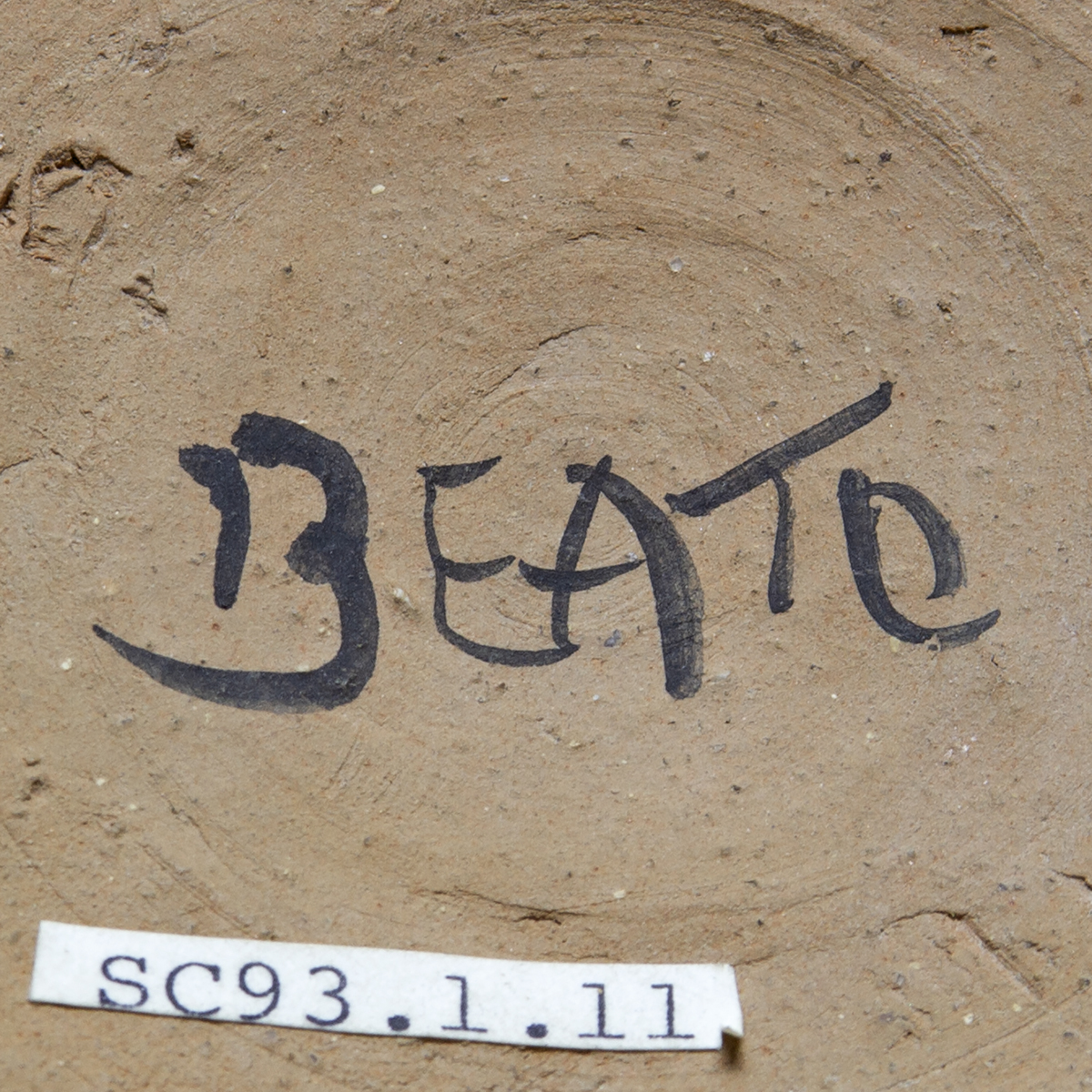
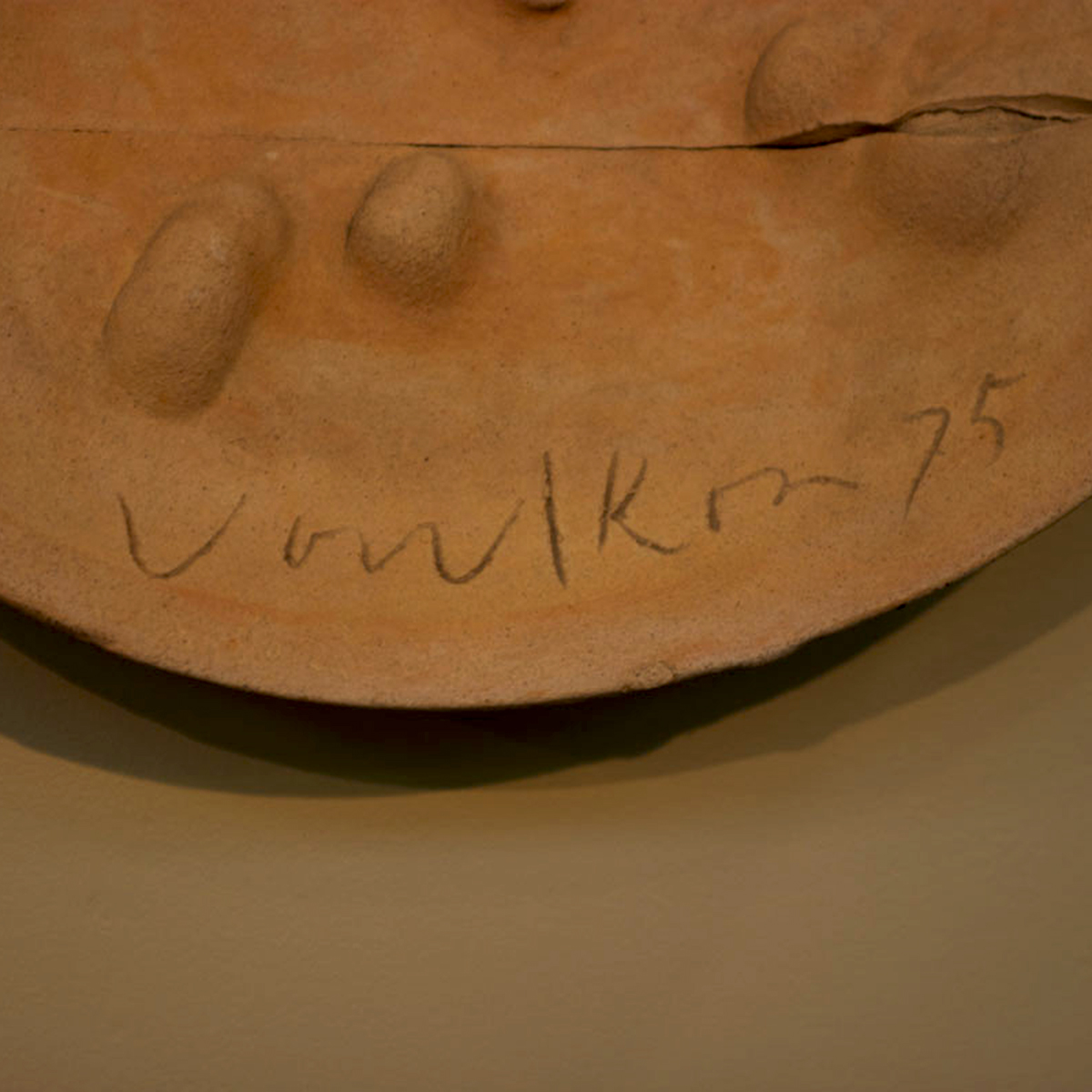
Karen Karnes’s impressed KK is a compact seal; preserve the framing and the way the letters join. Beatrice Wood’s painted BEATO is a name-bearing signature with brush-shaped strokes. Peter Voulkos used written signatures, including the incised VOULKOS 75 example shown here. These marks differ: a double K, BEATO-like flourish or scratched surname alone does not identify the artist. Compare letter formation, placement and the ceramic itself with the artist’s other pieces.
Inspect the underside, inside the foot ring, near the foot edge and around attached handles. Keep any secondary seals, names, numerals and surviving labels in the photograph. A signature cut through clay, a fired painted name and a later paper collection label have different physical appearances. When numbers accompany the signature, record them exactly; some can be dates while others are object or collection identifiers. The hand-painted BEATO example has a separate museum collection label, which is not part of Wood’s signature.
A potter need not use one signature throughout a career. Warren MacKenzie left work unsigned during parts of the 1970s and much of the 2000s, then resumed his chop at the end of 2009. Compare an unsigned pot’s shape, clay, glaze, construction and ownership history with the potter’s other work. A workshop connection or a similar glaze is a useful lead, while the complete object and a matching signature provide more specific identifying details.
Undated
Karen Karnes: impressed KK seal with an enclosing outline, rather than a freely written name.
The illustrated example is captioned 2000.
Undated
Beatrice Wood: painted BEATO; the separate paper SC93.1.11 collection label is not the maker signature.
Example dated c. 1975.
Undated
Peter Voulkos: incised VOULKOS 75, illustrating drawn strokes cut into the ceramic surface.
The inscription includes 75, identifying the pictured Charger as 1975.
Compare the technique, complete lettering, any second seal and the full pot with other examples by the maker. Keep collection labels and unrelated numbers separate.
They can identify the workshop and individual potter. Bernard Leach pieces can carry both his BL seal and the St Ives workshop seal.
Yes. Warren MacKenzie, for example, left work unsigned during parts of his career and resumed his chop at the end of 2009.
It can be the potter, a decorator or a studio name. Its role depends on the complete signature and accompanying workshop marks.