
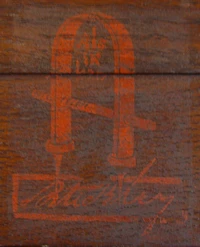
Gustav Stickley / United Crafts
c. To 1903
ALS IK KAN / [signature panel]
Red compass stands above an outlined rectangular signature panel.
decal · red · wood furniture · Eastwood (Syracuse), New York
Ware & regional marks
On wood furniture from Eastwood (Syracuse), New York, Stickley marks carry “ALS IK KAN / Gustav Stickley”. The mark period is 1905–1912.
Gustav’s Craftsman-era furniture dates to about 1900–1916; the separate L. & J. G. Stickley business was established in Fayetteville in 1900 and continues in modern production.
Gustav Stickley / United Crafts
c. To 1903
Red compass stands above an outlined rectangular signature panel.
decal · red · wood furniture · Eastwood (Syracuse), New York
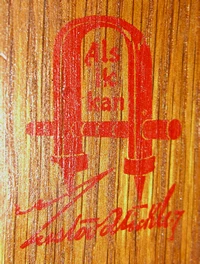
Gustav Stickley / Craftsman Workshops
1905–1912
Red compass and freely written full-name signature without a rectangular base panel.
decal · red · wood furniture · Eastwood (Syracuse), New York
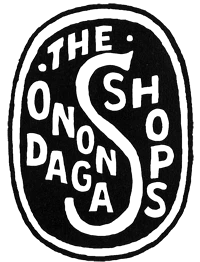
L. & J. G. Stickley
c. To 1906
Tall oval with a large S woven through the Onondaga Shops lettering.
label · wood furniture · Fayetteville, New York
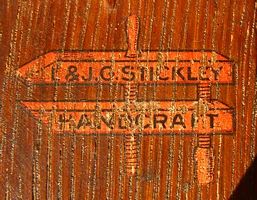
L. & J. G. Stickley
1906–1912
Red handscrew clamp carries the company name and Handcraft.
decal · red · wood furniture · Fayetteville, New York
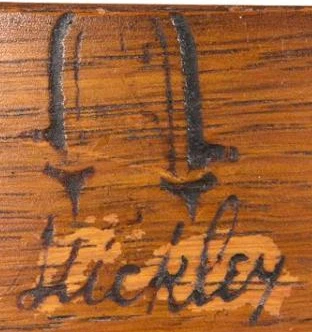
Gustav Stickley / Craftsman Workshops
1912–1916
Dark burned compass above the surname; no red ink or motto is visible.
brand · wood furniture · Eastwood (Syracuse), New York
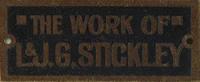
L. & J. G. Stickley
From 1912
Rectangular metal plate uses two lines of block lettering and attachment holes.
metal tag · wood furniture · Fayetteville, New York
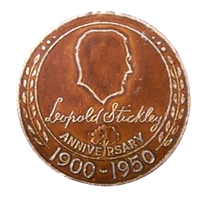
L. & J. G. Stickley
1950
Leopold’s profile and 1900–1950 anniversary dates identify the 1950 issue.
medallion · wood furniture · Fayetteville, New York
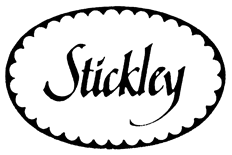
L. & J. G. Stickley
From 1985
Script name inside an oval with a scalloped inner edge.
brand · wood furniture · Manlius, New York
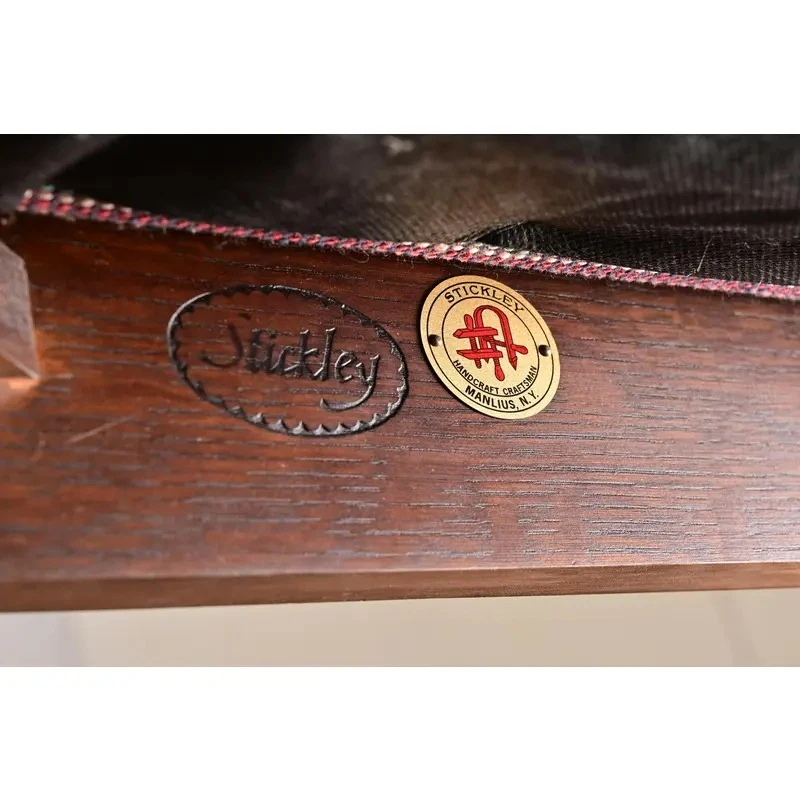
L. & J. G. Stickley
From 1989
Round applied medallion combines the handscrew clamp and joiner’s compass.
medallion · wood furniture · Manlius, New York
The Stickley name covers several furniture businesses founded by brothers. Gustav Stickley developed Craftsman furniture at Eastwood, near Syracuse, New York, around 1900. His United Crafts and Craftsman Workshops made plain, strongly constructed furniture associated with the American Arts and Crafts movement. He promoted the same approach to houses and interiors through The Craftsman magazine. Financial difficulties led to bankruptcy in 1915, and the magazine ended in 1916.
Leopold and John George Stickley established their separate business in Fayetteville in 1900. It used the Onondaga Shops name and later the Handcraft name. Its clamp emblem differed from Gustav’s joiner’s compass. A brief association of the brothers’ businesses combined these tools in a new mark. L. & J. G. Stickley subsequently developed Colonial Revival furniture, including its Cherry Valley range, under Leopold’s direction.
After Leopold’s death in 1957, his widow Louise continued the firm. Alfred and Aminy Audi bought it in 1974. Manufacturing moved to Manlius in 1985, and the company reintroduced Mission furniture in 1989. The revived range used an applied medallion combining clamp and compass. These modern shop marks distinguish later production from the early Craftsman and Handcraft furniture.
Also known as: United Crafts · Craftsman Workshops · The Onondaga Shops · L. & J.G. Stickley · Stickley Associated Cabinetmakers · Gustav Stickley and L. & J. G. Stickley, Inc.
Albert Stickley’s Michigan company used the Quaint name. It is distinct from Gustav’s New York Craftsman Workshops and L. & J. G. Stickley.
Charles Stickley’s business also used the family surname. Read the partner names and factory location rather than assigning every Stickley mark to Gustav.