
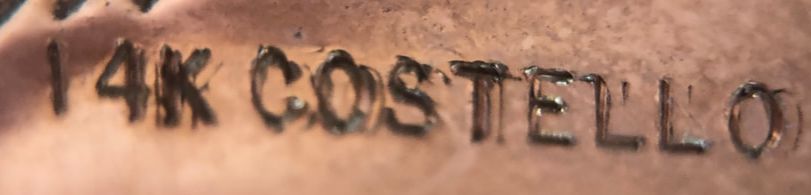
Read the stamp
14K stamps
14K means fourteen-karat gold: fourteen parts gold out of twenty-four, approximately 58.3%. The common 585 mark specifies the related 58.5% fourteen-karat standard; suffixes such as GF, GP or HGE identify a gold-layer construction.
14K counts gold parts out of 24
14K means fourteen parts gold mixed with ten parts other metal in a twenty-four-part alloy. The arithmetic is 14 divided by 24, or approximately 58.3% gold. K and KT abbreviate karat; CT is the carat spelling commonly used in Britain. These letters describe metal fineness, whereas a gemstone’s carat is a weight. The same 14K grade can be yellow, white or rose gold because different alloying metals change the colour. Colour does not by itself identify a different karat grade.
Why 14K pieces can also carry 585
Millesimal marks express gold content in parts per thousand. The common 585 standard specifies 585 parts gold in a thousand, or 58.5%, and is used for the fourteen-karat grade. It is slightly above the exact 14/24 calculation, so 58.3% and 58.5% describe related conventions rather than identical arithmetic. GIA records 583, 585 and 14K as markings for this grade. By comparison, 18K corresponds to 750, or 75% gold. Keep the actual number in the transcription instead of replacing every fourteen-karat stamp with 585.
The suffix changes a 14K stamp
14K GF means a gold-filled construction, with a layer of fourteen-karat gold mechanically applied over another metal. RGP means rolled gold plate; GP means gold plate, and HGE means heavy gold electroplate. In these descriptions, the karat number applies to the gold layer rather than the whole object. A fractional prefix can also describe the amount of that layer. Photograph all characters together: a worn GF after 14K can disappear in a close crop and change the apparent meaning. A gold-coloured surface is compatible with several of these constructions.
Where maker marks and fineness meet
On rings, inspect the inside of the shank; on chains, look at the clasp and end tag, and on pendants examine the reverse or bail. A maker’s name or trademark often accompanies the quality mark. The examples pair 14K or 14KT with COSTELLO, DANKNER or D:B: those names identify different makers while the gold grade stays comparable. An isolated F, J or S beside 14K needs its own maker comparison; do not automatically expand it into a plating term. A stamped claim can also be counterfeit, so compare the complete group and the jewelry’s construction.
Examples
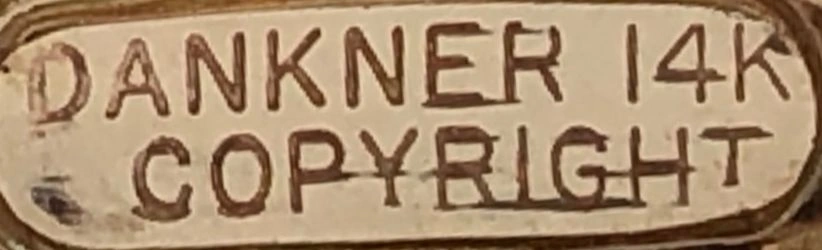
Undated
Henry Dankner & Sons
DANKNER 14K COPYRIGHT: a full name and quality mark within one recessed group.
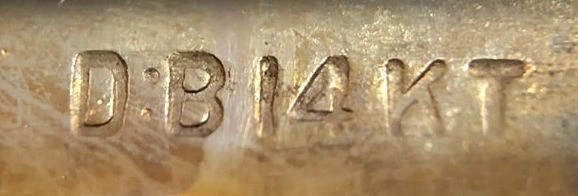
Undated
Dolan & Bullock
D:B 14KT: KT is the longer karat abbreviation beside the Dolan & Bullock maker device.
Frequently asked questions
What does 14K mean on jewelry?
It means fourteen-karat gold, approximately 58.3% gold by the fourteen-out-of-twenty-four calculation.
Is 585 the same as a 14K gold stamp?
585 is the common fourteen-karat grade specified at 58.5% gold. The exact 14/24 calculation is about 58.3%.
What do 14K gold plated markings mean?
With GP, GF, RGP or HGE, the 14K describes a gold layer applied over another metal rather than the entire object.
What does an F or J beside 14K mean?
It can belong to a maker’s mark. Compare the full initials, shape and surrounding wording before assigning a maker or expanding a suffix.