Silver

Wellner silver marks

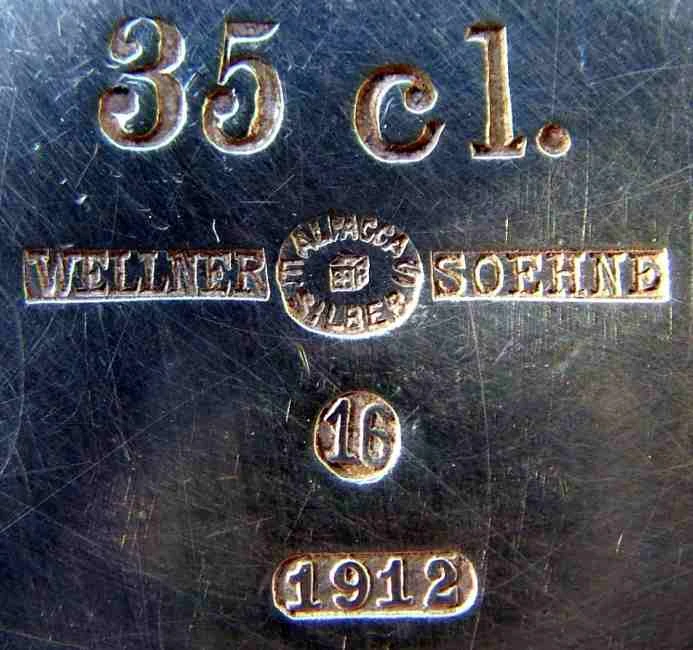
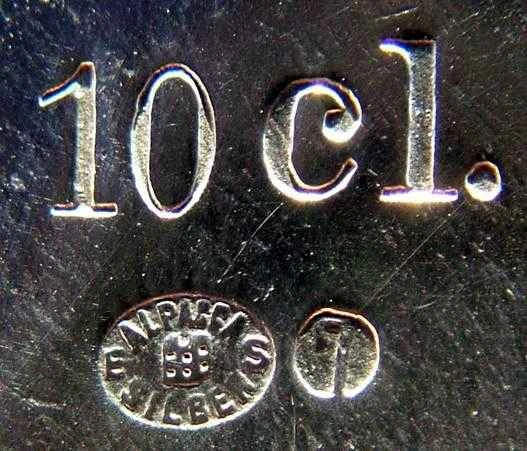
The name “ALPACCA SILBER; 10 cl.; 1” appears among Wellner silver marks on silver-plated nickel silver (Alpacca) from Aue, Saxony, Germany.

Active years
From 1854
Country
Germany
Products
silver-plated cutlery, nickel-silver tableware, serving hollowware, trays
Marks
5

1854 is the foundation of the August Wellner manufactory; later nationalised and successor businesses have separate names. The brand continues through production in Schneeberg.

What to look for

Marks & lettering

5 marks
Wellner mark, c. To 1892

silvercollection.it

c. To 1892

ALPACCA SILBER; 10 cl.; 1

The oval die appears without the Wellner name; distinguish the capacity 10 cl. from the maker mark.

stamped · silver-plated nickel silver (Alpacca) · Aue, Saxony, Germany

Capacity and silver-deposit figures are separate from the maker device.

Wellner mark, c. 1907–1910

silvercollection.it

c. 1907–1910

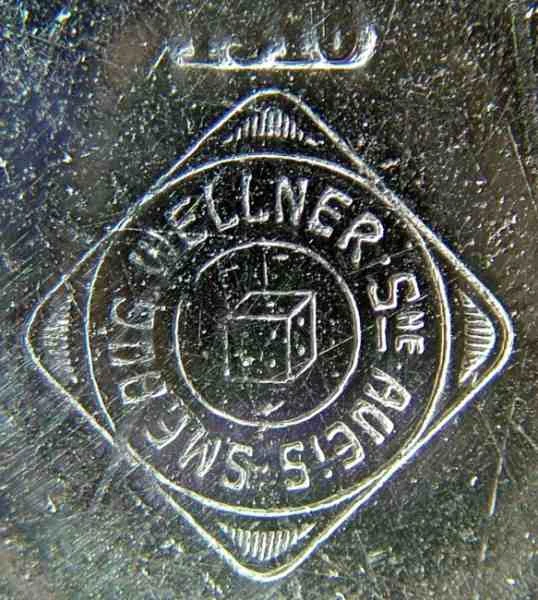
SMF. AUG. WELLNER SNE / AUE i S

The full SMF, AUG. and AUE inscription surrounds a die inside a square border.

stamped · silver-plated nickel silver (Alpacca) · Aue, Saxony, Germany

Capacity and silver-deposit figures are separate from the maker device.

Wellner mark, c. 1927–1934

silvercollection.it

c. 1927–1934

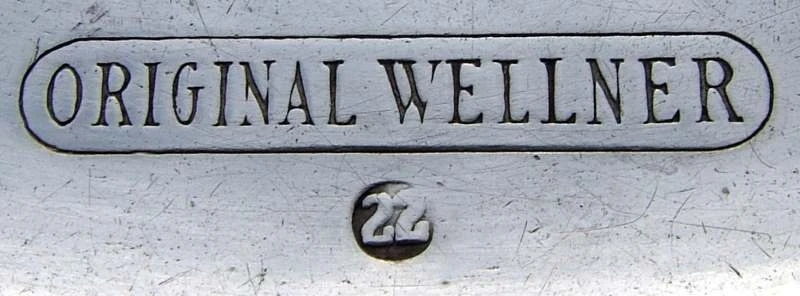
ORIGINAL WELLNER; 22

ORIGINAL precedes WELLNER within one cartouche; compare earlier added ORIGINAL WELLNER over-stamps.

stamped · silver-plated nickel silver (Alpacca) · Aue, Saxony, Germany

Capacity and silver-deposit figures are separate from the maker device.

About Wellner

The Wellner cutlery business developed from metalworking in Aue, Saxony. In 1854 Carl August Wellner took over a smelting works from his father and built up spoon production under his own name. The factory used nickel silver, also called Argentan or Alpacca, as a base for tableware. Mechanised rolling and pressing expanded production beyond the earlier hand methods.

In 1892 the business was registered as Sächsische Metallwarenfabrik August Wellner Söhne. Family members and Peter Paul Gaedt took over its management, and new buildings and machinery supported a growing international trade. The company became a joint-stock business in 1913. It supplied cutlery and serving ware to hotels, restaurants and passenger liners, while designers including Peter Behrens and Joseph Maria Olbrich contributed cutlery patterns.

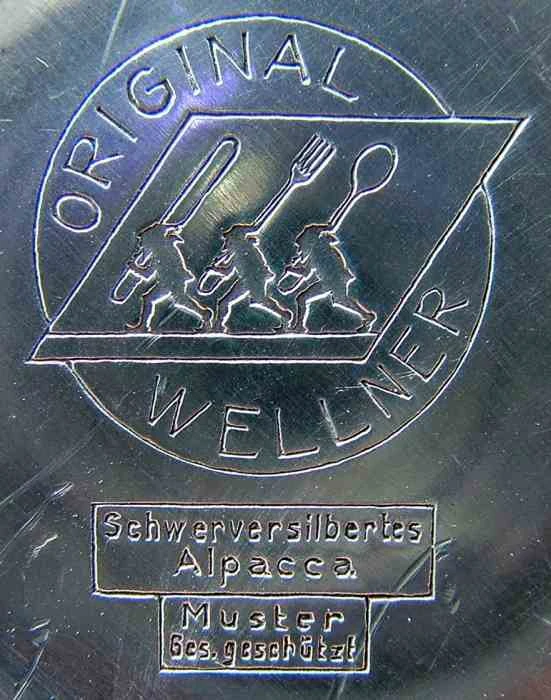
Original Wellner branding appeared during the 1920s. After the Second World War, production continued through the Auer Besteck- und Silberwarenwerke, known as ABS. Restructuring followed German reunification. In 2001 former employee Siegfried Günzl preserved remaining patterns, moulds and machines and continued the Wellner tradition in nearby Schneeberg.

Also known as: August Wellner & Sons · August Wellner Söhne · Original Wellner · Auer Besteck- und Silberwarenwerke (successor) · Sächsische Metallwarenfabrik August Wellner Söhne

Look-alikes & how to tell them apart

Gottlieb Wellner / GOWE

A separate Aue business founded by August’s younger brother used the Gottlieb Wellner or GOWE name. Read August, Original Wellner and the complete factory inscription.

Wellner Firenze and Wellner Amsterdam

Related overseas operations used local names and marks. Firenze, Amsterdam or a local company inscription identifies a different production branch from the Aue examples.