
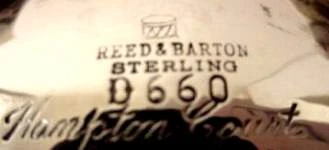
Undated
REED & BARTON / STERLING
Written company name and STERLING replace the three-device trademark arrangement; the separate number is not part of the name.
stamped · sterling silver · Taunton, Massachusetts, United States
Silver
Reed and Barton marks include stamped “MFD & PLATED BY / REED & BARTON” on silverplate in Taunton, Massachusetts, United States.
1824–2015 refers to the historical Taunton manufacturer and its predecessors. Reed & Barton name from 1840; the brand continued under Lenox ownership after the 2015 bankruptcy.
Undated
Written company name and STERLING replace the three-device trademark arrangement; the separate number is not part of the name.
stamped · sterling silver · Taunton, Massachusetts, United States
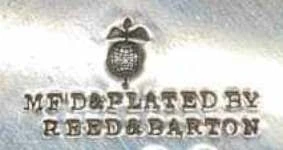
Undated
MFD & PLATED BY wording and the globe device identify this plated-ware layout.
stamped · silverplate · Taunton, Massachusetts, United States
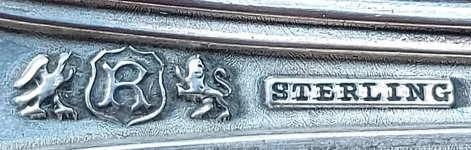
Undated
Only the central R is shielded; STERLING sits in its own horizontal rectangular cartouche.
stamped · sterling silver · Taunton, Massachusetts, United States
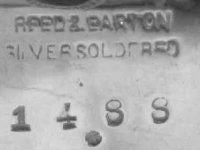
Undated
Two-line lettering with SILVERSOLDERED, unlike the full MFD & PLATED BY form.
stamped · silverplate · Taunton, Massachusetts, United States
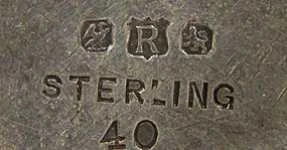
Undated
All three devices occupy bordered compartments, unlike the version with an unboxed eagle and lion.
stamped · sterling silver · Taunton, Massachusetts, United States
Reed & Barton developed from the Britannia-metal business that Isaac Babbitt and William Crossman began in Taunton, Massachusetts, in 1824. After several changes of partnership, Henry G. Reed and Charles E. Barton became owners of the concern. Leonard, Reed & Barton was formed in 1837, and the shorter Reed & Barton name followed in 1840. The company began silver electroplating in 1848 and grew into a major maker of table and serving wares.
Sterling silver joined its plated products in the later nineteenth century. The factory made flatware, tea and coffee services, trophies and elaborate commemorative silver. A design department established in 1873 supported an expanding catalogue. The company acquired Dominick & Haff in 1928, adding patterns and manufacturing expertise, and employed both its own designers and outside contributors, including Eliel Saarinen and Gio Ponti.
Wartime work expanded its production of military tableware and encouraged developments in plating and stainless-steel manufacture. Family ownership continued through succeeding generations, but the Taunton business filed for bankruptcy in 2015. Lenox acquired the brand, which continued to sell flatware. The historical factory used written names, pictorial trademarks, metal designations and, on some hollowware, separate year symbols.
Also known as: Reed and Barton
Both use heraldic-looking devices. Reed & Barton’s central letter is R between an eagle and lion; Gorham’s familiar sterling sequence includes a lion, anchor and G. Read all the symbols in order.