
Undated
Bent Knudsen
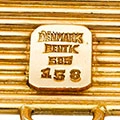
DENMARK / BENT K / 585 / 158: the 585 line states fineness; the name and separate model number identify other features.
Read the stamp
585 means 585 parts gold per thousand, or 58.5% gold: the millesimal standard used for 14-karat gold. It can appear on yellow, rose or white gold; GF, GP or HGE beside a karat number instead describes a gold layer over another material.
A 585 stamp expresses gold fineness in parts per thousand. Of a thousand parts of alloy, 585 are gold and the remaining 415 are other metals. In percentage form that is 58.5% gold and 41.5% alloying metals. The karat system divides the alloy into 24 parts: 14 divided by 24 is 58.33%, while the recognised 585 hallmarking standard specifies 58.5%. This is why 14K and 585 commonly appear together rather than indicating different layers or two separate qualities.
The number measures gold content, not colour. London’s hallmarking standards include both white and yellow or red 585 gold. A pale ring stamped 585 can therefore be white gold rather than silver; a 925 stamp would indicate a different fineness and metal convention. ITALY is origin wording and adds no extra gold purity to the number. Nor does 585 by itself identify Italy or any other single country: it is a recognised fineness in the international Hallmarking Convention.
Look inside a ring shank, on the back of a pendant, or beside a chain clasp and its adjoining end tag. Photograph the whole group of stamps, including letters and small symbols. The maker’s name or trademark answers a different question from the fineness number. A full UK hallmark normally combines a sponsor’s mark, a metal-and-fineness mark and an assay-office mark. A lone 585 is a fineness inscription rather than that complete combination. On a chain, read the tag and links as well as the clasp.
Keep the suffix attached when copying a stamp. GF means gold filled: a gold-alloy layer mechanically bonded to another metal. GP means gold plated, and HGE means heavy gold electroplate. In a mark such as 14K GF, the karat value describes the gold layer rather than the entire object. These constructions differ from an alloy described throughout as 585 gold. Gold-coloured plating can also cover a silver core, so colour and a gold-looking surface cannot replace reading the complete inscription.
Copy every digit before deciding what it means. A rubbed final digit can change the reading, and nearby initials belong to the maker or sponsor rather than the purity value. Counterfeit jewelry can carry generic numbers and symbols that resemble hallmarks. Check the full mark group and the metal itself when a stamp and the object disagree; sight, weight and colour do not establish a 585 fineness.
Undated
DENMARK / BENT K / 585 / 158: the 585 line states fineness; the name and separate model number identify other features.
Undated
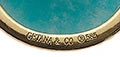
GETANA & CO. 585 stamped along a setting edge: maker wording and fineness read together.
Undated
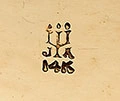
James Avery mark with 14K and 585: karat and millesimal descriptions of the same gold grade.
It means 58.5% gold by mass, the recognised millesimal standard for 14-karat gold.
The two marks express the same commercial gold grade in different systems: karats and parts per thousand.
Yes. The 585 grade can be white, yellow or rose gold; the number measures gold content rather than colour.
585 gives the gold fineness, 58.5%. ITALY supplies origin wording; it does not change that fineness.