

Country guide
British pottery marks
British pottery marks can combine a factory name, town, country statement, design registration and production code. Earthenware, stoneware and porcelain makers used different kinds of marks, including impressed names, printed badges and painted initials. A maker’s own sequence is needed to interpret the smaller letters, numerals and symbols beside the main identity.
Key makers’ marks
12 marks
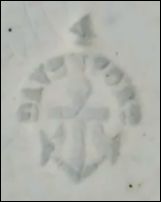
Davenport Pottery
1848
DAVENPORT
Impressed 4 and 8 flanking the anchor date this example to 1848, rather than defining mark use.
printed, impressed · Longport (Burslem), England
The 4 above the mark may indicate plate size.
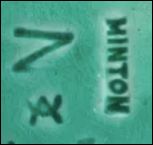
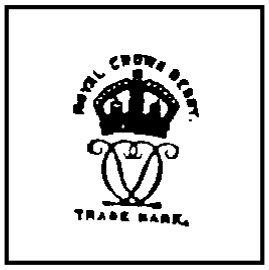
Derby
1877–1889
ROYAL CROWN DERBY TRADE MARK
printed · different colours · porcelain · England, United Kingdom
The factory existed in Derby since the 1840’s under the name “Old Derby China Company”. Printed mark in different colours.
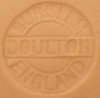

Worcester
1912
Royal Worcester England 21 dots
The 21 dots date the example's manufacture to 1912; 51 refers to the factory's 1751 foundation.
porcelain · England, United Kingdom
Year-code variant.
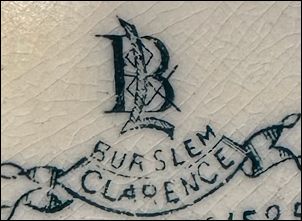
Burgess & Leigh
Undated
B&L Burslem
England, United Kingdom
Clarence is the pattern name. Registration numbers belonging to E. J. D. Bodley suggest production under arrangement with Bodley.
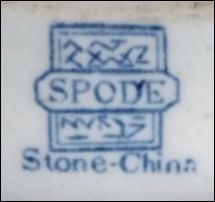
1767-1833 Josiah Spode
Undated
blue
Stone-China stamps of this style date to the early nineteenth century.
blue · Stoke-on-Trent, England
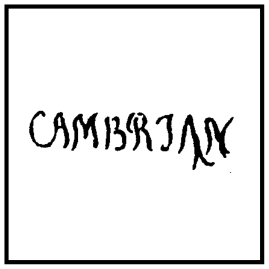
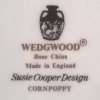
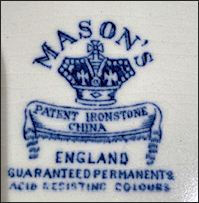
Mason's Ironstone China
Undated
G.L
earthenware · England, United Kingdom
Variants of this style continued under G. L. Ashworth & Bros, Mason's Ironstone China and Wedgwood.
About British pottery marks
Staffordshire supplied a large part of Britain’s tableware and ornamental pottery. Its pottery towns include Burslem, Hanley, Longton, Tunstall, Fenton and Stoke. Wedgwood, Spode, Minton, Doulton and many smaller firms developed separate businesses there. Crowns, royal arms and regional knots were shared decorative frames; the accompanying factory name or initials are more specific.
Other centres have their own histories. Worcester’s porcelain manufactory began in 1751, and Derby’s origins lie around 1750. Swansea and Nantgarw made Welsh porcelain, sometimes sent as undecorated blanks to painters elsewhere. Scotland’s Wemyss Ware began at Kirkcaldy in 1882. A broad British identity therefore needs a named manufacturer and place to become useful.
Read every part of the base before dating the piece. A registration diamond or Rd number refers to a design; an establishment year can commemorate a business. Neither automatically dates the individual object. Worcester’s marks, Minton’s impressed symbols and other factory codes must be compared within their own systems, while a separate decorator or retailer stamp should keep its own identity.
How to read the marks
Identify the ceramic body, then copy the maker, town and country exactly.
Separate the large pattern or trade name from smaller company initials.
Read date codes using that manufacturer’s sequence; do not transfer a Minton or Worcester rule to another factory.
Keep registration diamonds and Rd numbers separate from production dates.
Look for a decorator’s signature or retailer’s stamp beside the factory mark.
Compare every piece in a service for replacements and mixed production periods.
Key makers
Worcester / Royal Worcester
Worcester, England · First Worcester porcelain factory founded 1751; later owners and Royal Worcester identities.
Porcelain tableware, figures and ornamental objects.
Derby / Royal Crown Derby
Derby, England · Origins c. 1750; later Derby Crown and Royal Crown Derby businesses.
Porcelain and bone china services, figures and ornamental wares.
Wedgwood
Burslem, Etruria and later Barlaston, Staffordshire, England · Independent business founded 1759.
Creamware, ornamental stonewares and tableware.
Spode
Stoke, Staffordshire, England · Josiah Spode acquired the Stoke site in 1776; site production continued to 2008.
Earthenware, stone china and bone china.
Doulton / Royal Doulton
Lambeth, London, and Burslem, Staffordshire, England · Lambeth origins 1815; Burslem operation from 1877; Royal name from 1901.
Stoneware, tableware, art pottery and figures.
Swansea and Nantgarw porcelain works
Swansea and Nantgarw, Wales · Welsh porcelain production in the early 19th century; Nantgarw chiefly 1813–1814 and 1817–1820.
Soft-paste porcelain services and ornamental wares; Swansea also had other pottery production.
Look-alikes & fakes
A shared crown or Staffordshire knot
Many British factories used these devices. Read the initials, town and full company wording inside or below the frame.
Establishment dates and anniversary wording
A number such as Worcester’s 51 recalls the 1751 foundation within a later logo. Compare the maker’s complete stamp and date system.
Later painting on an older blank
A genuine body mark and a later decorating signature can coexist. Compare the porcelain and decoration stages separately.
Later imports using historic British brands
Read the actual country-of-manufacture line, especially on later branded wares and replacement pieces. A British brand history does not place every object at its original works.
Related marks
3,686 marks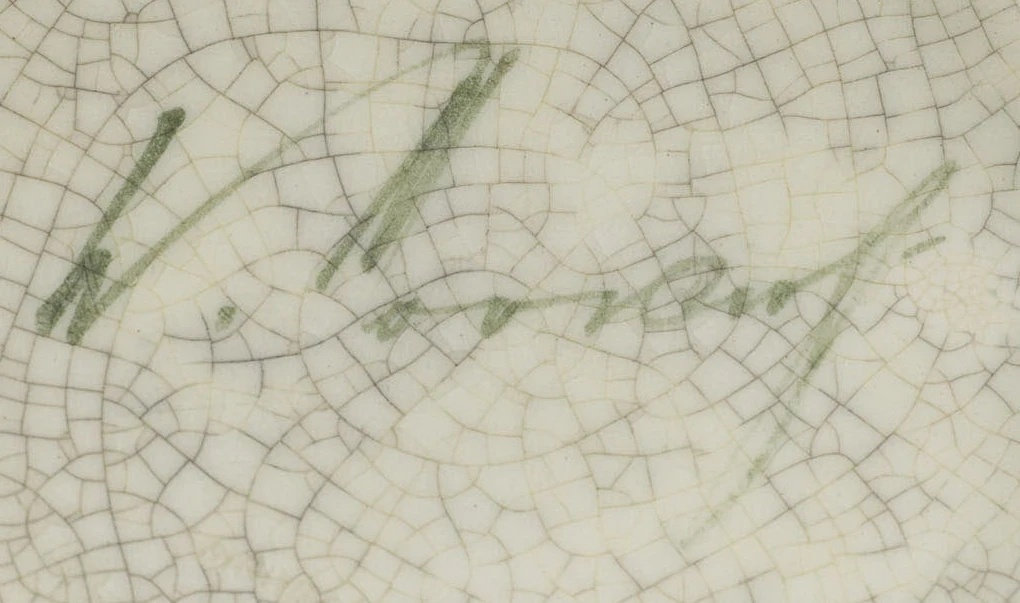
c. 1913–1928
Moorcroft
Full painted signature with impressed BURSLEM separates this early independent format from Macintyre Florian Ware and the later royal stamp.
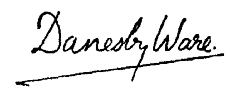
c. 1930–1941
Denby / Joseph Bourne & Son
Danesby Ware is written as a two-word script trade name rather than a Bourne company name or Denby scroll.
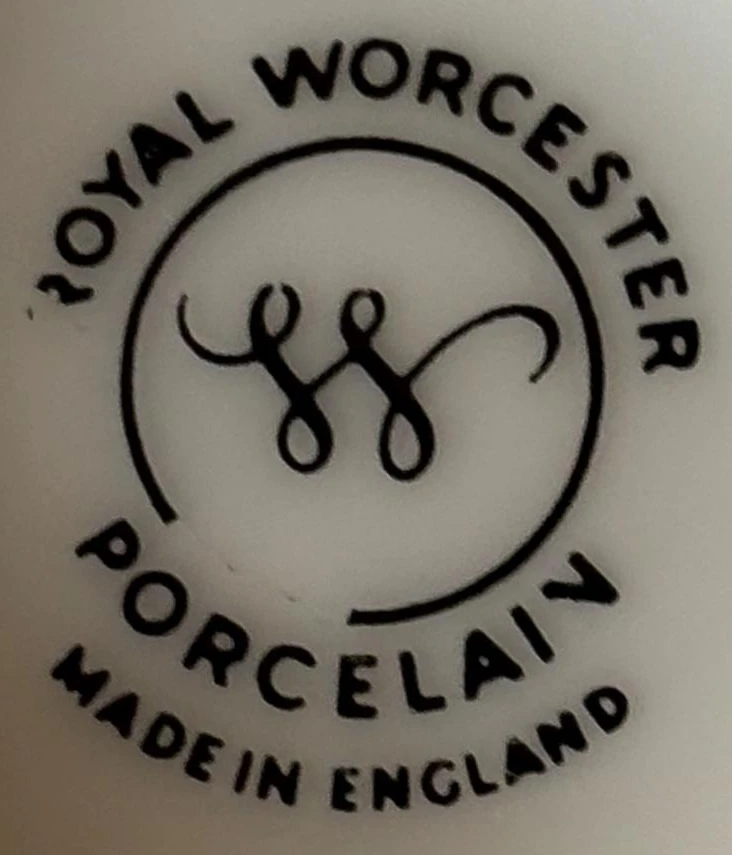
c. 1950–1983
Royal Worcester
A single large W replaces the crown and 51 emblem; the coddler-specific PORCELAIN wording sits below the circle.

c. 1969–1989
Wiltshaw & Robinson / Carlton Ware
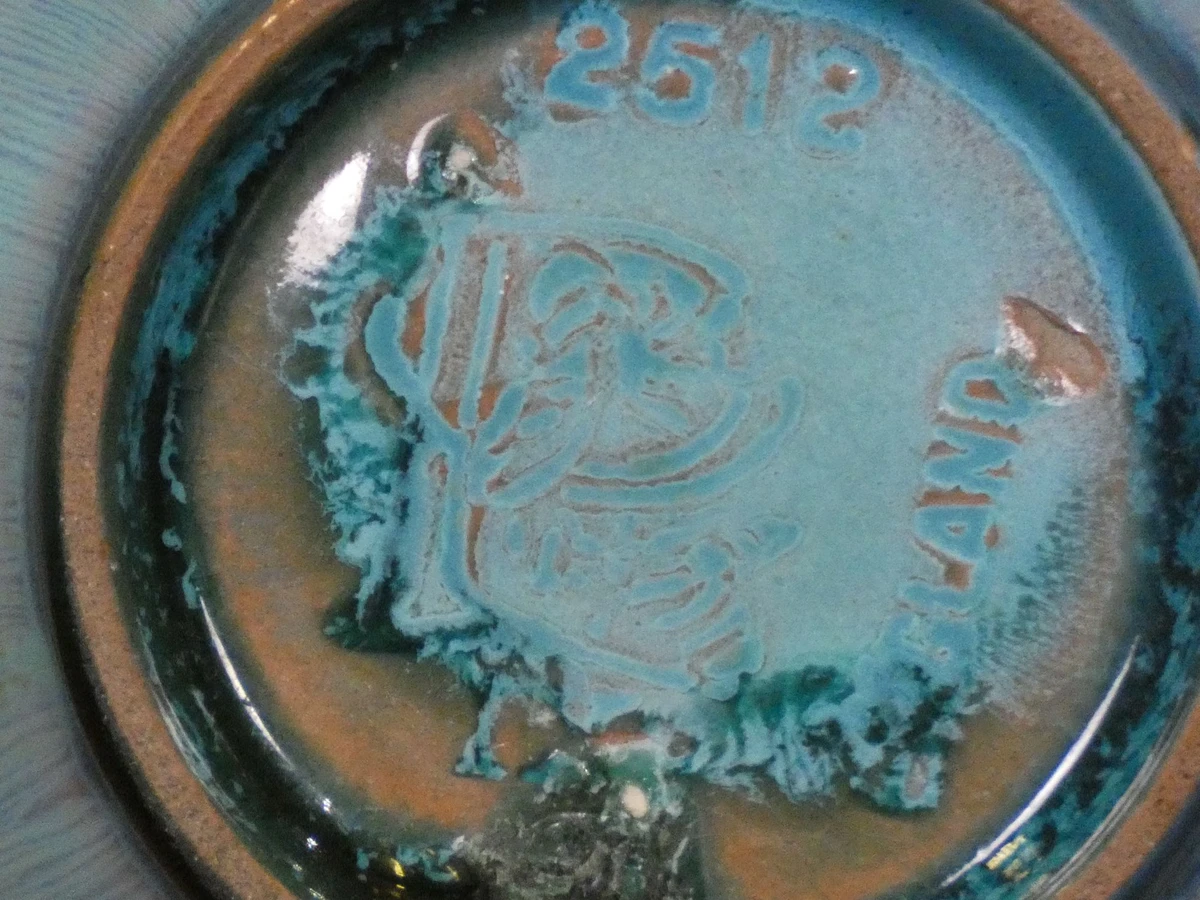
Heavy rounded type replaces flowing script; catalogue describes a slide-on lithographic transfer.
c. From 1949
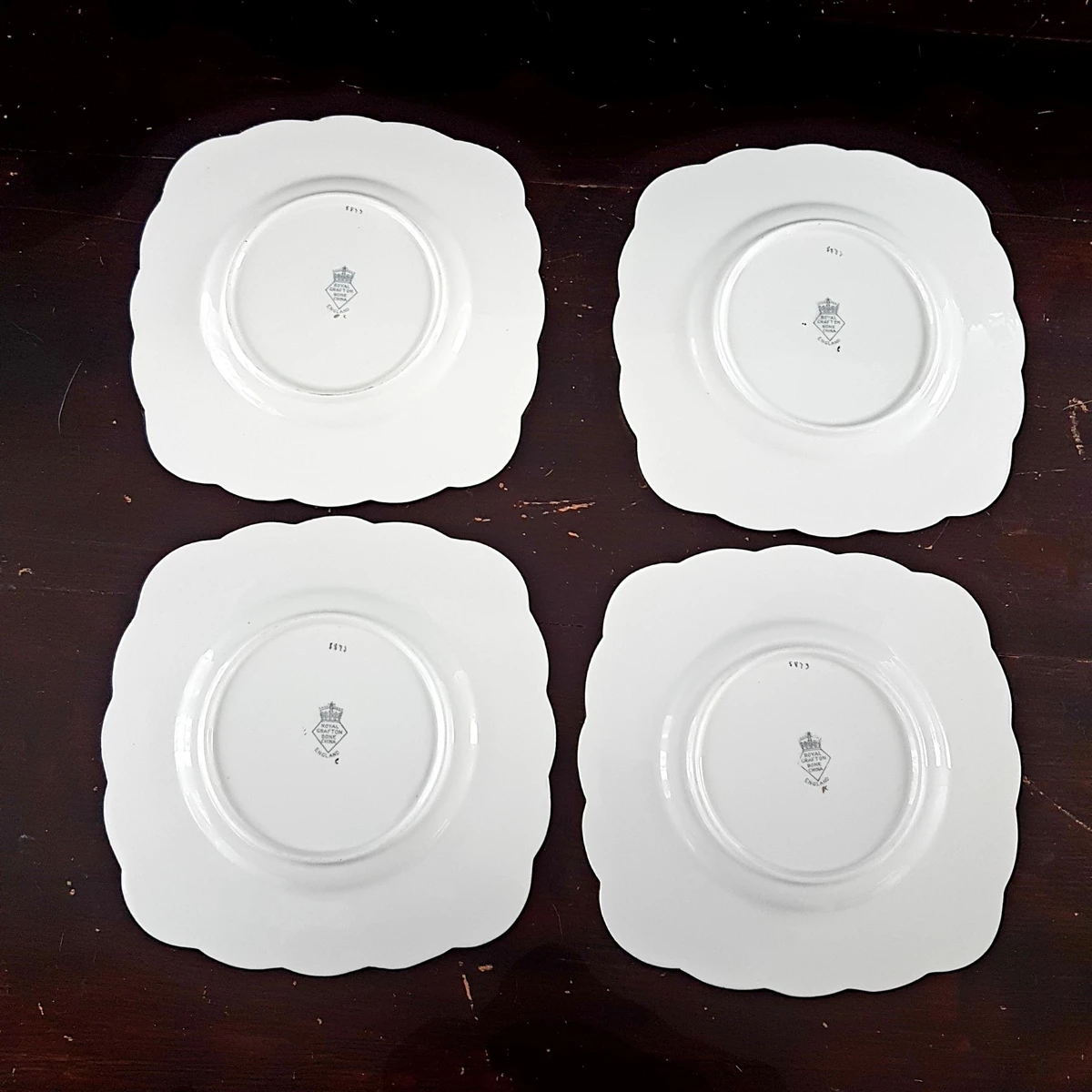
A. B. Jones & Sons and Royal Grafton successors
Crown rests on a diamond containing ROYAL GRAFTON BONE CHINA; ENGLAND curves below.
c. From 1947
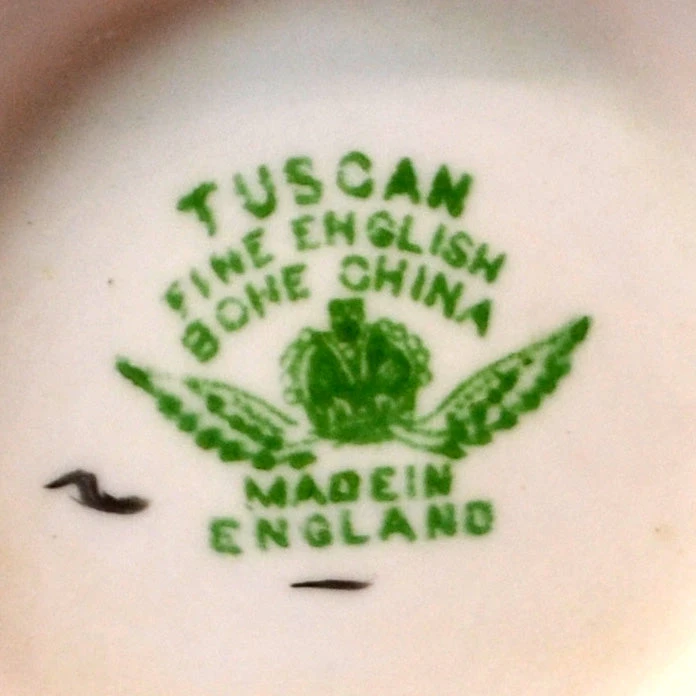
R. H. & S. L. Plant / Royal Tuscan
Three upper wording lines introduce FINE ENGLISH BONE CHINA above the crowned wings.
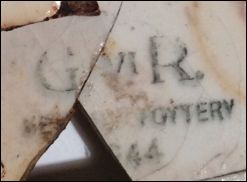
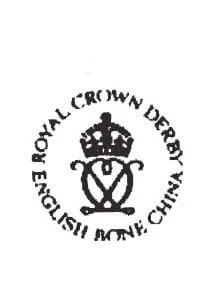
c. From 1976
Derby Crown Porcelain / Royal Crown Derby
Company name and ENGLISH BONE CHINA form a circle around the crown and interlaced D monogram. Illustrated artwork.
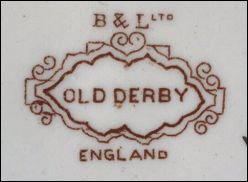
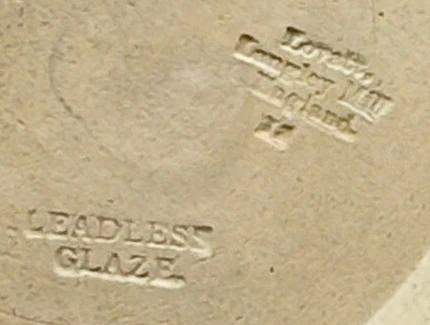
c. 1907–1930
Lovatt / Langley Mill pottery lineage
Curved name-and-place impression with an additional LEADLESS GLAZE stamp; distinguish printed Langley Ware wording.
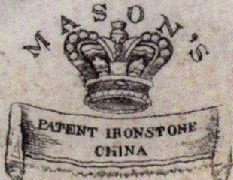
c. 1815–1830
Mason family ironstone business
Widely spaced maker’s name over a crown and scroll; no England or colour guarantee below.
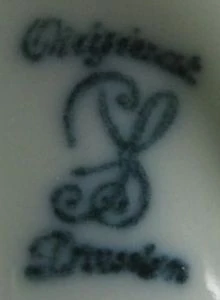
c. From 1918
Sächsische Porzellan-Fabrik Carl Thieme and successors, Potschappel
Original above and Dresden below distinguish the complete layout from the monogram-only design.
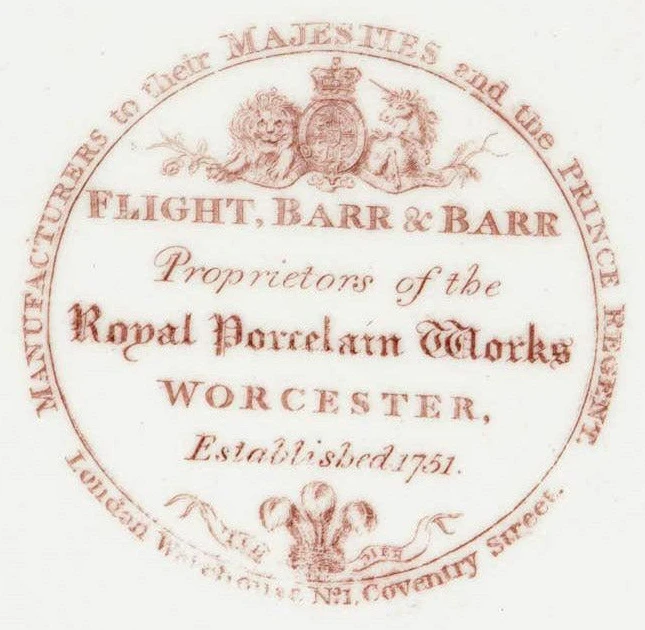
c. 1813–1840
Flight, Barr & Barr, Worcester
Circular red mark with the royal arms at the top and Prince of Wales feathers below; distinguish the compact stacked crown mark.
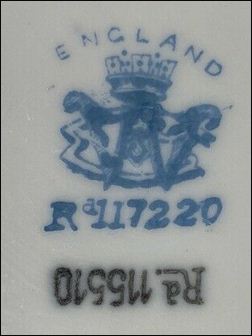
c. 1872–1911
Wileman & Co
This mark dates to about 1872–1911; registration 115510 dates the shape to 10 December 1888 and 117220 the pattern to 9 January 1889.
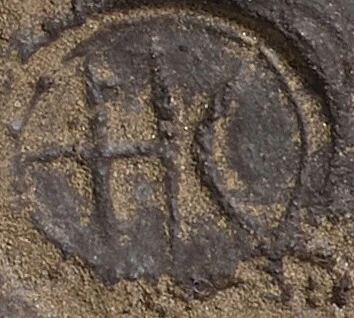
Undated
Hans Coper
A single HC monogram identifies Coper’s seal; circular foot rings around it are not additional marks.
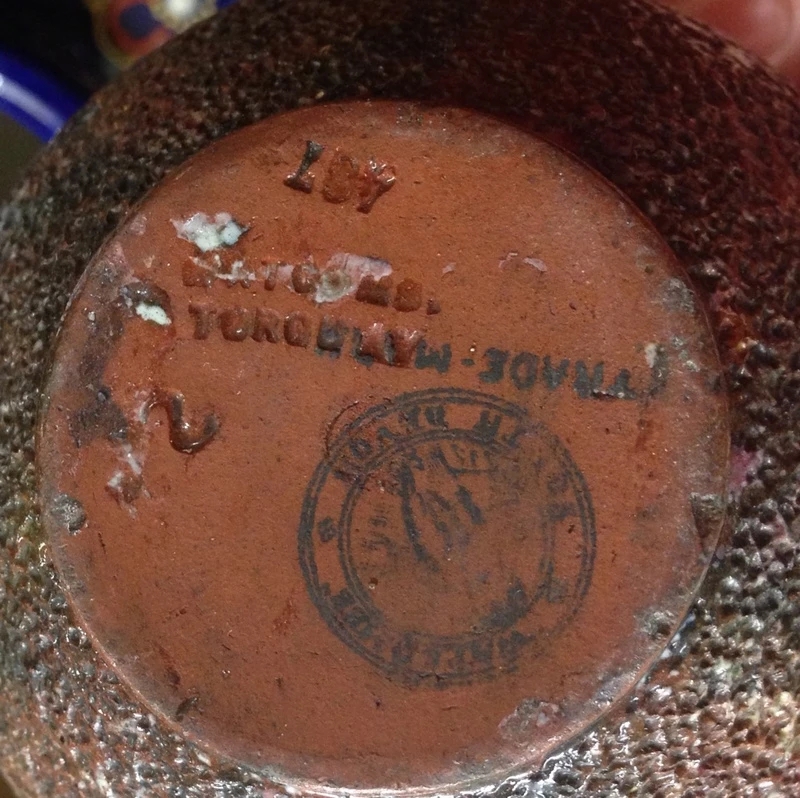
Undated
Watcombe Pottery
Circular bird/emblem stamp, alongside a separate impressed Watcombe Torquay name.

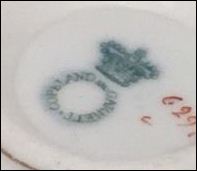
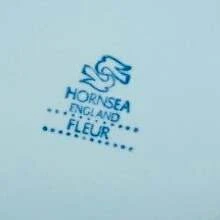
Undated
Hornsea Pottery
Open three-line name-and-pattern layout with dots differs from the circular name and care stamps. Different pattern names in this same layout are one family.
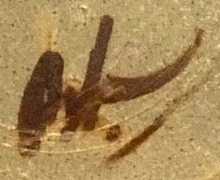
c. 1949
Bernard Leach
Painted signature instead of an impressed seal. Handwritten BL layouts vary; the pictured bowl is attributed c.1949.
Browse makers
572 makersWilliam Moorcroft LtdUnited Kingdom5 marksDenbyUnited Kingdom6 marksRoyal WorcesterUnited Kingdom5 marksCarlton Ware LtdUnited Kingdom5 marksPilkington’s Royal LancastrianUnited Kingdom5 marksRoyal Doulton56 marksRoyal Grafton China LtdUnited Kingdom6 marksKeele Street Pottery Co LtdUnited Kingdom5 marksR H & S L PlantUnited Kingdom7 marksNew Hall Pottery Co LtdUnited Kingdom8 marksRoyal Crown DerbyUnited Kingdom5 marksBurgess & LeighUnited Kingdom30 marksLovatt & LovattUnited Kingdom5 marksMason's Ironstone ChinaUnited Kingdom6 marksDresden Porcelain CoUnited Kingdom7 marksFlight, Barr & BarrUnited Kingdom5 marksWileman & CoUnited Kingdom12 marksHans CoperUnited Kingdom2 marksWatcombe PotteryUnited Kingdom5 marksEmma Bridgewater LtdUnited Kingdom5 marksCopeland & GarrettUnited Kingdom15 marksHornseaUnited Kingdom5 marksA E Gray and Co LtdUnited Kingdom17 marksBernard LeachUnited Kingdom3 marksCaughleyUnited Kingdom26 marksDavenport PotteryUnited Kingdom5 marksMinton & CoUnited Kingdom12 marksDerbyUnited Kingdom35 marksCoalportUnited Kingdom11 marksLowestoftUnited Kingdom2 marksGrimwades LtdUnited Kingdom40 marksBeswick36 marksDoultonUnited Kingdom18 marksGrimwade BrosUnited Kingdom7 marksRoyal Stafford China (Props: Thomas Poole and Gladstone China Ltd)United Kingdom4 marksS BridgwoodUnited Kingdom16 marksStoke-on-TrentUnited Kingdom22 marksHammersleyUnited Kingdom33 marksBowUnited Kingdom25 marksF Winkle & CoUnited Kingdom11 marksS Fielding & Co (Ltd)United Kingdom31 marksAdderleyUnited Kingdom25 marksEtruria PotteryUnited Kingdom24 marksBooths LtdUnited Kingdom20 marksNew Wharf Pottery CoUnited Kingdom14 marksHollinshead & Kirkham (Ltd)United Kingdom9 marksCobridgeUnited Kingdom2 marksChelseaUnited Kingdom24 marksBishop & StonierUnited Kingdom9 marksLiverpoolUnited Kingdom5 marksSwanseaUnited Kingdom6 marksRidgwaysUnited Kingdom19 marksJoseph ClementsonUnited Kingdom9 marksLeedsUnited Kingdom2 marksLate Mayers3 marksWorcesterUnited Kingdom120 marksRoslyn ChinaUnited Kingdom6 marksColclough & CoUnited Kingdom4 marksW H Grindley & Co (Ltd)United Kingdom42 marksCrown Staffordshire Porcelain Co LtdUnited Kingdom39 marksA Meakin (Ltd) Alfred Meakin (Tunstall) LtdUnited Kingdom38 marksJ Kent (James, Ltd)United Kingdom37 marksJ Maddock & Sons (Ltd)United Kingdom37 marksFrancis Morley (& Co)United Kingdom29 marksDunn, Bennett & CoUnited Kingdom27 marksBirks, Rawlins & Co (Ltd)United Kingdom26 marksCharles MeighUnited Kingdom26 marksEmpire Porcelain CoUnited Kingdom26 marksGibson & Sons (Ltd)United Kingdom26 marksJ Sadler & SonsUnited Kingdom26 marksCartwright & EdwardsUnited Kingdom24 marksG L Ashworth & BrosUnited Kingdom23 marksAnthony Shaw (& Son) (& Co)United Kingdom22 marksJ H Weatherby & Sons (Ltd)United Kingdom21 marksJackson & GoslingUnited Kingdom21 marksJohn Tams & Son LtdUnited Kingdom21 marksPrimavesi & Son, earthenware, china, glass retailersUnited Kingdom21 marksShaw and Copestake Ltd - SylvacUnited Kingdom20 marksThomas ForesterUnited Kingdom20 marksBristolUnited Kingdom19 marksBritish Anchor Pottery Co LtdUnited Kingdom19 marksJohnson Bros, Hanley LtdUnited Kingdom18 marksT HughesUnited Kingdom18 marksW Baker & CoUnited Kingdom18 marksFord & SonsUnited Kingdom16 marksJoseph HeathUnited Kingdom16 marksMyottUnited Kingdom16 marksTaylor, Tunnicliff & CoUnited Kingdom16 marksAdderleys LtdUnited Kingdom15 marksHenry Alcock & Co (Ltd)United Kingdom15 marksLancaster & Sandland LtdUnited Kingdom15 marksRidgway Potteries LtdUnited Kingdom15 marksSwinnertons LtdUnited Kingdom15 marksT & R BooteUnited Kingdom15 marksA G Richardson and Co LtdUnited Kingdom14 marksBarratt's of Staffordshire LtdUnited Kingdom14 marksCharles Allerton & SonsUnited Kingdom14 marksEllgreave Pottery Co LtdUnited Kingdom14 marksFranciscan TablewareUnited Kingdom14 marksS Radford (Samuel, Ltd)United Kingdom14 marksShore and Coggins LtdUnited Kingdom14 marksUpper Hanley Pottery CoUnited Kingdom14 marksE & C ChallinorUnited Kingdom13 marksElsmore & ForsterUnited Kingdom13 marksJohn Meir & SonUnited Kingdom13 marksLanternierUnited Kingdom13 marksSamuel Alcock and CoUnited Kingdom13 marksSheltonUnited Kingdom13 marksSoho Pottery CoUnited Kingdom13 marksTaylor & KentUnited Kingdom13 marksVolkstedt-Rudolstadt Beyer and BockUnited Kingdom13 marksWilliam Ridgway (& Co)United Kingdom13 marks1767-1833 Josiah SpodeUnited Kingdom12 marksCo-operative Wholesale Society Ltd (Earthenware manufacture)United Kingdom12 marksCollingwood BrosUnited Kingdom12 marksH J ColcloughUnited Kingdom12 marksH J Wood (Ltd)United Kingdom12 marksH M Williamson & SonsUnited Kingdom12 marksHewitt & Leadbeater / Hewitt BrothersUnited Kingdom12 marksHicks, Meigh & JohnsonUnited Kingdom12 marksJ BroadhurstUnited Kingdom12 marksJames EdwardsUnited Kingdom12 marksE ClarkeUnited Kingdom11 marksGeorge & Charles MasonUnited Kingdom11 marksJ Fryer and Son11 marksJ H DavisUnited Kingdom11 marksJohn AlcockUnited Kingdom11 marksJohn Ridgway & CoUnited Kingdom11 marksParagon China LtdUnited Kingdom11 marksT MorrisUnited Kingdom11 marksThe Grindley Hotel Ware Co LtdUnited Kingdom11 marksW Hilditch & SonsUnited Kingdom11 marksCharles Amison (and Co Ltd)United Kingdom10 marksJohn Steventon & Sons LtdUnited Kingdom10 marksPowell, Bishop & StonierUnited Kingdom10 marksPrice & Kensington Potteries LtdUnited Kingdom10 marksPrice Bros (Burslem) LtdUnited Kingdom10 marksS Ford & CoUnited Kingdom10 marksWhittaker partnershipsUnited Kingdom10 marksWilliam Bennett (Hanley) LtdUnited Kingdom10 marksWilliam LoweUnited Kingdom10 marksA. G. Harley JonesUnited Kingdom9 marksBeswick and Son(s)United Kingdom9 marksCauldon LtdUnited Kingdom9 marksCo-operative Wholesale Society Ltd (China)United Kingdom9 marksFleshpots9 marksHope & CarterUnited Kingdom9 marksJ F WilemanUnited Kingdom9 marksLongport F C EmeryUnited Kingdom9 marksMellor, Taylor & CoUnited Kingdom9 marksMorley Fox & CoUnited Kingdom9 marksOld Hall Earthenware Co LtdUnited Kingdom9 marksPinder Bourne & CoUnited Kingdom9 marksSamuel LearUnited Kingdom9 marksT Lawrence (Thomas, Longton Ltd)United Kingdom9 marksWood & Son (s, Ltd)United Kingdom9 marksBrownfields Guild Pottery Society Ltd.United Kingdom8 marksChapmans Longton LtdUnited Kingdom8 marksClementson BrosUnited Kingdom8 marksE Cotton (Elijah, Ltd)United Kingdom8 marksEdge, Malkin & CoUnited Kingdom8 marksEdward WalleyUnited Kingdom8 marksFurnivals Ltd (1913 Ltd)United Kingdom8 marksGeorge Clews and Co LtdUnited Kingdom8 marksJohn Dimmock & CoUnited Kingdom8 marksJohn Goodwin8 marksNorth Staffordshire Pottery Co LtdUnited Kingdom8 marksRosina China Co LtdUnited Kingdom8 marksS W DeanUnited Kingdom8 marksStaffordshire William Adams - potter of TunstallUnited Kingdom8 marksT Rathbone & CoUnited Kingdom8 marksThe Winterton Pottery (Longton) LtdUnited Kingdom8 marksW T Barlow & SonUnited Kingdom8 marksWilliam HackwoodUnited Kingdom8 marksWilliam Sandland, Sandlands & ColleyUnited Kingdom8 marksA.E. Jones (& Co)United Kingdom7 marksAlfred Clough LtdUnited Kingdom7 marksAlfred Fenton & SonsUnited Kingdom7 marksBiltons Ltd (1912 Ltd)United Kingdom7 marksBooths and Colcloughs LtdUnited Kingdom7 marksBourne & Leigh (Ltd)United Kingdom7 marksBritannia China CoUnited Kingdom7 marksCeramic Art Co LtdUnited Kingdom7 marksCharles FordUnited Kingdom7 marksCork & EdgeUnited Kingdom7 marksFelix & Richard PrattUnited Kingdom7 marksGeorge Wade and Son LtdUnited Kingdom7 marksH A Wain and Sons LtdUnited Kingdom7 marksH Aynsley & Co (Ltd)United Kingdom7 marksHoward Pottery Co LtdUnited Kingdom7 marksJ T HuddenUnited Kingdom7 marksJob Meigh (& Son)United Kingdom7 marksJohn Edwards (& Co)United Kingdom7 marksLancaster & Sons (Ltd)United Kingdom7 marksLongton HallUnited Kingdom7 marksRalph HammersleyUnited Kingdom7 marksStar China CoUnited Kingdom7 marksThe New Chelsea Porcelain Co Ltd, The New Chelsea China Co LtdUnited Kingdom7 marksThomas PooleUnited Kingdom7 marksW & E CornUnited Kingdom7 marksWagstaff & BruntUnited Kingdom7 marksWilliam HudsonUnited Kingdom7 marksWilliam MorleyUnited Kingdom7 marksWiltshaw & Robinson (Ltd)United Kingdom7 marksA J Wilkinson LtdUnited Kingdom6 marksAntique pottery6 marksBates, Brown-Westhead & MooreUnited Kingdom6 marksBenjamin & Sampson HancockUnited Kingdom6 marksBoulton, Machin & TennantUnited Kingdom6 marksCauldon Potteries LtdUnited Kingdom6 marksCeramic Art Co (1905) LtdUnited Kingdom6 marksCharles MeakinUnited Kingdom6 marksCockson & ChetwyndUnited Kingdom6 marksDiamond Pottery Co (Ltd)United Kingdom6 marksDoric China CoUnited Kingdom6 marksE Asbury & CoUnited Kingdom6 marksE J D BodleyUnited Kingdom6 marksElektra Porcelain Co LtdUnited Kingdom6 marksElkin & KnightUnited Kingdom6 marksEra Art PotteryUnited Kingdom6 marksF J EmeryUnited Kingdom6 marksFrank Beardmore & CoUnited Kingdom6 marksHall Bros (Longton) LtdUnited Kingdom6 marksHicks & MeighUnited Kingdom6 marksHoods LtdUnited Kingdom6 marksJ H Cope & Co - Wellington ChinaUnited Kingdom6 marksJ W Pankhurst & CoUnited Kingdom6 marksMayer & SherrattUnited Kingdom6 marksMellor, Venables & CoUnited Kingdom6 marksMorley & AshworthUnited Kingdom6 marksR Sudlow & Sons (Ltd)United Kingdom6 marksReid & CoUnited Kingdom6 marksRichard AlcockUnited Kingdom6 marksRidgways (Bedford Works) LtdUnited Kingdom6 marksRudolstadt StraussUnited Kingdom6 marksSmith & FordUnited Kingdom6 marksThe Brownhills Pottery CoUnited Kingdom6 marksThomas C Wild & CoUnited Kingdom6 marksWashington Pottery LtdUnited Kingdom6 marksBairstow Manor PotteryUnited Kingdom5 marksBeech, Hancock & CoUnited Kingdom5 marksBlackhurst & HulmeUnited Kingdom5 marksBlair & Co, Blairs Ltd, Blairs (Longton) LtdUnited Kingdom5 marksBrian Wood Ceramics5 marksBridge Street Pottery CoUnited Kingdom5 marksByth Porcelain Co LtdUnited Kingdom5 marksC Challinor & CoUnited Kingdom5 marksCumberlidge & HumphreysUnited Kingdom5 marksE. Roddy (&Co)United Kingdom5 marksFenton Pottery CoUnited Kingdom5 marksGater, Hall & Co5 marksGeorge Jones & Sons LtdUnited Kingdom5 marksGoldscheider (Staffordshire) Pottery LtdUnited Kingdom5 marksHines BrosUnited Kingdom5 marksJames BeechUnited Kingdom5 marksJohn Turner / John & William TurnerUnited Kingdom5 marksKeeling & CoUnited Kingdom5 marksLongportUnited Kingdom5 marksMoore BrosUnited Kingdom5 marksParamount Pottery Co LtdUnited Kingdom5 marksPinder Bourne & HopeUnited Kingdom5 marksPlymouth then BristolUnited Kingdom5 marksPortland Pottery LtdUnited Kingdom5 marksRaymond Everill & SonsUnited Kingdom5 marksRidgway & MorleyUnited Kingdom5 marksRidgway, Sparkes & RidgwayUnited Kingdom5 marksRobinson & CoUnited Kingdom5 marksShore, Coggins & HoltUnited Kingdom5 marksSMF SchrambergUnited Kingdom5 marksStevenson, Spencer and Co LtdUnited Kingdom5 marksT Elsmore & SonUnited Kingdom5 marksThomas Gimbert BoothUnited Kingdom5 marksThomas WalkerUnited Kingdom5 marksW T Copeland (and Sons)United Kingdom5 marksWilliam Kent (Porcelains) LtdUnited Kingdom5 marksAlcock, Lindley and Bloore LtdUnited Kingdom4 marksBates, Walker & CoUnited Kingdom4 marksBridgwood & ClarkeUnited Kingdom4 marksBritish Pottery LtdUnited Kingdom4 marksBurgess & GoddardUnited Kingdom4 marksCharles WaineUnited Kingdom4 marksCockson & SeddonUnited Kingdom4 marksColclough China LtdUnited Kingdom4 marksCork, Edge & MalkinUnited Kingdom4 marksCotton & BarlowUnited Kingdom4 marksDean & Stokes4 marksDeans (1910) LtdUnited Kingdom4 marksDudson, Wilcox & Till LtdUnited Kingdom4 marksF.W. GroveUnited Kingdom4 marksG T MountfordUnited Kingdom4 marksGeorge Proctor & CoUnited Kingdom4 marksGeorge Warrilow (& Sons) (Ltd)United Kingdom4 marksGoodwin & EllisUnited Kingdom4 marksHeath & BlackhurstUnited Kingdom4 marksHelena WolfsohnUnited Kingdom4 marksHolland & GreenUnited Kingdom4 marksHollinshead & GriffithsUnited Kingdom4 marksHulse, Nixon & AdderleyUnited Kingdom4 marksJames DudsonUnited Kingdom4 marksJohn Shaw and Sons (Longton) LtdUnited Kingdom4 marksKensington Fine Art Pottery LtdUnited Kingdom4 marksKLM StaffordshireUnited Kingdom4 marksLingard Webster (and Co Ltd)United Kingdom4 marksMachin & PottsUnited Kingdom4 marksMacintyre & CoUnited Kingdom4 marksNewcastleUnited Kingdom4 marksPearl Pottery CoUnited Kingdom4 marksPinkstonUnited Kingdom4 marksPinxtonUnited Kingdom4 marksRobinson & LeadbeaterUnited Kingdom4 marksRoyal Albion China CoUnited Kingdom4 marksSmith, Ford & JonesUnited Kingdom4 marksStanley Pottery CoUnited Kingdom4 marksStephen Folch (& Sons)United Kingdom4 marksStratford Bone China LtdUnited Kingdom4 marksThomas Dimmock (Jnr) & CoUnited Kingdom4 marksThomas GodwinUnited Kingdom4 marksW Wood & CoUnited Kingdom4 marksWedgwoodUnited Kingdom4 marksWild and AdamsUnited Kingdom4 marksWild BrosUnited Kingdom4 marksWildblood, Heath & SonsUnited Kingdom4 marksWilliam A Adderley and CoUnited Kingdom4 marksWood & BarkerUnited Kingdom4 marksAdams, Harvey & CoUnited Kingdom3 marksAlbert G Richardson / Richardsons (Cobridge) LtdUnited Kingdom3 marksArthur WoodUnited Kingdom3 marksAtlas China Co LtdUnited Kingdom3 marksAvon Art Pottery LtdUnited Kingdom3 marksBarkers & KentUnited Kingdom3 marksBates, Gildea & WalkerUnited Kingdom3 marksBlue John Pottery LtdUnited Kingdom3 marksBucknall & StevensonUnited Kingdom3 marksBurslemUnited Kingdom3 marksCockson & HardingUnited Kingdom3 marksCrown WinsorUnited Kingdom3 marksDeakin & Bailey3 marksDeakin & Son3 marksEnglish Ironstone Pottery Ltd3 marksFord & Pointon LtdUnited Kingdom3 marksG W Turner & SonsUnited Kingdom3 marksGeorge Frederick BowersUnited Kingdom3 marksGeorge Phillips3 marksGildea & WalkerUnited Kingdom3 marksGladstone China (Longton) LtdUnited Kingdom3 marksGrove & StarkUnited Kingdom3 marksH BurgessUnited Kingdom3 marksHibbert & BougheyUnited Kingdom3 marksHill & CoUnited Kingdom3 marksHolmes & SonUnited Kingdom3 marksJ F Elton & CoUnited Kingdom3 marksJ Goodwin, Stoddard & CoUnited Kingdom3 marksJason China Co LtdUnited Kingdom3 marksJohn MaddockUnited Kingdom3 marksJoseph RobinsonUnited Kingdom3 marksKensington Pottery LtdUnited Kingdom3 marksKirkland & CoUnited Kingdom3 marksLiddle Elliot & SonUnited Kingdom3 marksLivesley & DavisUnited Kingdom3 marksMeakin Bros & Co / C & A MeakinUnited Kingdom3 marksMiles MasonUnited Kingdom3 marksMoore & Co3 marksMoorland Pottery3 marksNorfolk Pottery Co LtdUnited Kingdom3 marksParrott and CompanyUnited Kingdom3 marksPlymouthUnited Kingdom3 marksPodmore China CoUnited Kingdom3 marksPointon & Co LtdUnited Kingdom3 marksRalph & James ClewsUnited Kingdom3 marksRegal Pottery Co (Ltd)United Kingdom3 marksRidgway & AbingtonUnited Kingdom3 marksRockingham-BrameldUnited Kingdom3 marksSmith & BinnallUnited Kingdom3 marksSwansea and NantgarwUnited Kingdom3 marksT MayerUnited Kingdom3 marksThomas Dean & SonsUnited Kingdom3 marksTrentham Bone China Ltd3 marksWilliam Brownfield & Son(s)United Kingdom3 marksWillow Potteries LtdUnited Kingdom3 marksWood & ChallinorUnited Kingdom3 marksWulstan Pottery LtdUnited Kingdom3 marksAlton China Co LtdUnited Kingdom2 marksArkinstall and Sons (Ltd)United Kingdom2 marksBarker & SonUnited Kingdom2 marksBarker & TillUnited Kingdom2 marksBates, Elliot & CoUnited Kingdom2 marksBeardmore & BirksUnited Kingdom2 marksBeech & HancockUnited Kingdom2 marksBeresford BrosUnited Kingdom2 marksBott & CoUnited Kingdom2 marksBurslem Pottery CoUnited Kingdom2 marksBurslem School of Art2 marksC Meigh, Son & PankhurstUnited Kingdom2 marksCanning Pottery CoUnited Kingdom2 marksCaufhleyUnited Kingdom2 marksChetham & RobinsonUnited Kingdom2 marksCollingswood & GreatbatchUnited Kingdom2 marksCoopers Art Pottery CoUnited Kingdom2 marksCrownford China Co. Ltd.United Kingdom2 marksCumberlidge, Humphreys & HeleUnited Kingdom2 marksDenton China (Longton Ltd)2 marksEdwards & BrownUnited Kingdom2 marksElijah JonesUnited Kingdom2 marksEngland2 marksFloral China Co. Ltd.2 marksFord & Sons (Crownford) LtdUnited Kingdom2 marksGreen & ClayUnited Kingdom2 marksHales, Hancock & Godwin LtdUnited Kingdom2 marksHanley Porcelain CompanyUnited Kingdom2 marksHarve-NentesUnited Kingdom2 marksHilditch & HopwoodUnited Kingdom2 marksHolmes, Stonier & HollinsheadUnited Kingdom2 marksHopkin and VernonUnited Kingdom2 marksHulme & ChristieUnited Kingdom2 marksJ Vernon & CoUnited Kingdom2 marksJohn Aynsley2 marksJones and WalleyUnited Kingdom2 marksJones Shepherd & CoUnited Kingdom2 marksJunior John & Samuel AlcockUnited Kingdom2 marksKirklands (Etruria) Ltd2 marksKirklands (Staffordshire) Ltd2 marksM Moore & Co2 marksMeigh and ForesterUnited Kingdom2 marksMinton & BoyleUnited Kingdom2 marksOld Hall Porcelain Works LtdUnited Kingdom2 marksPratt and SimpsonUnited Kingdom2 marksR G Scrivener & CoUnited Kingdom2 marksRegency China LtdUnited Kingdom2 marksRigby & Stevenson (Ltd)United Kingdom2 marksS Johnson LtdUnited Kingdom2 marksStaffordshire-CobridgeUnited Kingdom2 marksStrafford le BowUnited Kingdom2 marksStubbs Bros & John Chew Ltd / Stubbs BrosUnited Kingdom2 marksSwift and ElkinUnited Kingdom2 marksThe Longton New Art Pottery Co LtdUnited Kingdom2 marksThorley China LtdUnited Kingdom2 marksTunstall Joseph GoodwinUnited Kingdom2 marksW & J ButterfieldUnited Kingdom2 marksW & S EdgeUnited Kingdom2 marksW T H Smith & CoUnited Kingdom2 marksWallis Gimson & CoUnited Kingdom2 marksWestminster Pottery LtdUnited Kingdom2 marksWhittingham, Ford & CoUnited Kingdom2 marksWhittingham, Ford & RileyUnited Kingdom2 marksWilliam BourneUnited Kingdom2 marksWilliam KentUnited Kingdom2 marksWinkle & Wood at the Colonial PotteryUnited Kingdom2 marksWood & ClarkeUnited Kingdom2 marksWorthington & HarropUnited Kingdom2 marksA BevingtonUnited Kingdom1 markA Bullock & CoUnited Kingdom1 markAlfred Colley & Co. LtdUnited Kingdom1 markAllman, Broughton & CoUnited Kingdom1 markAlton Art WareUnited Kingdom1 markAncient pottery1 markAntique pipe clayUnited Kingdom1 markAntique pottery (pipes)1 markBaifield Productions LtdUnited Kingdom1 markBailey Potteries Ltd; Bewely PotteryUnited Kingdom1 markBakin, Walker & BroadhurstUnited Kingdom1 markBeardmore & EdwardsUnited Kingdom1 markBednall & HeathUnited Kingdom1 markBenjamin AdamsUnited Kingdom1 markBlackhurst & TunnicliffeUnited Kingdom1 markBoughey & WiltshawUnited Kingdom1 markBridgett and BatesUnited Kingdom1 markBristol-Plymouth-New HallUnited Kingdom1 markBrown-Westhead, Moore & CoUnited Kingdom1 markBuckley, Wood & CoUnited Kingdom1 markC & W K HarveyUnited Kingdom1 markCapper & WoodUnited Kingdom1 markCaughley SchopskireUnited Kingdom1 markCaugleyUnited Kingdom1 markChelsea and WorcesterUnited Kingdom1 markChelsea-DerbyUnited Kingdom1 markCheshireUnited Kingdom1 markChristie and BeardmoreUnited Kingdom1 markClay dishesUnited Kingdom1 markClayton Bone China (Ltd)United Kingdom1 markClementson & YoungUnited Kingdom1 markClementson, Young & JamesonUnited Kingdom1 markCoalport-ColebrokdaleUnited Kingdom1 markColebrockdalUnited Kingdom1 markCollingwood China LtdUnited Kingdom1 markCooper & DethickUnited Kingdom1 markCrown Lynn Ceramics (UK) LtdUnited Kingdom1 markCrown StuartUnited Kingdom1 markDavenport, Banks & Co1 markDavenport, Beck & Co1 markDecoro Pottery Co1 markE Brain and Co LtdUnited Kingdom1 markE Brookes & SonUnited Kingdom1 markE Hughes & CoUnited Kingdom1 markE SteeleUnited Kingdom1 markElijah MayerUnited Kingdom1 markElizabethan Fine Bone China Ltd.United Kingdom1 markEverard, Colclough & TownsendUnited Kingdom1 markForester and HulmeUnited Kingdom1 markFredrick Malkin, Belle Works, BurslemUnited Kingdom1 markGac1 markGelson Bros1 markGeorge TownsendUnited Kingdom1 markHackwood & CoUnited Kingdom1 markHackwood, Dimmock & CoUnited Kingdom1 markHampson & BroadhurstUnited Kingdom1 markHanley China CompanyUnited Kingdom1 markHawley & CoUnited Kingdom1 markHenry Hulme & SonsUnited Kingdom1 markHolmes & PlantUnited Kingdom1 markHughes, Bennett & CoUnited Kingdom1 markHulse & AdderleyUnited Kingdom1 markJ & G MeakinUnited Kingdom1 markJ H & J DavisUnited Kingdom1 markJ J Quick & Co LimitedUnited Kingdom1 markJ ReevesUnited Kingdom1 markJ Shore & CoUnited Kingdom1 markJames GildeaUnited Kingdom1 markJarmouthUnited Kingdom1 markJohn & George AlcockUnited Kingdom1 markJohn Chew1 markJohn Holland1 markJohn MeirUnited Kingdom1 markJoseph StubbsUnited Kingdom1 markJust MugsUnited Kingdom1 markLongport in StaffordshireUnited Kingdom1 markLowe, Ratcliffe & CoUnited Kingdom1 markMassey, Wildblood & CoUnited Kingdom1 markMayer & ElliotUnited Kingdom1 markMinton StaffordshireUnited Kingdom1 markMorgan, Wood & CoUnited Kingdom1 markPrice BrothersUnited Kingdom1 markR H Plant & CoUnited Kingdom1 markRatcliffe & CoUnited Kingdom1 markRidgway and Adderley LtdUnited Kingdom1 markRidgway, Morley & WearUnited Kingdom1 markRobinson & ChapmanUnited Kingdom1 markRoyal Art Pottery CoUnited Kingdom1 markRoyal Crown Pottery CoUnited Kingdom1 markSampson Hancock (& Sons)United Kingdom1 markSampson SmithUnited Kingdom1 markShelley Potteries LtdUnited Kingdom1 markStaffordshireUnited Kingdom1 markStaffordshire-HanleyUnited Kingdom1 markStephen Clive (& Co)United Kingdom1 markStudio Szeiler LtdUnited Kingdom1 markSunderland-Dawson-Low FordUnited Kingdom1 markSwanseyUnited Kingdom1 markT A and S GreenUnited Kingdom1 markT PinderUnited Kingdom1 markTams & LoweUnited Kingdom1 markThomas HackwoodUnited Kingdom1 markThomas HeathUnited Kingdom1 markThomas Podmore & CoUnited Kingdom1 markThomas SneydUnited Kingdom1 markThomas Till & Son(s) potters BurslemUnited Kingdom1 markW H Robinson & CoUnited Kingdom1 markW S KennedyUnited Kingdom1 markWaine & BatesUnited Kingdom1 markWardle Art Pottery Co LtdUnited Kingdom1 markWilkinson & HulmeUnited Kingdom1 markWilliam & Thomas HackwoodUnited Kingdom1 markWilliam Hackwood & SonUnited Kingdom1 markWilliam MasonUnited Kingdom1 markWiltshaw & WoodUnited Kingdom1 markWood & BaggaleyUnited Kingdom1 markWood & CoUnited Kingdom1 markWood & HulmeUnited Kingdom1 markWood & PigottUnited Kingdom1 markYale & BarkerUnited Kingdom1 markYarmontUnited Kingdom1 markYork County LeedsUnited Kingdom1 markZachariah Boyle & SonsUnited Kingdom1 mark