
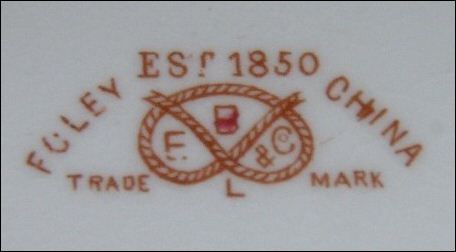
c. 1903–1905
E B
E. Brain & Co., successors to Robinson & Son, used this variant with E B & Co initials around 1903–1905.
Longton, England
between -5 the company E. Brain & Co (successors to Robinson & Son) used the same mark but with the & Co
Pottery & porcelain
Burslem, England, United Kingdom · 1796–1903 · 5 marks.
c. 1903–1905
E. Brain & Co., successors to Robinson & Son, used this variant with E B & Co initials around 1903–1905.
Longton, England
between -5 the company E. Brain & Co (successors to Robinson & Son) used the same mark but with the & Co
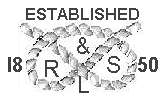
Undated
1850 refers to establishment of the Foley China Works, not the first use of this mark.
Longton, England
An early mark without the name Foley China; the L indicates Longton.
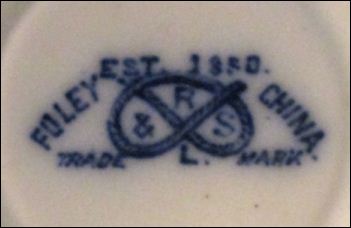
Undated
1850 is the works establishment year, not a mark-use date.
Longton, England
The positions of R and S within the Stafford knot vary; L indicates Longton.
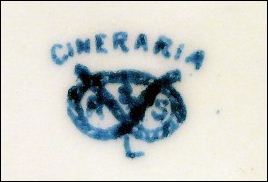
Undated
Cineraria is the pattern name.
Longton, England
An early mark without Foley China wording; L indicates Longton.
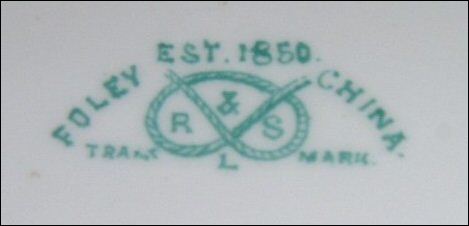
Undated
1850 is the works establishment year, not a mark-use date.
Longton, England
The positions of R and S within the Stafford knot vary.
Robinson & Son manufactured china at the Foley China Works near the Fenton–Longton boundary in Stoke-on-Trent. William Robinson and William John Robinson’s partnership ended in December 1884; Elijah Brain and William Hawker continued the business under the Robinson & Son name until about 1903. The works originated in 1850. E. Brain & Co. succeeded the firm and used a related Stafford-knot mark with changed initials.
Also known as: John Robinson and Sons · Robinson & Son · Robinson and Sons