
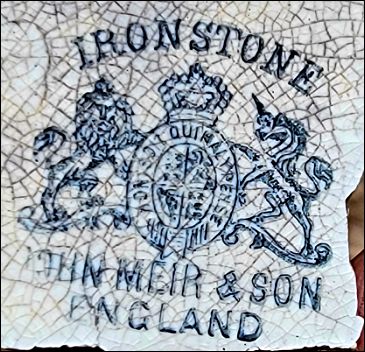
c. After 1890
Ironstone John Meir & Son England
The source considers marks including ENGLAND likely to be after 1890.
earthenware · Tunstall, England
Fragment found in New England, United States.
Pottery & porcelain
Tunstall, England, United Kingdom · 1837–1897 · 13 marks.
c. After 1890
The source considers marks including ENGLAND likely to be after 1890.
earthenware · Tunstall, England
Fragment found in New England, United States.
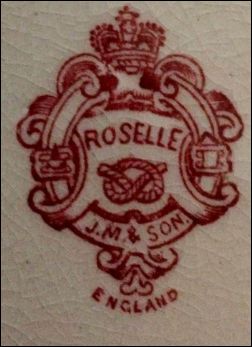
c. After 1890
The source considers marks including ENGLAND likely to be after 1890.
earthenware · Tunstall, England
Roselle is the pattern name; the decorative belt includes a Stafford knot and .
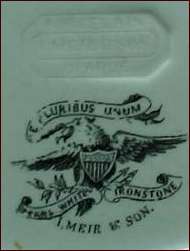
Undated
impressed, printed · white · ironstone · Tunstall, England
Printed eagle-and-shield mark on white intended for the American market, paired with an impressed Porcelain Opaque mark.
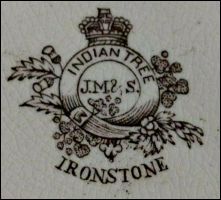
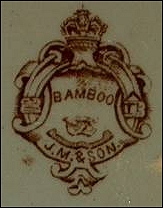
Undated
earthenware · Tunstall, England
Bamboo is the pattern name. The caption gives a conditional dating cue for marks including ENGLAND; this example is not captioned with that word.
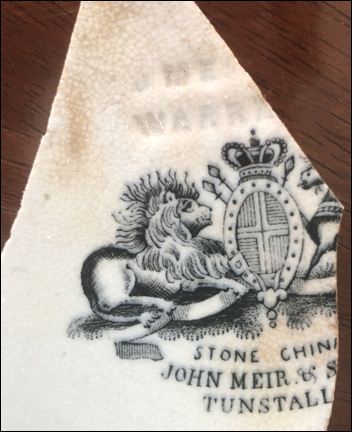
Undated
impressed, printed · earthenware · Tunstall, England
Fragment found on Great Exuma in the Bahamas, bearing both impressed and printed marks.
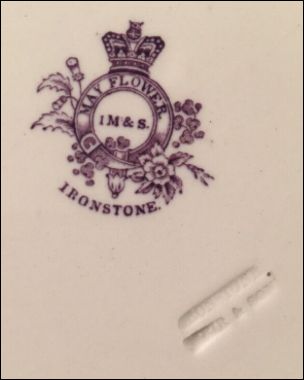
Undated
impressed · earthenware · Tunstall, England
May Flower is the pattern name; the source also describes an impressed Ironstone Meir & Son mark.
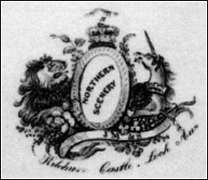
Undated
earthenware · Tunstall, England
Northern Scenery is a series based on Scottish views.
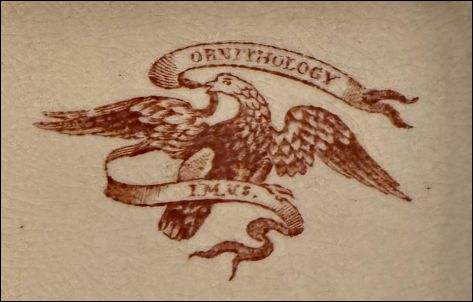
Undated
earthenware · Tunstall, England
Ornithology is a series with birds in the foreground of landscape scenes. The source suggests the eagle was intended to appeal to the American market.
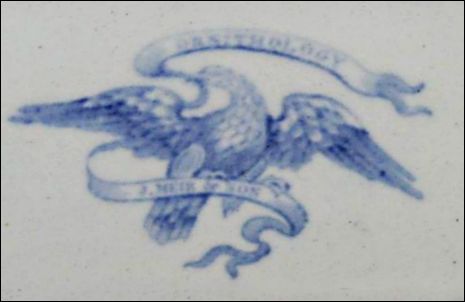
Undated
earthenware · Tunstall, England
Ornithology is a series with birds in the foreground of landscape scenes. The source suggests the eagle was intended to appeal to the American market.


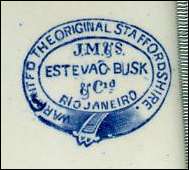
Undated
earthenware · Tunstall, England
Estevao Busk & Company were importers based in Rio de Janeiro.
John Meir & Son manufactured earthenware and ironstone at the Greengates Pottery in Tunstall. Henry Meir joined his father in 1837, according to this source page, and the firm retained John Meir & Son after John died in April 1844. It continued until 1897, although some directories used Henry Meir or Henry Meir & Son. Its wares included Roselle and several ironstone shapes and transferware patterns for home and export markets.
The advertised establishment date of 1798 relates to the earlier pottery rather than John Meir, who started in 1812.
Also known as: John Meir & Son | North Staffordshire Potters · North Staffordshire Potters