
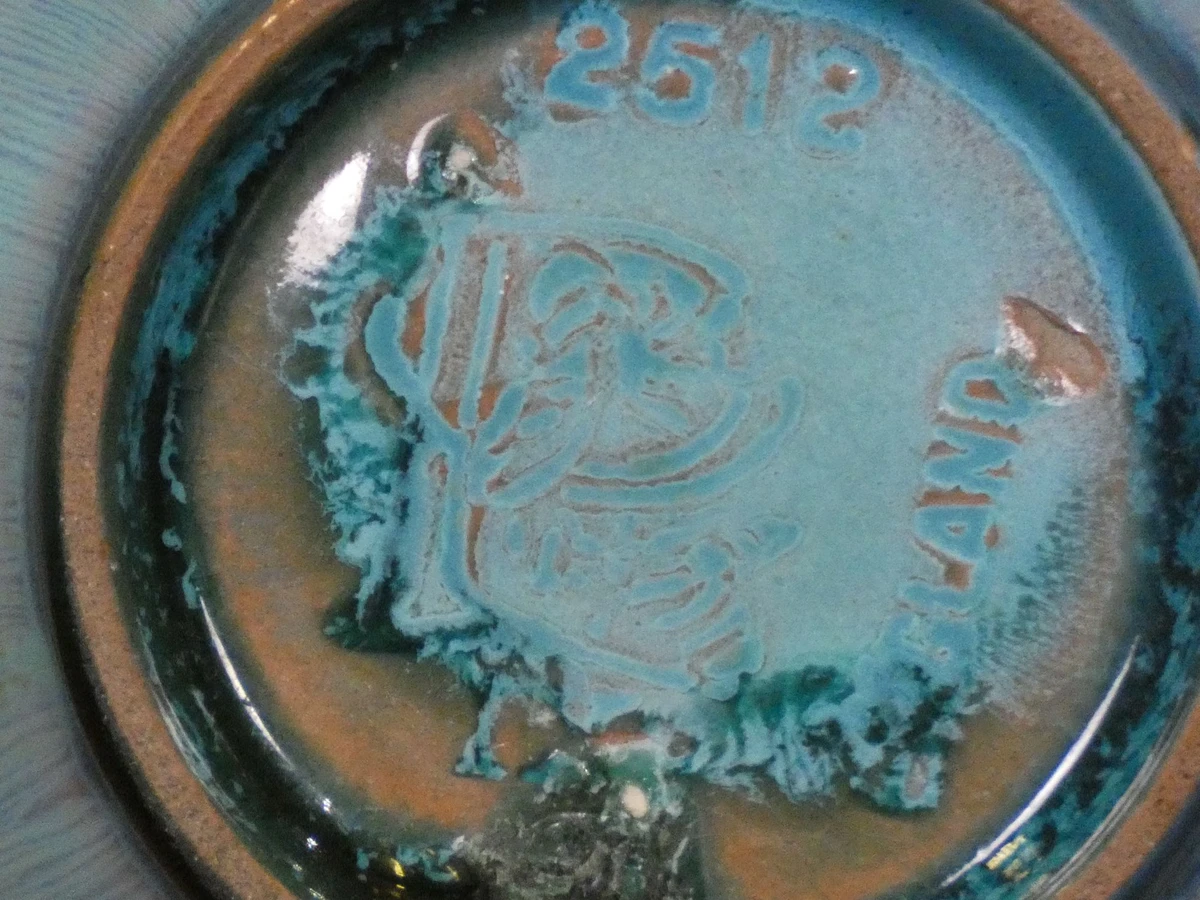
c. 1906–1913
P/L; ENGLAND; 2512
Interlaced P/L with two bees; lacks Royal wording.
impressed · earthenware · Clifton Junction, near Swinton, Salford
Pottery & porcelain
Pilkington pottery marks include impressed “P/L; ENGLAND; 2512” on earthenware dated c. 1906–1913 in Clifton Junction, near Swinton, Salford.
Company 1891–2010; tile production from 1893. Lancastrian pottery launched 1904, stopped 1938, with revivals in the 1950s and 1970s.
c. 1906–1913
Interlaced P/L with two bees; lacks Royal wording.
impressed · earthenware · Clifton Junction, near Swinton, Salford
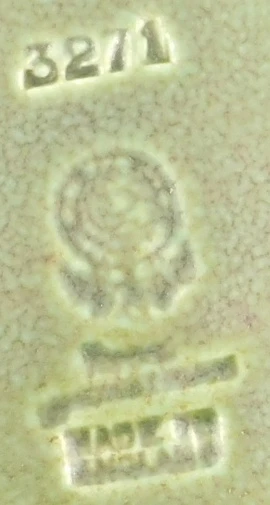
c. From 1913
P within a Lancashire rose, with Royal Lancastrian wording; shape 3271 is separate.
impressed · earthenware · Clifton Junction, near Swinton, Salford
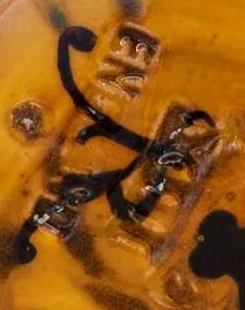
Undated
Black painted RJ cipher alongside impressed factory and model markings.
painted · earthenware · Clifton Junction, near Swinton, Salford
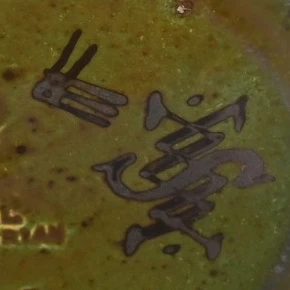
auctions.fieldingsauctioneers.co.uk
Undated
Large painted interlaced WSM at right; the factory rose and E.T.R. thrower’s initials are separate marks.
painted · earthenware · Clifton Junction, near Swinton, Salford
Undated
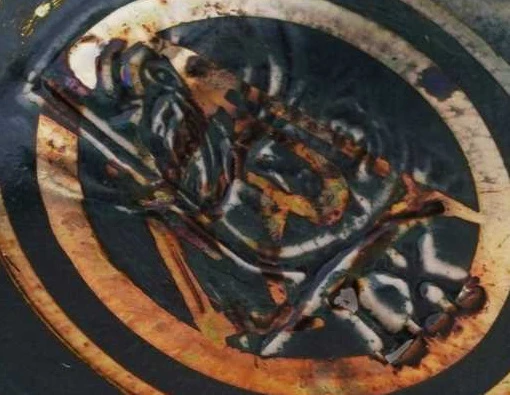
Compact interlaced decorator’s cipher within the decorated base; distinguish from the Roman date XI.
painted · earthenware · Clifton Junction, near Swinton, Salford
Pilkington’s Tile and Pottery Company was formed in 1891 by four brothers with interests in coal mining. Its works stood at Clifton Junction near Swinton, now in Salford. Tile manufacture began in 1893 under William Burton, a chemist who had previously worked at Wedgwood. Decorative pottery developed from experiments with the glazes used for tiles; the Lancastrian pottery range was launched in 1904.
William and Joseph Burton developed crystalline, opalescent and lustrous finishes. The factory worked with designers including Walter Crane, while Gordon Mitchell Forsyth became art director in 1905. Vases and chargers combined metallic glazes with flowers, animals, heraldry and inscriptions. Different decorators could paint the same design, so an artist’s cipher identifies the person who decorated a piece rather than necessarily its designer.
A Royal Warrant granted by George V in 1913 brought the Royal Lancastrian name. William Salter Mycock worked at the factory from 1894 until 1938, initially decorating tiles and later pottery. Pottery production stopped in 1938, with later revivals during the 1950s and 1970s. Tile manufacture continued much longer, ending with the company’s closure in 2010.
Also known as: Pilkington’s Lancastrian · Royal Lancastrian · Pilkingtons · Pilkington’s Tile and Pottery Company Ltd
Both factories used iridescent metallic decoration. Pilkington pieces can be identified by their P/L or Royal Lancastrian factory device alongside a decorator’s cipher; a lustrous finish alone does not identify the factory.