
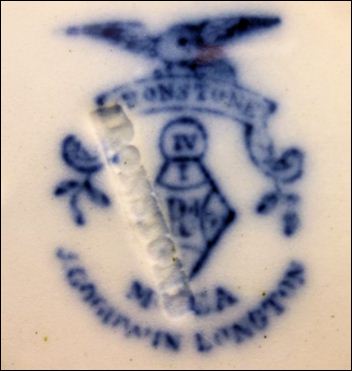
1841–1851
Ironstone J Goodwin Longton
The source dates ware marked LONGTON to 1841–1851.
earthenware · Longton, England
Morea is the pattern name. The source associates the eagle with ware intended for the American export market.
Pottery & porcelain
Longton · 1841–1851 · 8 marks.
1841–1851
The source dates ware marked LONGTON to 1841–1851.
earthenware · Longton, England
Morea is the pattern name. The source associates the eagle with ware intended for the American export market.
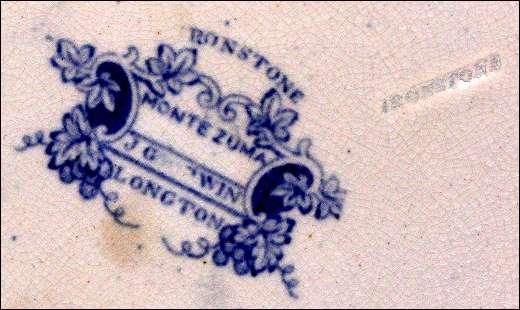
1846–1851
This caption assigns the LONGTON example to 1846–1851.
earthenware · Longton, England
Montezuma is the pattern name.
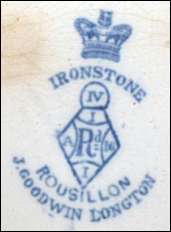
1846–1851
The registration diamond records design registration on 16 December 1846, not a single-year mark-use period.
earthenware · Longton, England
Rousillon is the pattern name.
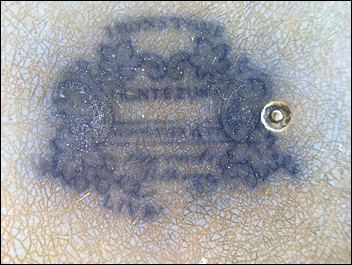
1852–1871
The source dates LIVERPOOL marks to 1852–1871.
earthenware · Seacombe, Liverpool, England
Montezuma pattern. The dish was recovered by a diver in Puerto Rico; the source suggests, without confirming, a connection to an 1870 shipment lost at sea.
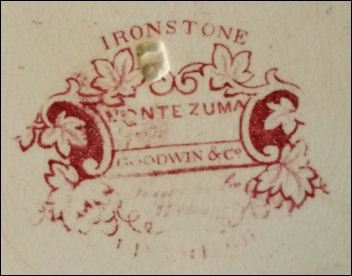
1852–1871
The source dates LIVERPOOL marks to 1852–1871.
earthenware · Seacombe, Liverpool, England
Montezuma is the pattern name.
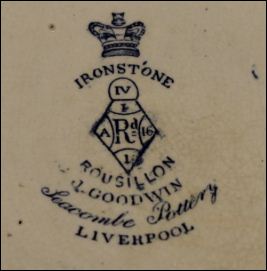
1852–1871
The Liverpool mark retains the 1846 design registration used at the earlier Longton works.
earthenware · Seacombe, Liverpool, England
Rousillon is the pattern name.
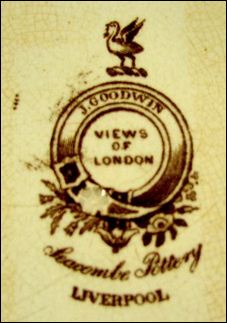
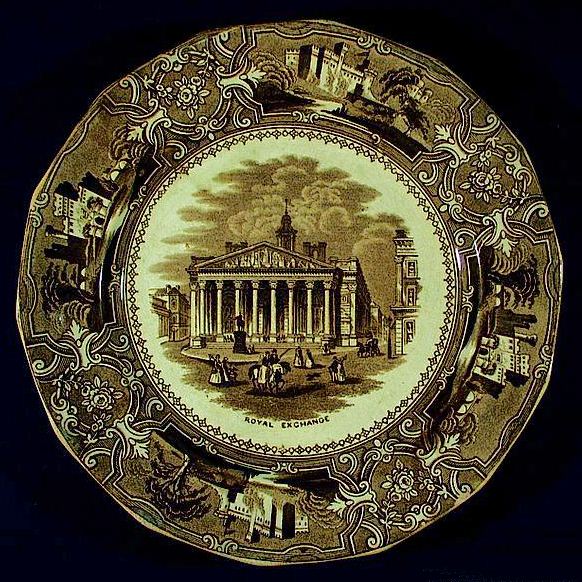
Undated
earthenware · Longton
Photograph of decorated ware from the Views of London series; no maker mark is shown.
John Goodwin operated the Crown Pottery Works in Longton after his partnership with George Ellis ended in November 1840. He moved the business to Seacombe, near Liverpool, in 1851, firing the first kiln there in 1852. The pottery made printed earthenware and parian for export. Goodwin died in 1857 and his sons continued the business. Following the loss of a major shipment in 1870, the firm entered liquidation in 1871.