
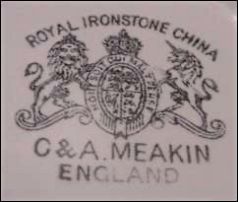
1865–1873
Royal Ironstone China C & A. Meakin England
Tunstall, England
Shown for comparison: this is the preceding C & A Meakin partnership's mark, not the later Alfred Meakin firm.
Pottery & porcelain
Tunstall, England, United Kingdom · 1873–1976 · 38 marks.
1865–1873
Tunstall, England
Shown for comparison: this is the preceding C & A Meakin partnership's mark, not the later Alfred Meakin firm.
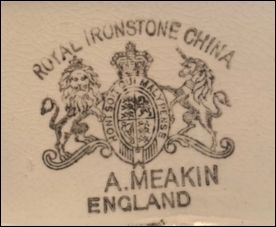
c. 1873
The source dates this toothbrush-holder mark to about 1873 and describes removal of C from the earlier C & A stamp.
white · Tunstall, England
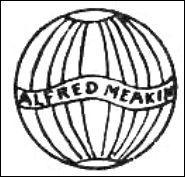
c. 1875–1897
Globe marks are dated about 1875–1897; the ENGLAND variant is tentatively dated 1891–1897.
Tunstall, England
mark the mark with ' ' is likely
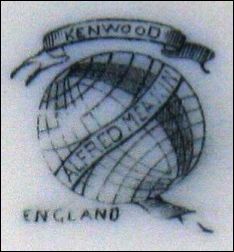
c. 1875–1897
Globe marks are dated about 1875–1897; the ENGLAND variant is tentatively dated 1891–1897.
Tunstall, England
mark the mark with ' ' is likely
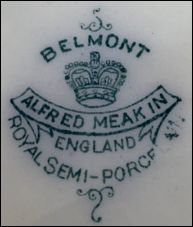
c. From 1891
Tunstall, England
LTD follows incorporation in 1896, although it was not used consistently. Alfred Colley also used Royal Semi-Porcelain but included Tunstall.
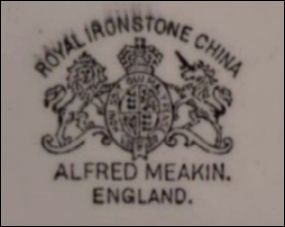
c. From 1891
Tunstall, England
Royal Arms were often incorporated in marks on ironstone ware.
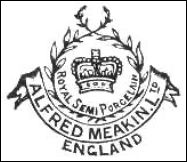
c. From 1897
Tunstall, England
LTD follows incorporation in 1896. Alfred Colley also used Royal Semi-Porcelain but included Tunstall in its marks.
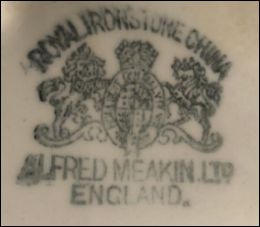
c. From 1897
Tunstall, England
Royal Arms were often incorporated in marks on ironstone ware.
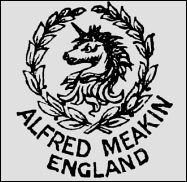
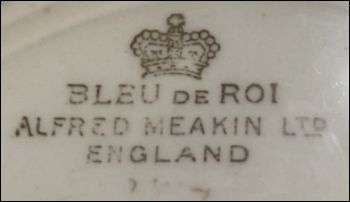
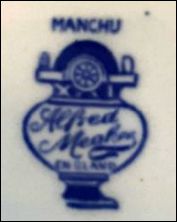
c. 1920–1929
The source tentatively dates this uncommon vase mark to the late 1920s through early 1940s.
Tunstall, England
Reported on Lombardy and Manchu patterns and not documented in the usual reference books.
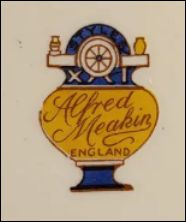
c. 1920–1929
The source tentatively dates this uncommon vase mark to the late 1920s through early 1940s.
Tunstall, England
Reported on Lombardy and Manchu patterns and not documented in the usual reference books.
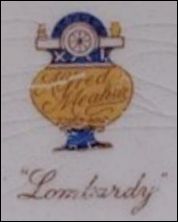
c. 1920–1929
The source tentatively dates this uncommon vase mark to the late 1920s through early 1940s.
Tunstall, England
Reported on Lombardy and Manchu patterns and not documented in the usual reference books.
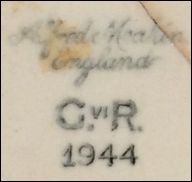
c. 1930–1939
1944 is the manufacturing year on the illustrated government-supply piece, not the mark's full use interval.
Tunstall, England
The G VI R cypher identifies ware supplied to the British Government, including armed services and government restaurants.
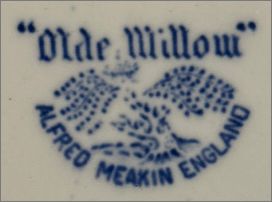
c. 1930–1939
Tunstall, England
The unusual Olde Willow spelling differs from the more common Old Willow wording; the source suggests an earlier or alternative trade name.
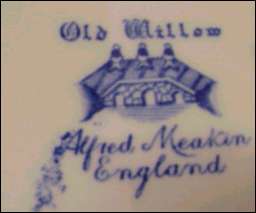
c. From 1930
Tunstall, England
LTD generally disappears from marks from onward. Old Willow refers to the Willow pattern.
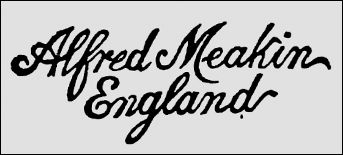
c. From 1930
Tunstall, England
LTD generally disappears from marks from onward. Old Willow refers to the Willow pattern.
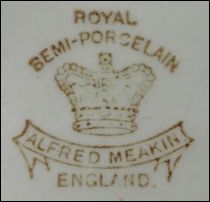
c. From 1930
Tunstall, England
Alfred Colley also used Royal Semi-Porcelain but included Tunstall in its marks.
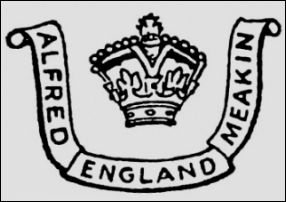
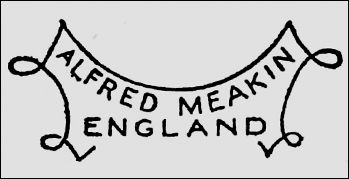
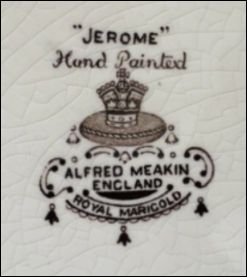
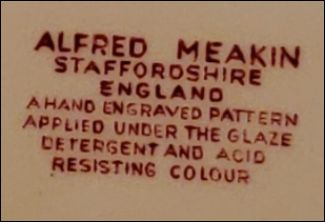
c. 1940–1969
underglaze · Tunstall, England
General dating for marks with hand-engraved pattern, underglaze and detergent-resistance wording.
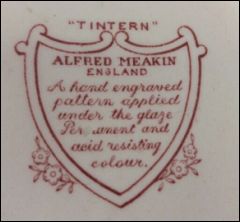
c. 1940–1969
underglaze · Tunstall, England
General dating for marks with hand-engraved pattern, underglaze and detergent-resistance wording.
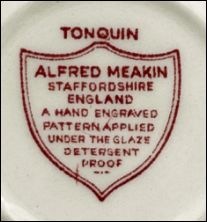
c. 1940–1969
underglaze · Tunstall, England
General dating for marks with hand-engraved pattern, underglaze and detergent-resistance wording.
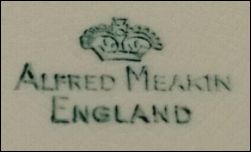
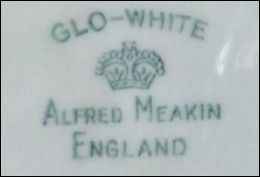
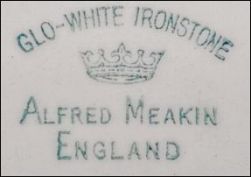
From 1945
Tunstall, England
Postwar mark; slight variations occur.
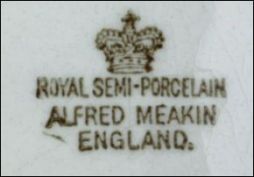
c. From 1945
Tunstall, England
Postwar mark. Alfred Colley also used Royal Semi-Porcelain but included Tunstall in its marks.
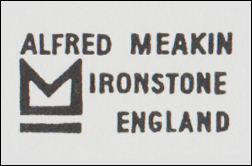
c. 1960–1979
Tunstall, England
mark used on ware produced in the 1960s and 70s
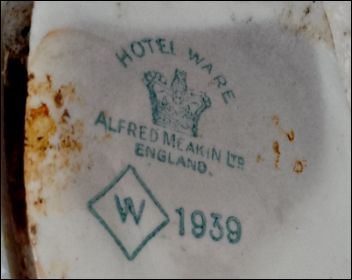
Undated
The illustrated fragment is dated 1939; this is not a mark-use interval.
Tunstall, England
The W in a diamond identifies Office of Works commissions for government use. This fragment was found in Gloucester in 2024.
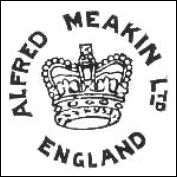
Undated
LTD indicates a date after incorporation in 1896, but its omission does not establish a pre-1896 date.
Tunstall, England
Many marks on ironstone ware incorporated the Royal Arms . In 1896 Alfred Meakin was incorporated as a Limited Company so marks with ' ' are always post 1896. However not all marks post 1896 include ' ' - the use seems rather random. ' ' seems to no longer appears in marks from onwards.
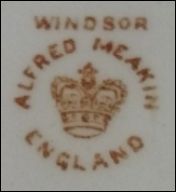
Undated
LTD follows incorporation in 1896, but was used inconsistently and generally disappears from about 1930.
Tunstall, England
Many marks on ironstone ware incorporated the Royal Arms . In 1896 Alfred Meakin was incorporated as a Limited Company so marks with ' ' are always post 1896. However not all marks post 1896 include ' ' - the use seems rather random. ' ' seems to no longer appears in marks from onwards.
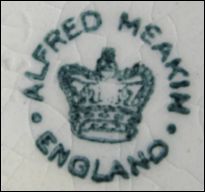
Undated
LTD follows incorporation in 1896, but was used inconsistently and generally disappears from about 1930.
Tunstall, England
Many marks on ironstone ware incorporated the Royal Arms . In 1896 Alfred Meakin was incorporated as a Limited Company so marks with ' ' are always post 1896. However not all marks post 1896 include ' ' - the use seems rather random. ' ' seems to no longer appears in marks from onwards.
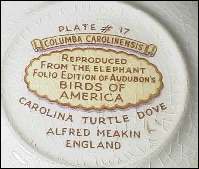
Undated
Tunstall, England
Example of a mark used on a specific pattern range.
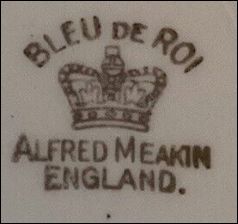
Undated
LTD follows incorporation in 1896, but was used inconsistently and generally disappears from about 1930.
Tunstall, England
Many marks on ironstone ware incorporated the Royal Arms . In 1896 Alfred Meakin was incorporated as a Limited Company so marks with ' ' are always post 1896. However not all marks post 1896 include ' ' - the use seems rather random. ' ' seems to no longer appears in marks from onwards.
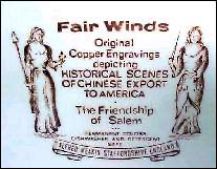
Undated
Tunstall, England
Example of a mark used on a specific pattern range.
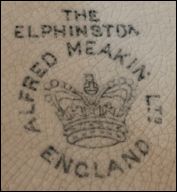
Undated
LTD follows incorporation in 1896, but was used inconsistently and generally disappears from about 1930.
Tunstall, England
Many marks on ironstone ware incorporated the Royal Arms . In 1896 Alfred Meakin was incorporated as a Limited Company so marks with ' ' are always post 1896. However not all marks post 1896 include ' ' - the use seems rather random. ' ' seems to no longer appears in marks from onwards.
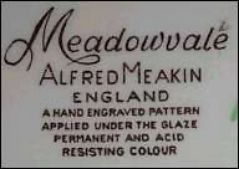
Undated
Tunstall, England
Example of a mark used on a specific pattern range.
Alfred Meakin established his own Tunstall pottery in 1873, manufacturing earthenware, ironstone and export tableware. The business incorporated in 1896 and became Alfred Meakin (Tunstall) Ltd in 1913. After Alfred and his son died, the Johnson family ran the company. It made government canteen ware during the Second World War and later introduced new tableware ranges. Myott acquired its share capital in 1974; the two operations combined as Myott-Meakin Ltd in 1976.