
Pottery & porcelain
Copeland Spode marks
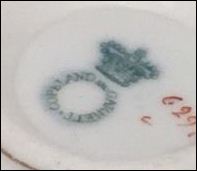
The name “Copeland & Garrett Late Spodes Felspar Porcelain” appears among Copeland Spode marks on porcelain from Stoke, England.
- Active years
- 1833–1847
- Country
- United Kingdom
- City / region
- Stoke, England
- Products
- china, earthenware, porcelain, bone china, Parian sculpture, majolica, architectural ceramics
- Marks
- 15
1833–1966 is Copeland family control of the Spode business, not the entire history of the works or a fixed stamp-use range. The Copeland trade style continued towards the 1970 reversion to Spode Ltd; later revivals also exist.
What to look for
- Read the maker name, ceramic body and pattern separately. FELSPAR PORCELAIN, ROYAL OPAL, NEW BLANCHE and NEW FAYENCE identify bodies rather than independent makers.
- Impressed month letters and two year digits often date the potting of later Copeland wares. That date can precede decoration, so it does not necessarily date the printed pattern.
- “Late Spode” connects Copeland with its predecessor. Compare the complete stamp: sailing-boat devices, printed name plaques and impressed names belong to different formats.
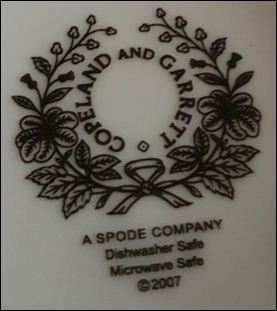
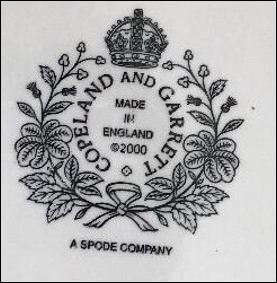
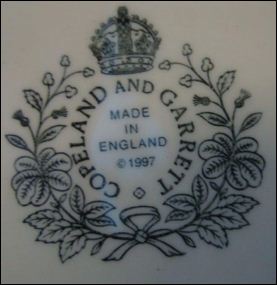
- Check for modern copyright dates and A SPODE COMPANY wording on revived Copeland & Garrett stamps.
Dated marks & timeline
15 marks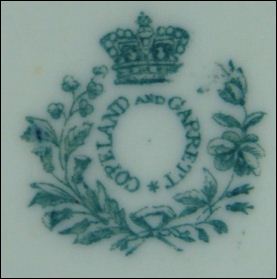

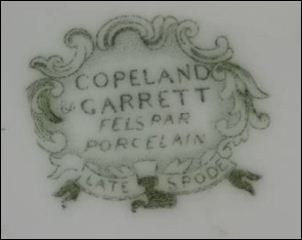
c. 1833–1847
Copeland & Garrett Felspar Porcelain Late Spode
porcelain · Stoke, England
Felspar is the name of the ceramic body.
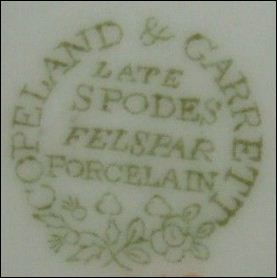
c. 1833–1847
Copeland & Garrett Late Spodes Felspar Porcelain
porcelain · Stoke, England
Felspar is the name of the ceramic body.
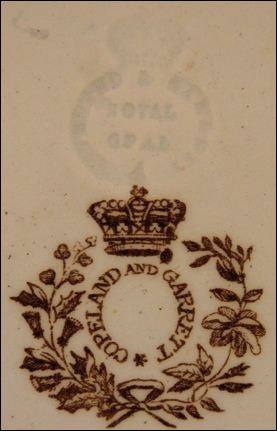
c. 1833–1847
Copeland & Garrett Royal Opal
impressed, printed · Stoke, England
Royal Opal is the name of the ceramic body.
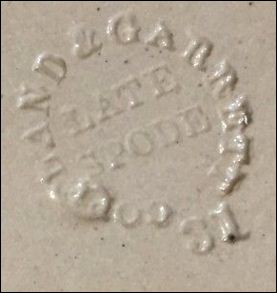
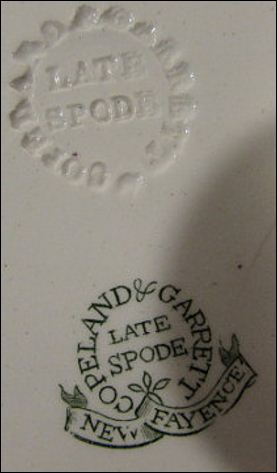
c. 1833–1847
LATE SPODE COPELAND & GARRETT NEW FAYENCE
Stoke, England
New Blanche and New Fayence are ceramic body names.
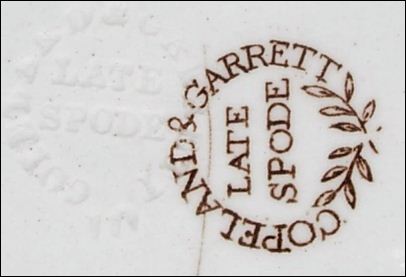
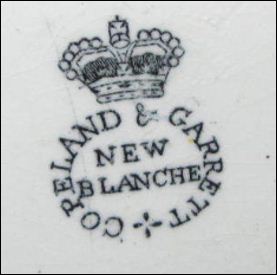
c. 1833–1847
COPELAND & GARRETT NEW BLANCHE
Stoke, England
New Blanche and New Fayence are ceramic body names.
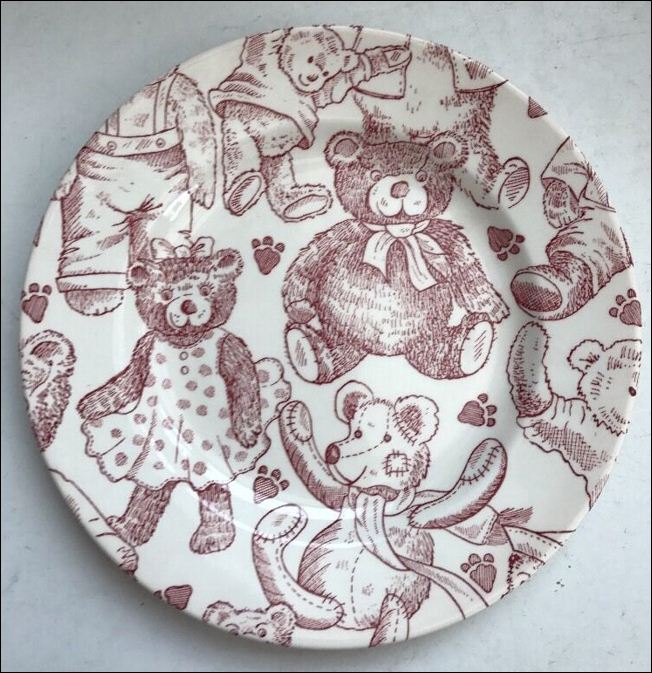
Undated
G COPELAND
Stoke, England
Spode and late Spode continued as names on ware made by the successor business.
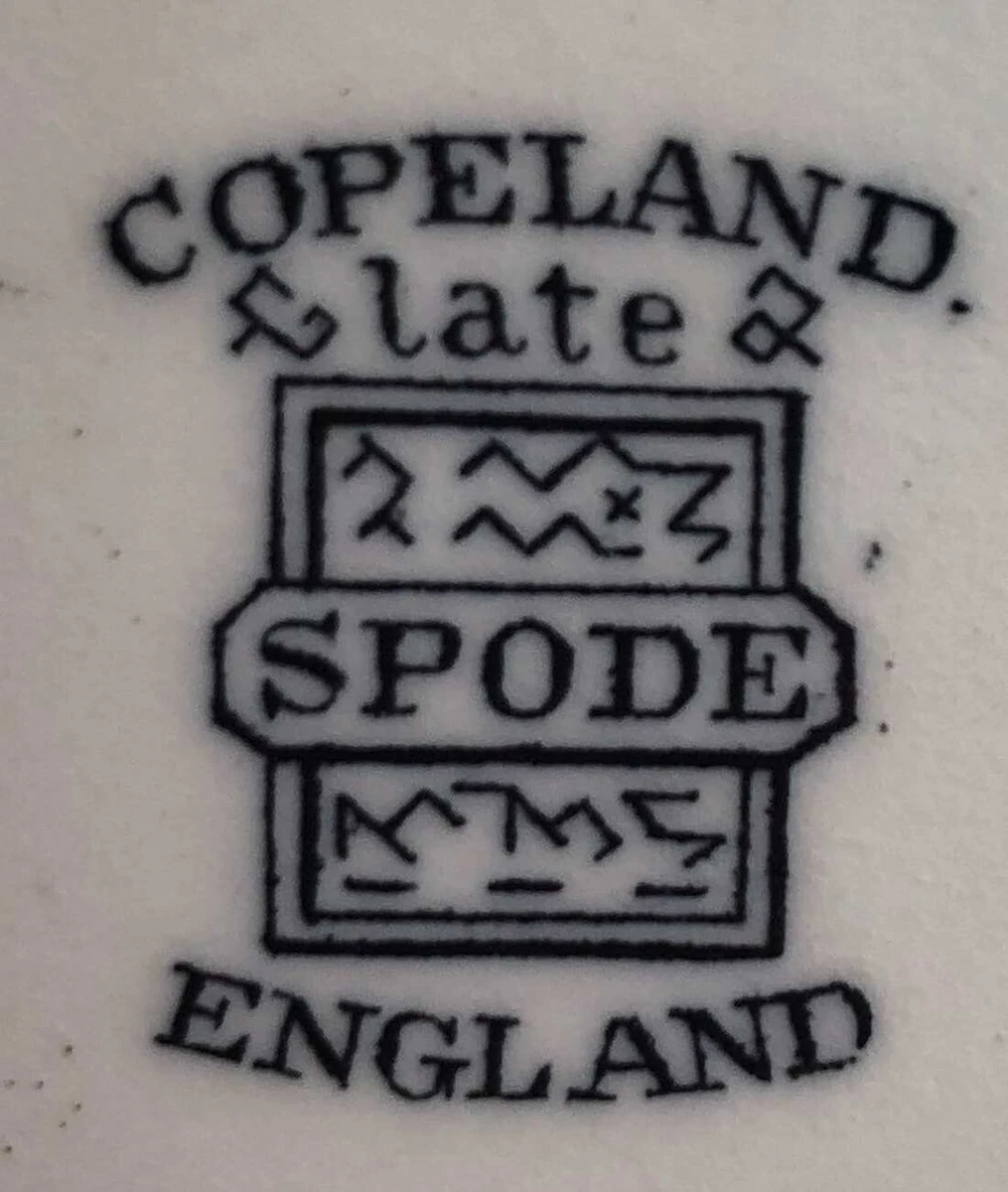
Undated
COPELAND / late / SPODE / ENGLAND
The geometric Spode plaque and England wording distinguish this from the sailing-boat mark and from pre-1833 SPODE Stone-China stamps.
transfer printed · black · ceramic · Stoke-on-Trent, England
About Copeland & Garrett
William Taylor Copeland acquired the Spode business in 1833 and entered a partnership with Thomas Garrett. The works remained in Stoke, Staffordshire, continuing the production of earthenware and fine porcelain. Marks combined the new proprietors’ names with references to Spode, preserving the reputation and identity of the earlier business. Garrett retired in 1847, after which Copeland continued on his own account.
The Victorian factory made a broad range of useful and ornamental ceramics. Transfer-printed tablewares were produced in several colours, while fine painted porcelain, majolica and Parian sculpture served more elaborate decorative purposes. Parian’s unglazed surface resembled marble and was used for busts and figures. The company also undertook architectural ceramic commissions. Copeland’s sons joined the business in 1867, giving rise to the W. T. Copeland & Sons name.
In the twentieth century the factory continued making dinner and tea services, including Chinese Rose, Spode’s Italian and Christmas Tree. It also developed Art Deco shapes and decorative bodies. The Copeland family relinquished control in 1966, and the business reverted to the Spode name in 1970. Copeland, late Spode and Spode wording therefore overlap within one factory’s history. Later revival backstamps reused the Copeland & Garrett name, so the name alone cannot date a piece to the original partnership.
Also known as: Copeland · W. T. Copeland · W. T. Copeland & Sons · Copeland late Spode · Copeland Spode · W. T. Copeland & Sons, formerly Copeland & Garrett, Spode Works
Look-alikes & how to tell them apart
Early Josiah Spode
The same factory has an earlier ownership history. SPODE alone and early Stone-China marks belong to that history; Copeland and Copeland & Garrett wording identifies later trade styles.
Modern Spode Copeland & Garrett revivals
A revived crown-and-wreath stamp can resemble the original partnership mark. Copyright dates, care instructions and A SPODE COMPANY identify the later context.