
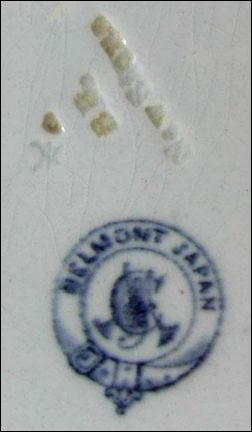
c. 1841–1873
M&C BB New Stone
The Belmont Japan pattern was registered on 22 June 1860; the mark style is dated about 1841–1873.
printed, impressed · earthenware · Stoke, England
BB means Best Body; New Stone is impressed.
Pottery & porcelain
Minton china mark is associated with china and earthenware from Stoke, England, United Kingdom. BB means Best Body; New Stone is impressed.
c. 1841–1873
The Belmont Japan pattern was registered on 22 June 1860; the mark style is dated about 1841–1873.
printed, impressed · earthenware · Stoke, England
BB means Best Body; New Stone is impressed.
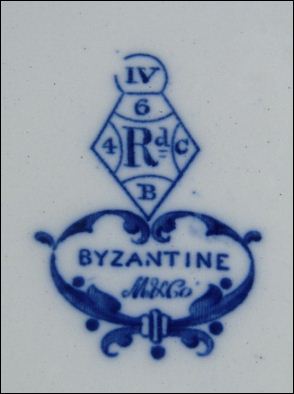
c. 1841–1873
Byzantine pattern registered 6 June 1870; the printed-mark style is dated approximately 1841–1873.
printed · earthenware · Stoke, England
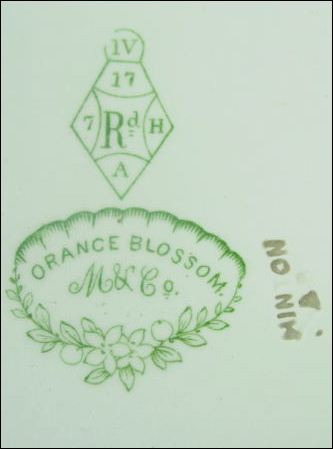
c. 1841–1873
Orange Blossom pattern registered 17 December 1869; the printed-mark style is dated approximately 1841–1873.
printed, impressed · orange · earthenware · Stoke, England
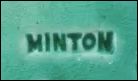
c. 1862–1873
impressed, printed · earthenware · Stoke, England
From the china works was known as Mintons. The two names, Minton & Co and Mintons, are often used indiscriminately. the business traded as Mintons - for a number of years printed marks with the ' ' continued to be used but with the addition of an impressed 'MINTONS' The inclusion of 'ENGLAND' (a requirement of the US McKinley Tariff Act ) shows that the ware was made 1891 onwards.
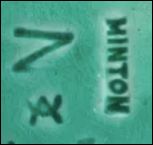
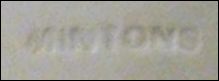
c. From 1873
impressed · earthenware · Stoke, England
Mintons naming began ; printed marks continued alongside impressed MINTONS for some years . ENGLAND indicates 1891 onward when present.
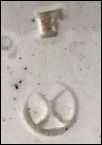
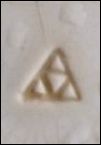
Undated
The source labels this impressed date-code symbol as 1876; it does not provide a continuous period of mark use.
earthenware · Stoke, England
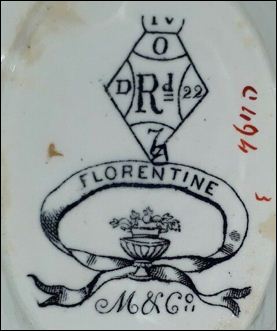
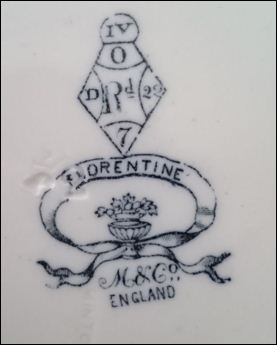
Undated
The Florentine pattern was registered on 22 September 1862.
printed · earthenware · Stoke, England
printed mark with 'M&Co' in a form the Florentine pattern was registered on the 22nd September 1862
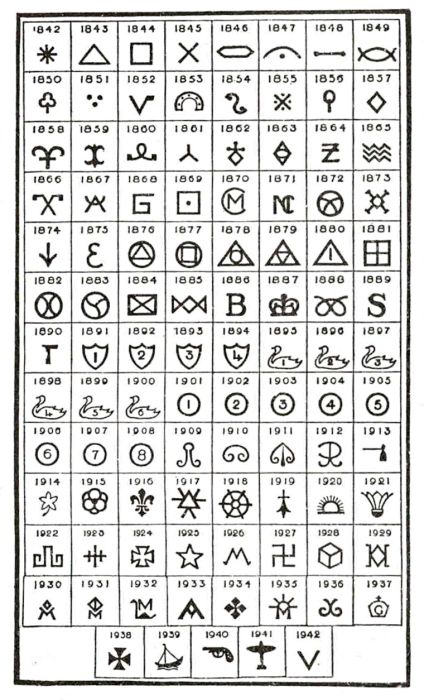
Undated
impressed, painted · earthenware · Stoke, England
Year cyphers can occur with an impressed or painted month letter and a potter's mark. Month letters: J January, F February, M March, A April, E May, I June, H July, Y August, S September, O October, N November, D December.
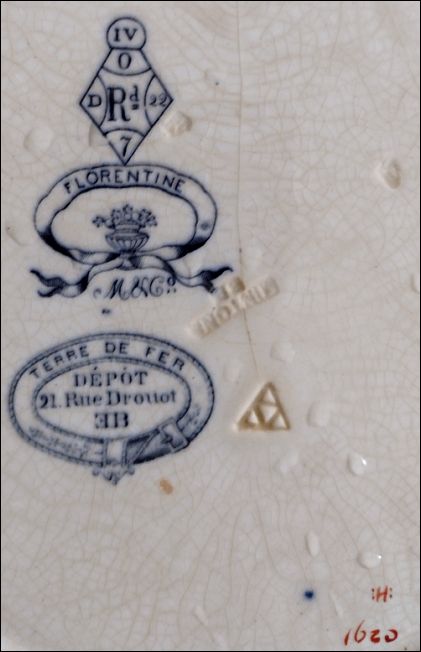
Undated
The triangular code and painted H date this example to July 1879; they do not define mark use.
impressed, painted · earthenware · Stoke, England
The plural was introduced in 1878. EB and the Paris address belong to retailer Emile Bourgeois.
Thomas Minton began the Stoke business in 1793. The name Minton & Co. appears in an 1841 directory. Colin Minton Campbell joined Herbert Minton and Michael Daintry Hollins in 1849; art director Léon Arnoux joined the same year. Majolica was launched at the Great Exhibition of 1851. Campbell led the firm after Herbert's death in 1858. The partnership with Hollins ended in 1863, separating china and tile production. From 1879 the business traded as Mintons.
Mintons became a Doulton subsidiary in 1968. Thomas Minton founded the business in Stoke in 1793. Colin Minton Campbell joined Herbert Minton and Michael Daintry Hollins in 1849. Léon Arnoux became art director that year, and majolica was launched at the Great Exhibition in 1851. After separation of the china and tile businesses, the china business later traded as Mintons. It became a Doulton subsidiary in 1968. Thomas Minton began the business at Stoke in 1793.
Later partnerships included Herbert Minton, Colin Minton Campbell and Michael Daintry Hollins. Art director Léon Arnoux joined in 1849 and helped develop majolica, introduced at the 1851 Great Exhibition. The china and tile businesses separated in the 1860s.