
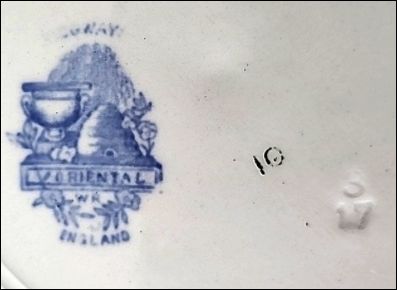
After 1879
ORIENTAL
The impressed 8/17 dates this example to August 1917; plural Ridgways indicates a post-1879 mark.
printed, impressed · Shelton, England
The pattern and earlier urn-and-beehive mark were reissued; production continued .
Pottery & porcelain
Ridgways marks are associated with china and earthenware from Shelton, England, United Kingdom. A pattern name is sometimes included.
After 1879
The impressed 8/17 dates this example to August 1917; plural Ridgways indicates a post-1879 mark.
printed, impressed · Shelton, England
The pattern and earlier urn-and-beehive mark were reissued; production continued .
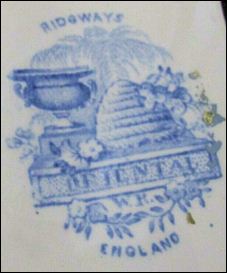
After 1879
printed · Shelton, England
Reissued Oriental pattern retaining an earlier urn-and-beehive design; production continued .
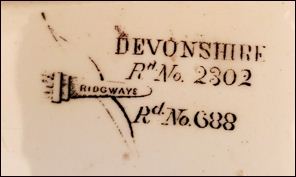
c. 1880–1885
Bow-and-quiver marks without a place name generally date circa 1880–1885, with documented later exceptions.
Shelton, England
Registration 688 dates the shape to 23 January 1884; registration dates are separate from mark-use dates.
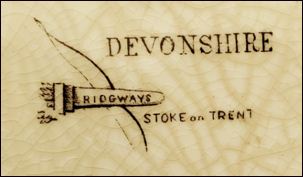
c. 1885–1890
The source generally dates Stoke-on-Trent bow-and-quiver marks to about 1885–1890.
Shelton, England
The combined caption's 1887 registration refers to a pattern, not the introduction of this mark.
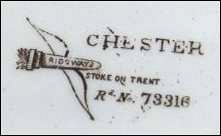
c. 1885–1890
The source generally dates Stoke-on-Trent bow-and-quiver marks to about 1885–1890; 73316 is a pattern registration of 1887.
Shelton, England
Date guidelines are not absolute.
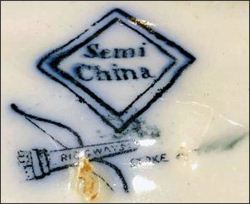
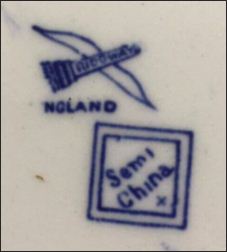
c. From 1891
The source dates this England-bearing example approximately from 1891; the small cross is unexplained.
Shelton, England
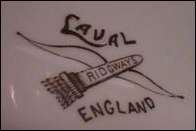
c. From 1891
The source generally dates bow-and-quiver marks containing ENGLAND from about 1891; variants continued after 1920.
Shelton, England
Date guidelines are not absolute.
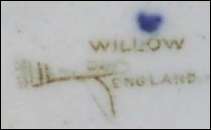
c. From 1891
Bow-and-quiver versions with England date from circa 1891 onwards.
Shelton, England
Bow and quiver mark without any place name is generally - however this is not a had and fast rule as the example registered in April 1887 shows Bow and quiver mark with ' ' is generally Bow and quiver mark with 'England' + the use of the bow and quiver mark continued - when the business was incorporated as Ridgway (Bedford Works) Ltd - usually the bow and quiver mark was then associated with the diamond mark
c. From 1912
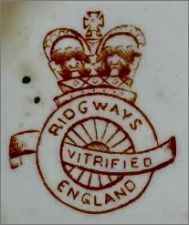
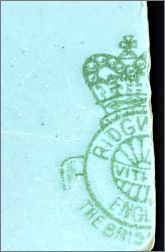
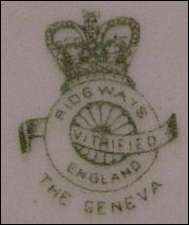
This mark style is dated from about 1912; 2026 is the fragment's discovery date.
Shelton, England
Fragment found in the Saco River, Conway, New Hampshire.
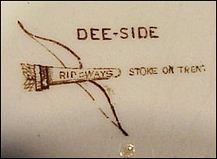
Undated
Shelton, England
Bow-and-quiver marks without a place are generally circa 1880–1885, with circa 1885–1890, and with England circa 1891 onward. The source warns of exceptions and continued use after 1920.
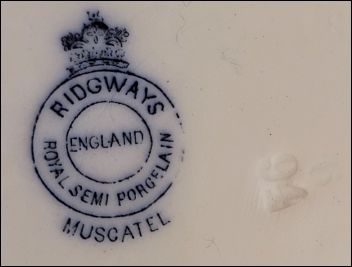
Undated
An impressed 6-94 dates this example to June 1894, conflicting with the cited 1905-onward introduction.
printed, impressed · Shelton, England
Pattern name may be included.
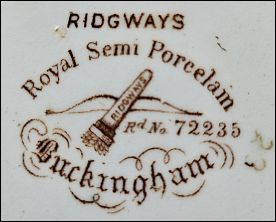
Undated
Pattern registration 72235 is dated 20 April 1887, a documented exception to the usual circa 1880–1885 no-place-name dating.
Shelton, England
the registration number 72235 shows the design/pattern was registered on 20th April 1887 to J & E A Ridgway Bow and quiver mark without any place name is generally c.1880-1885 - however this is not a had and fast rule as the example registered in April 1887 shows Bow and quiver mark with ' ' is generally c.1885-1890 Bow and quiver mark with 'England' c.1891+ the use of the bow and quiver mark continued after 1920 - when the business was incorporated as Ridgway (Bedford Works) Ltd - usually the bow and quiver mark was then associated with the diamond mark
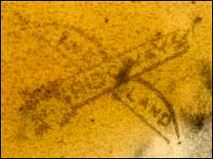
Undated
Shelton, England
The shared caption gives several qualified date ranges for bow-and-quiver variants and warns that place-name rules have exceptions.
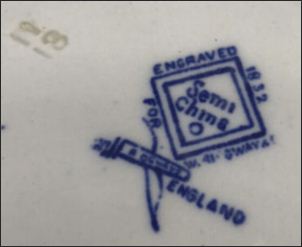
Undated
The impressed 11/13 dates the illustrated object's manufacture to November 1913; 1832 elsewhere refers to the pattern's earlier production.
impressed · Shelton, England
the impressed date mark gives the month/year of manufacture - in this instance 11/13 for November 1913 NOTE: The wording ' ' refers to the fact that the pattern was first produced in 1832 by one of the former companies William Ridgway & Co . who operated in this period. It does not mean that this ware was made in 1832

Undated
The source corrects a circa-1927 introduction claim: diamond variants are documented by 1885 and probably began around 1879–1880.
Shelton, England
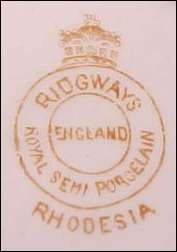
Undated
The impressed 6/94 dates an example to June 1894, contradicting a published 1905 introduction; the complete use interval is not given.
Shelton, England
Edward John Ridgway founded Bedford Works at Shelton in 1866. His sons John and Edward Ackroyd partnered with Joseph Sparks from 1873. The business traded as Ridgways from late 1879 and became Ridgways (Bedford Works) Ltd in 1920. It manufactured decorated table and toilet wares, stoneware, majolica and other ceramic goods. Edward John Ridgway established Bedford Works at Shelton in 1866. From 1873 his sons John and Edward Ackroyd worked with Joseph Sparks.
The business traded as Ridgways from late 1879 and incorporated as Ridgways (Bedford Works) Ltd. in 1920. Edward John Ridgway founded Bedford Works, Shelton, in 1866. His sons John and Edward Ackroyd Ridgway partnered with Joseph Sparks from 1873. The firm traded as Ridgways from late 1879 and became Ridgways (Bedford Works) Ltd in 1920.
Also known as: Ridgways | Pottery manufacturer | Stoke-on-Trent