
Pottery & porcelain
Bing and Grondahl marks
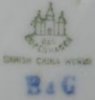
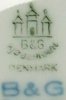
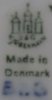
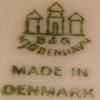
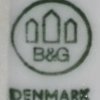
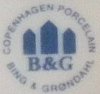
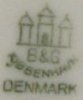
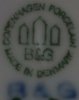
The name “COPENHAGEN PORCELAIN B&G BING & GRØNDAHL DENMARK” appears among Bing and Grondahl marks. Its mark period is 1983.
- Active years
- 1853–1987
- Country
- Denmark
- City / region
- Copenhagen
- Products
- Biscuit and glazed figures, Underglaze-painted porcelain, Tableware, Annual Christmas and collector plates, Studio ceramics
- Marks
- 19
Independent manufacturer 1853–1987; acquired/merged into Royal Copenhagen in 1987. B&G branding continued on annual collectibles.
What to look for
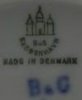
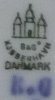
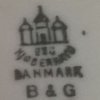
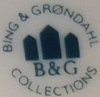
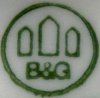
- Distinguish the three towers with B&G from Royal Copenhagen's three blue waves. Record the accompanying country and Copenhagen wording, not only the tower outline.
- Read green factory stamps and blue B&G lettering separately. The arrangement, typography and use of a surrounding circle help distinguish periods, but date charts must match the exact illustrated version.
- A printed year on a Christmas plate identifies its annual edition. After the 1987 merger, a B&G model may have Royal Copenhagen marks; annual collectibles continued with B&G branding.
Dated marks & timeline
19 marks




About Bing & Grondahl
Bing & Grøndahl was established in Copenhagen in 1853 by modeller Frederik Vilhelm Grøndahl and book and art merchants Meyer Herman Bing and Jacob Herman Bing. Grøndahl had worked at the royal porcelain factory before developing the new enterprise. Its early specialties included unglazed biscuit figures inspired by the sculpture of Bertel Thorvaldsen, alongside a wider range of porcelain.
During Pietro Krohn's artistic leadership from 1886 to 1897, the factory developed naturalistic forms and underglaze-painted decoration. Animal figures, sculptural vases and tableware became important parts of its output. The first annual Christmas plate appeared in 1895, beginning a long-running collector series with a new design each year. The three-tower factory emblem, introduced in 1898, drew on Copenhagen's coat of arms.
The business became a significant competitor to Royal Copenhagen while maintaining its own models and mark system. Its products included decorative figures, household porcelain and later studio ceramics. In 1987 the two manufacturers were united under Royal Copenhagen. Many continuing B&G models subsequently received Royal Copenhagen marks, while annual plates and other dated collectibles retained the Bing & Grøndahl identity.
Also known as: Bing and Grondahl · Bing & Gröndahl · B&G · Bing & Grøndahl Porcelænsfabrik
Look-alikes & how to tell them apart
Royal Copenhagen →
Danish porcelain with closely related figure and tableware traditions; later common ownership.
Use towers/B&G versus three waves for the original factory identities. For post-1987 examples, match the model and later factory mark rather than assigning every old B&G design to pre-merger production.