
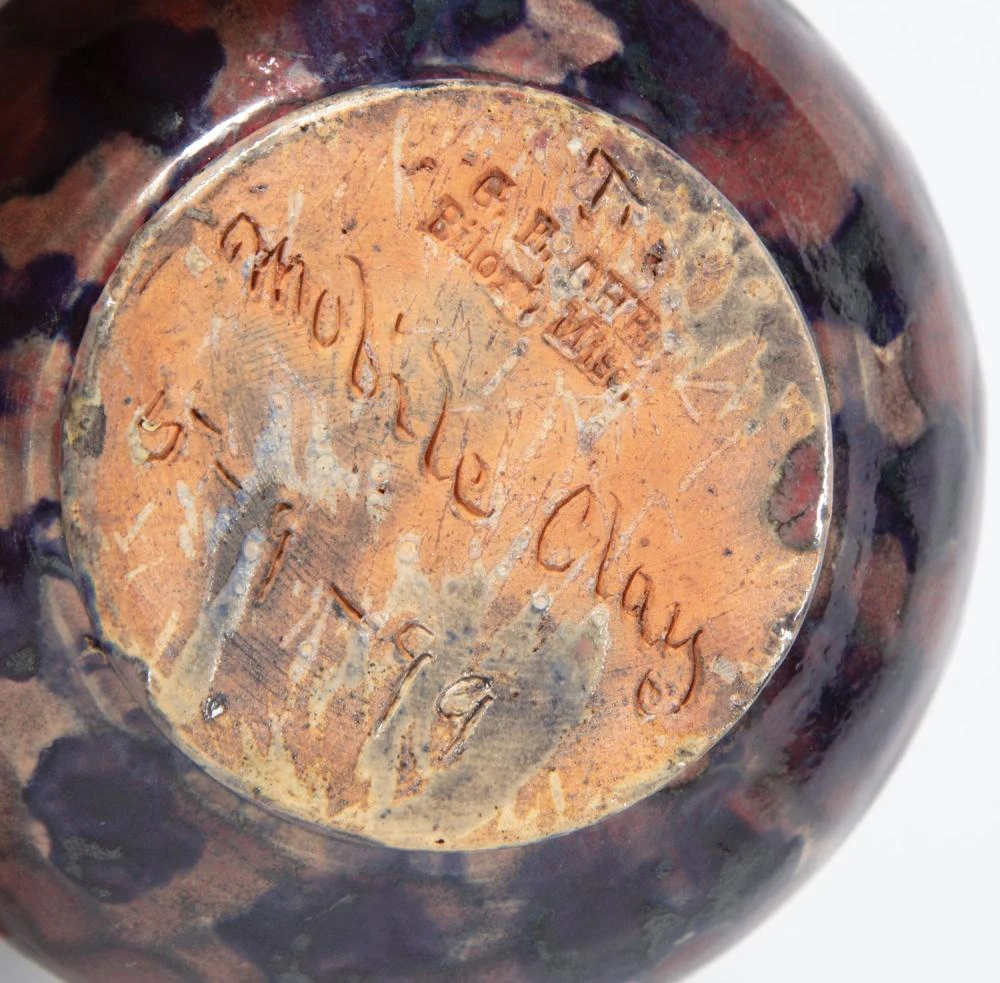
1899
Mobile Clay / 5-9-99; alongside G.E. OHR / BILOXI MISS
The handwritten clay name and 1899 date distinguish this inscription from the ordinary name stamp.
incised inscription with impressed maker stamp · earthenware · Biloxi, Mississippi
Pottery & porcelain
George Ohr signature is associated with earthenware art pottery and vases and bowls from United States. Late work included unglazed pottery.
Artist’s career from apprenticeship in 1879 to closure circa 1910. Own Biloxi pottery established in the 1880s; not a claim that it opened in 1879. Born 1857, died 1918.
1899
The handwritten clay name and 1899 date distinguish this inscription from the ordinary name stamp.
incised inscription with impressed maker stamp · earthenware · Biloxi, Mississippi
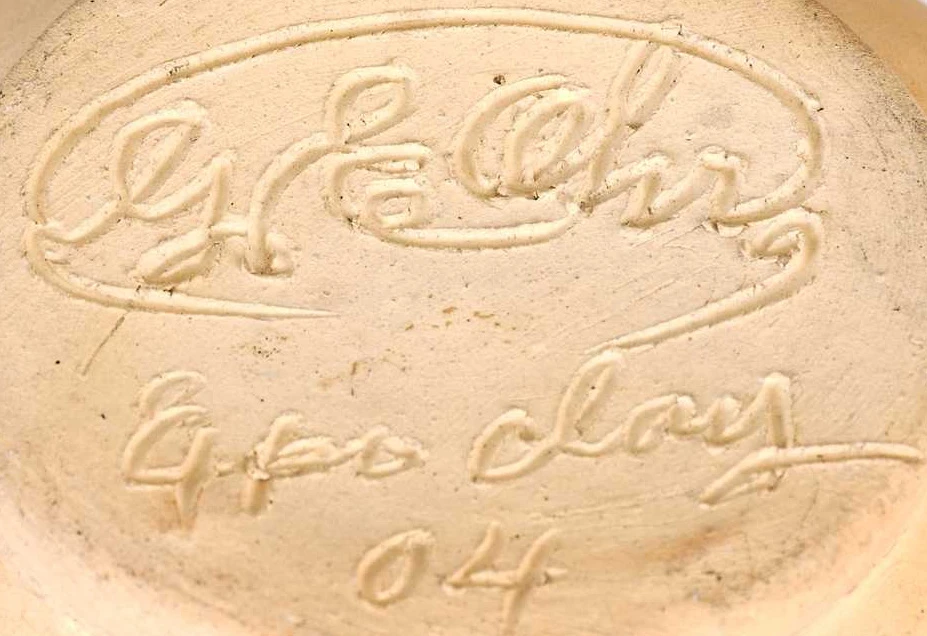
1904
Name above Expo Clay and 04 on unglazed pottery identifies the St. Louis production context.
incised · earthenware · St. Louis, Missouri
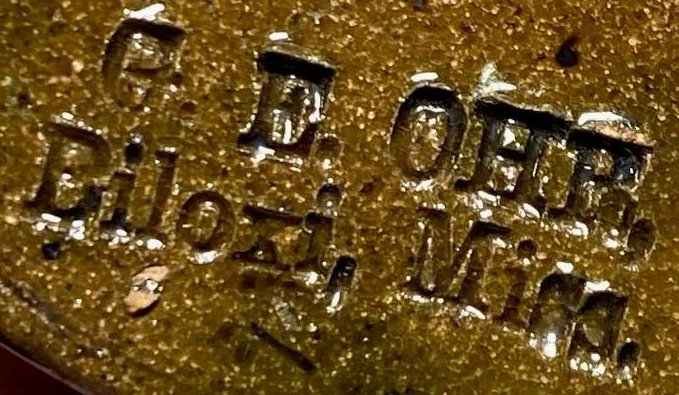
Undated
Initial G. rather than expanded GEO; two lines of type, not cursive incision.
impressed · earthenware · Biloxi, Mississippi
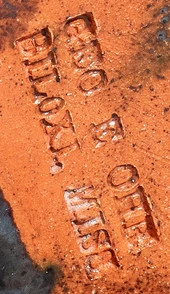
Undated
Expanded GEO spelling, followed by E OHR; differs from G. E. initial stamp.
impressed · earthenware · Biloxi, Mississippi
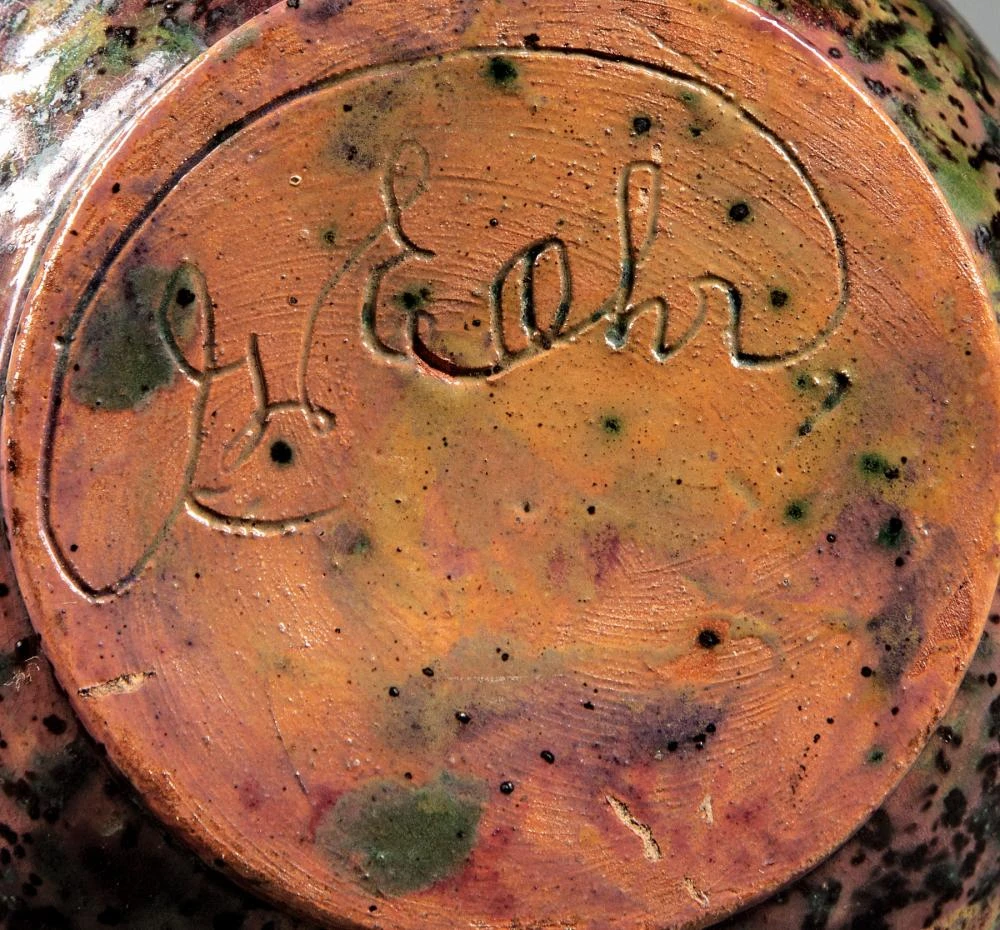
Undated
Flowing name with sweeping loops scratched by hand rather than separate type letters.
incised · earthenware · Biloxi, Mississippi
George Edgar Ohr was born in Biloxi, Mississippi, in 1857. He learned pottery with Joseph Fortune Meyer in New Orleans in 1879, then travelled and worked before establishing his own pottery in Biloxi during the 1880s. His early output included useful household vessels and souvenir pieces. He also returned to New Orleans to work with Meyer at the New Orleans Art Pottery.
A fire destroyed Ohr’s Biloxi workshop in 1894. He rebuilt and continued making pottery, preserving damaged pieces from the fire. His later vessels developed very thin walls, folded and pinched rims, twisted bodies and strongly coloured glazes. He altered freshly thrown forms while the clay remained pliable. The range included bowls, vases, puzzle mugs, teapots and other forms, alongside more sculptural experiments.
Ohr promoted his individuality through signs, inscriptions and appearances at fairs. His signatures include impressed type and freely incised script, sometimes accompanied by a date or a description of the clay. Late work included unglazed pottery. He stopped potting around 1910 and stored much of his remaining work. After his death in 1918, the family retained the collection until James Carpenter bought it decades later and brought it to a wider audience.
Also known as: George E. Ohr · G. E. Ohr · GEO E OHR · Biloxi Art Pottery · Mad Potter of Biloxi · George Edgar Ohr
Impressed printer’s-type marks can be recreated. A matching name stamp alone cannot distinguish an original from a later copy; the vessel and its provenance matter.
Complex applied decoration, puzzle vessels and manipulated forms occur in both traditions. Anna, Illinois wording identifies the Kirkpatrick pottery rather than Ohr’s Biloxi name stamp.