
Pottery & porcelain
Nymphenburg marks
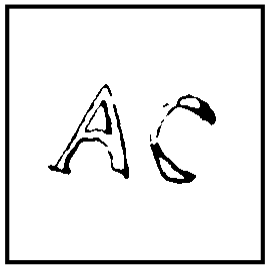
Nymphenburg marks are associated with porcelain and tableware from Bavaria, Germany. Nymphenburg marks include underglaze “a m” lettering.
- Active years
- From 1747
- Country
- Germany
- City / region
- Bavaria
- Products
- porcelain, tableware
- Marks
- 32
Dated marks & timeline
32 marks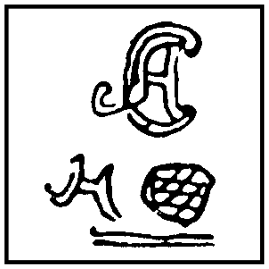

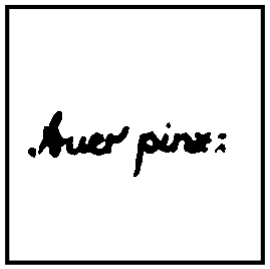
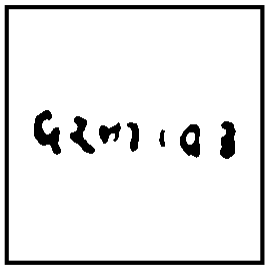
1763–1765
underglaze · blue · porcelain
underglaze · blue · porcelain · Germany
Blue underglaze hexagrams and other signs.
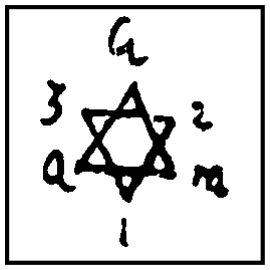
1763–1765
a m
underglaze · blue · porcelain · Germany
Blue underglaze hexagram and other signs described as magical hieroglyphs.

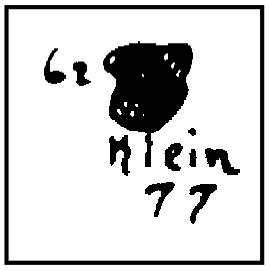



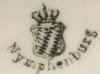
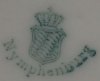

1923
CT 1923
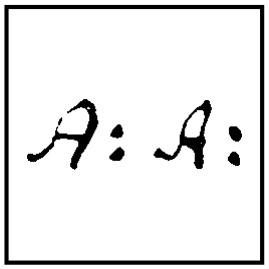
The illustrated Frankenthal-replica mark is dated 1923; this is not a complete use interval.
porcelain
Used on Frankenthal replicas.
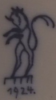
1924
1924
The illustrated Frankenthal-replica mark is dated 1924; this is not a complete use interval.
porcelain
Rising lion mark on Frankenthal replicas.
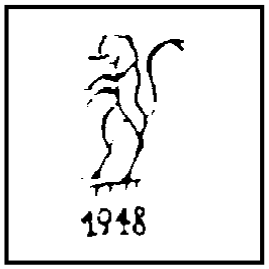
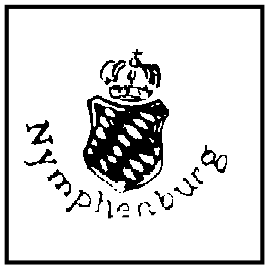
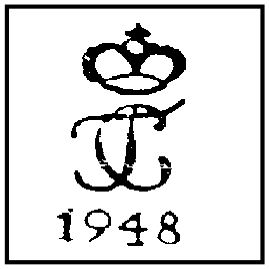

c. 1949–1975
Nymphenburg underglaze ca.
underglaze · green · porcelain · West Germany
Nymphenburg green underglaze ca. mark.

Marks 25–32
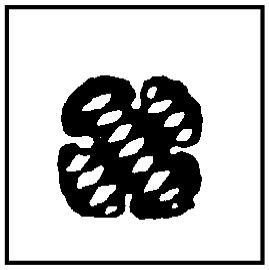
Undated
impressed · porcelain
impressed · porcelain · Germany
Impressed variants are dated 1755–1765, 1760–1780, 1780–1790 and 1810–1850.
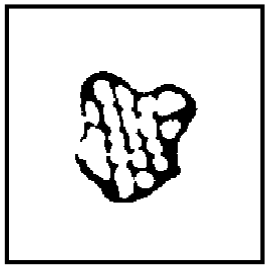
Undated
impressed · porcelain
impressed · porcelain · Germany
Impressed variants are dated 1755–1765, 1760–1780, 1780–1790 and 1810–1850.
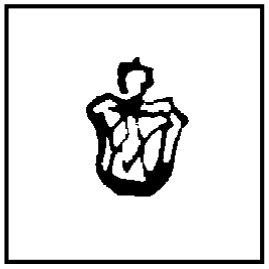
Undated
porcelain
porcelain · Germany
The shared caption lists body marks for 1755–1765, 1760–1780, 1780–1790 and 1810–1850 without assigning this image separately.
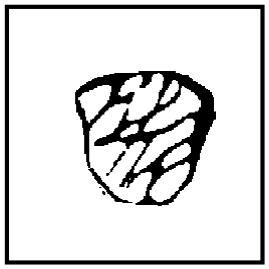
Undated
impressed · porcelain
impressed · porcelain · Germany
Impressed variants are dated 1755–1765, 1760–1780, 1780–1790 and 1810–1850.
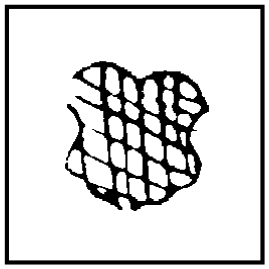
Undated
impressed · red · porcelain
impressed · red · porcelain · Germany
Shared caption lists body marks in 1755–1765, 1760–1780, 1780–1790 and 1810–1850 without assigning this shield to one interval.
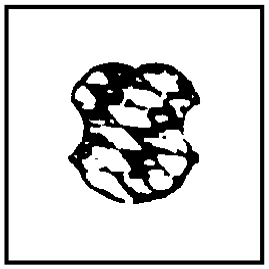
Undated
impressed · porcelain
impressed · porcelain · Germany
Impressed variants are dated 1755–1765, 1760–1780, 1780–1790 and 1810–1850.
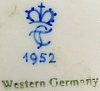
Undated
CT
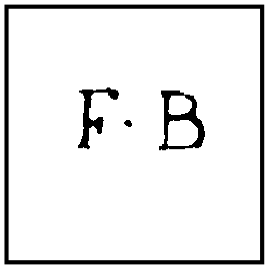
This Frankenthal-replica mark is illustrated on an example dated 1952.
porcelain · West Germany
and with Western Germany wording.
About Nymphenburg
Elector Max III established the manufactory at Neudeck in 1747. Porcelain technology was developed in 1754, when Franz Anton Bustelli became artistic director. A Bavarian court commission followed in 1755, and the factory moved to Nymphenburg Castle in 1761. Artistic production stopped in 1856 while the privatized firm made technical and sanitary porcelain. Albert Bäuml restored the artistic direction after 1887.
The factory transferred to the Wittelsbach fund in 1975, came under Duke Franz's patronage in 1996 and was taken over by Prince Luitpold in 2011. Founded at Neudeck near Munich in 1747 by Franz Niedermeyer, the manufactory improved production with Joseph Jakob Ringler from 1753 and moved to Nymphenburg in 1761. It later passed to private owners in 1862. The source highlights rococo modeling by Franz Anton Bustelli and later work by Dominic Havlicek and Johann Peter Melchior.
The manufactory was founded near Munich in 1747 and moved to Nymphenburg in 1761. Joseph Jakob Ringler established successful porcelain production from 1753. Franz Anton Bustelli's Rococo figures brought it fame; later designers included Dominikus Auliczek and Johann Peter Melchior. It passed into private ownership in 1862.