
bottleinfo.historicbottles.com
Undated
glass pontil
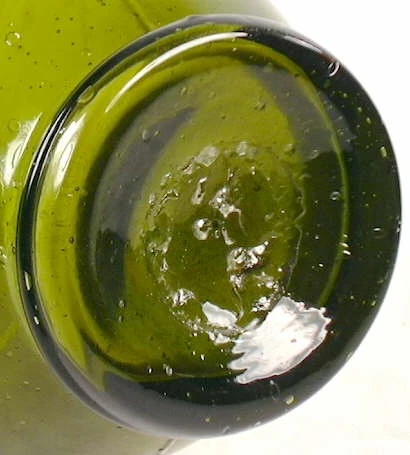
Glass-tipped pontil: irregular glass fragments and missing glass on a sauce-bottle base.
manufacturing scar
Read the stamp
A pontil mark is the scar left on a glass base when the holding rod, or punty, is detached after finishing the vessel. It can be rough, ring-shaped, iron-stained, ground or polished, depending on the attachment and finishing process.
After a vessel has been blown, a pontil rod holds its base so the glassworker can finish the mouth or rim. The rod is then detached, leaving a trace of the attachment. A solid rod tipped with hot glass can leave irregular extra glass, torn-out patches or a rough circular area. A blowpipe used as the holding tool contacts the base in a ring and can leave a ring-shaped scar with a relatively undisturbed centre. Inspect the base under angled light so the raised and missing glass stand out.
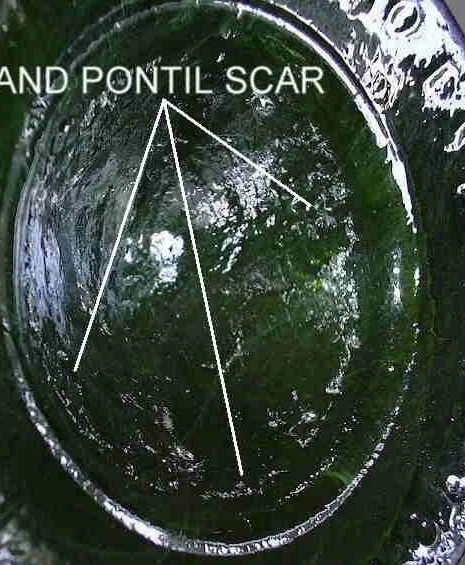
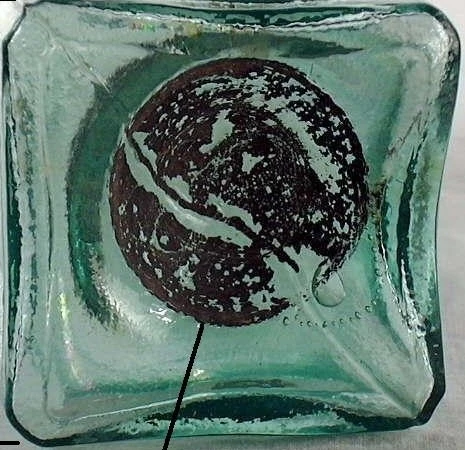
A glass-tipped scar has bumps, fragments and gouges from the glass-to-glass attachment. With a sand pontil, the glass on the rod was coated with sand or small glass particles before attachment, leaving a broad textured contact area. A bare-iron pontil can leave a dark reddish-brown or black iron deposit, often called an improved or iron pontil. Read the pattern of attachment, not just a dark stain: deposits from other causes can also occur on old bottle bases.
On tableware and decorative glass, the attachment scar was often ground away. Grinding leaves an abraded area; further polishing can create a smooth, shallow depression. Reflections help reveal the boundary of that worked area even when it is no longer rough. The polished depression records finishing of an attachment site. It should be read separately from a signature engraved across or beside it, since the signature supplies identity wording and the pontil supplies a manufacturing clue.
On American utilitarian bottles, pontil scars are strongly associated with manufacture before or around the mid-1860s. As snap-case holding tools spread, pontilled examples became uncommon and largely disappeared by the late 1860s or early 1870s. The change was gradual, with regional and bottle-type differences. Decorative barber bottles, decanters, reproductions and modern studio glass can retain pontil scars much later. The same rough feature therefore has a different dating value on a medicine bottle and a handmade art-glass vase.
A mould seam follows the meeting edges of the mould; an embossed number or emblem was formed as part of its surface. A pontil scar comes from the temporary holding attachment. Both types of feature can occur on one bottle, and a moulded design can remain visible inside a blowpipe ring. Compare the base with the mouth, body shape and mould lines. The scar type alone does not identify a factory or an exact production year.
bottleinfo.historicbottles.com
Undated
Glass-tipped pontil: irregular glass fragments and missing glass on a sauce-bottle base.
manufacturing scar
bottleinfo.historicbottles.com
Undated
Sand pontil: a textured contact area on an English liquor bottle with a seal dated 1822.
manufacturing scar
bottleinfo.historicbottles.com
Undated
Bare-iron pontil: a dark deposit on a peppersauce bottle dating to about 1860.
manufacturing scar
It is the base scar left when the holding rod is removed after the glassworker finishes the vessel.
Common attachment types are glass-tipped, blowpipe-ring, sand and bare-iron scars. A scar may then be ground or polished away.
They are a useful early dating clue on American utilitarian bottles, but later decorative bottles, reproductions and studio glass also use pontils.
It can be a ground and polished attachment site. Look for its worked boundary and compare it with the rest of the base rather than treating every concavity as a pontil.