
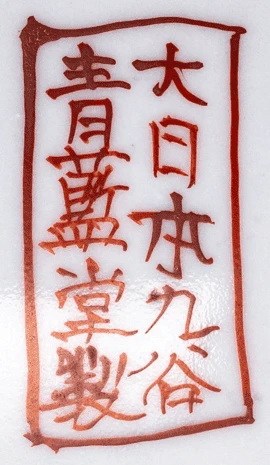
Seirando (Kawajiri Kihei)
c. 1868–1912
大日本九谷 青藍堂製
The 青藍堂 studio name inside the rectangle identifies this form; 大日本 alone is not an exact date.
painted · porcelain · Japan
Ware & regional marks
Japan · From 1655 · 12 marks.
Tradition dating from the mid-seventeenth century, interrupted around 1700 and revived in the nineteenth century; not a company lifespan.
Seirando (Kawajiri Kihei)
c. 1868–1912
The 青藍堂 studio name inside the rectangle identifies this form; 大日本 alone is not an exact date.
painted · porcelain · Japan
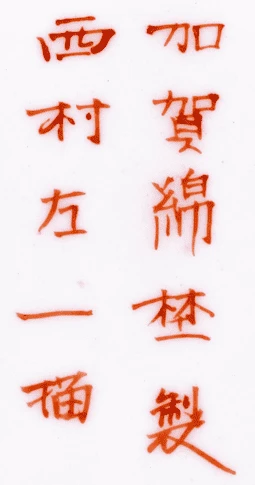
Watano; Nishimura Saichi (decorator)
c. 1868–1912
The separate painter column identifies Nishimura; Watano is the merchant or producer name, not that painter.
painted · porcelain · Japan
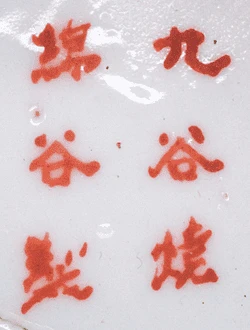
Wataya (probably Wataya Heibei)
c. 1868–1912
綿谷 reads Wataya; distinguish it from the similar merchant name 綿野 or 綿埜, Watano.
painted · porcelain · Japan
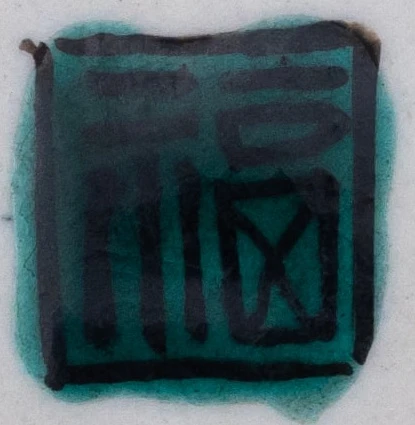
Unidentified Kutani workshop
Undated
The square 福 seal is a blessing rather than an individual signature; it also occurs on later wares.
painted · porcelain · Japan
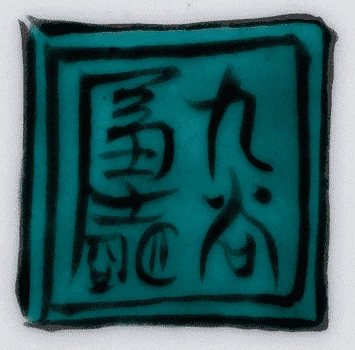
Higashi Fujiaki
Undated
富士明 names the decorator; the blue-green square differs from the plain regional 九谷 marks.
painted · porcelain · Japan
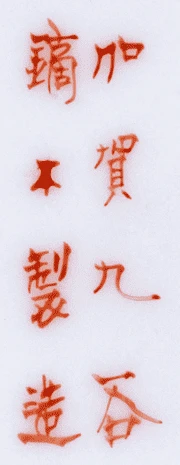
Kaburaki
Undated
Read 鏑木 as the business name; the foundation date does not date this particular stamp.
painted · porcelain · Japan
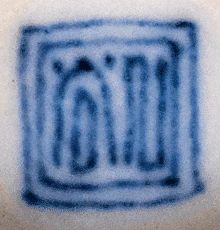
Unidentified Kutani workshop
Undated
The double square and blue script distinguish this design from the red open-script regional marks.
underglaze painted · porcelain · Japan
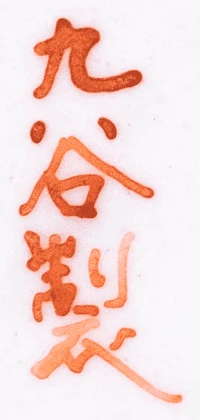
Unidentified Kutani workshop
Undated
製 means made; there is no individual maker name in this three-character form.
painted · porcelain · Japan
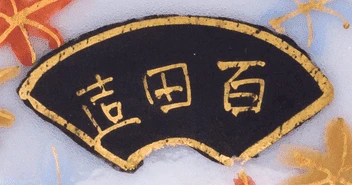
Momota
Undated
The fan-shaped reserve and right-to-left name separate this version from a plain Momota signature.
painted · porcelain · Japan
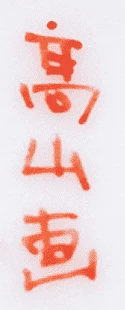
Takayama
Undated
画 identifies the painter; distinguish 高山 from other names ending in 山.
painted · porcelain · Japan
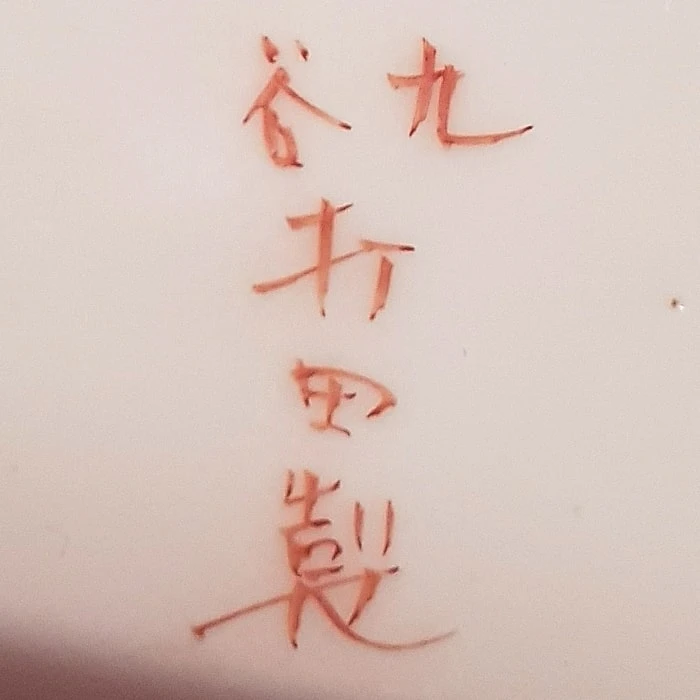
Uchida / Uchita
Undated
The lower 打田製 signature identifies the name; 九谷 at the top is the regional designation.
painted · porcelain · Japan
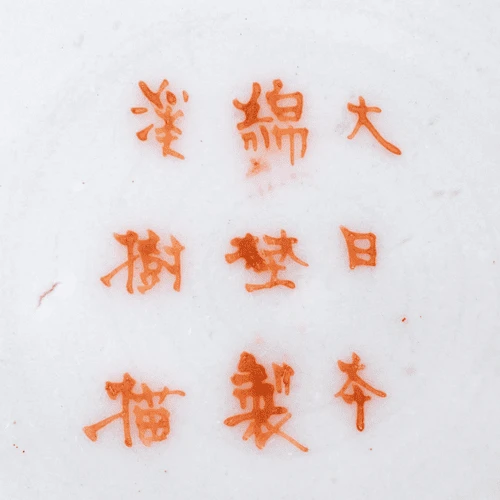
Watano Trading Company
Undated
The 埜 character in 綿埜 differs from 野 in another Watano spelling; compare the complete signature.
painted · porcelain · Japan
Kutani is a porcelain tradition of Ishikawa Prefecture, centred on Kaga, Komatsu, Nomi and Kanazawa, rather than a single factory. Its early history begins in the seventeenth century. The original kilns stopped around the beginning of the eighteenth century; production revived in the nineteenth century through several kilns and workshops. Yoshidaya revived production in 1824 and moved its kiln to Yamashiro in 1826. Brilliant overglaze enamels, red painting and gold decoration developed into different Kutani styles.
Export production expanded during the Meiji period, 1868–1912. Workshops, painters and merchants could all contribute to one object. Kaburaki sold and commissioned decorated porcelain in Kanazawa, while Watano and Wataya names appear on export wares. Kutani Shoza’s workshop helped establish elaborate gold decoration. A merchant’s name therefore need not identify the potter who formed the body.
The characters 九谷 read Kutani. Additional characters may identify a workshop or painter: 製 and 造 indicate making, while 画 indicates painting. Read a vertical inscription from the top down, taking the right-hand column before the left. 福, meaning good fortune, is an auspicious mark shared by different workshops. It also occurs on later pieces and other Japanese porcelains. Compare the whole mark, porcelain body and decoration together; neither red lettering nor a square seal gives a date by itself.
Also known as: 九谷焼 · Kutani-yaki · Japan Kutani · Kutani porcelain (Kutani-yaki)
Gilded figures and dense decoration can resemble Satsuma. Check the porcelain body and full inscription; decorative style alone does not identify the kiln.
福 is also found on Arita and Imari porcelains; compare the complete object and inscription rather than assigning every square 福 to Kutani.
Later dishes repeat early palettes and square 福 marks. A Ko-Kutani-style design is not a seventeenth-century date.