
Glass
Westmoreland marks
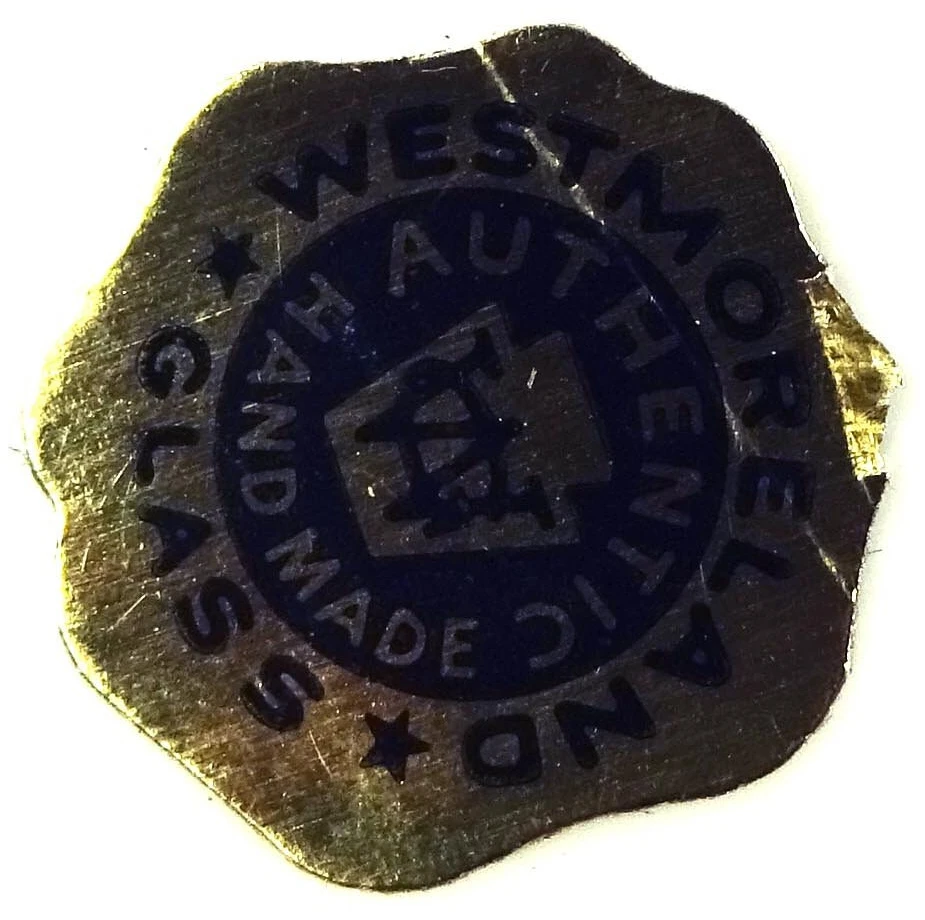
On Foil/paper on glass from Grapeville, Pennsylvania, Westmoreland marks carry “WESTMORELAND GLASS / AUTHENTIC / HAND MADE / WG”.
- Active years
- 1910–1984
- Country
- United States
- City / region
- Grapeville, Pennsylvania
- Products
- Milk glass, Tableware, Colored glass, Candy containers, Decorated ornamental glass
- Marks
- 5
Factory founded 1889, commercial production early 1890; closed 1984. Later production from sold moulds is separate.
What to look for
- Distinguish the keystone W from interlocking WG initials. A removable label can carry a more detailed company inscription.
- Check the pattern, color and finish with the mark. Original moulds continued in use after the Grapeville factory closed.
- A painted decorator’s year dates that decorated example; it does not establish the lifetime of its paper tag.
Marks & lettering
5 marks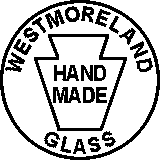
Undated
WESTMORELAND HAND MADE GLASS
The trademark was registered circa 1910; this is not a stated use interval.
label · glass · United States
paper label (trademark registered c 1910)

Undated
WESTMORELAND GLASS / AUTHENTIC / HAND MADE / WG
Scalloped foil with Authentic and Hand Made around a WG monogram in a keystone; different wording from the existing Hand Made Glass label.
label · Foil/paper on glass · Grapeville, Pennsylvania
Undated
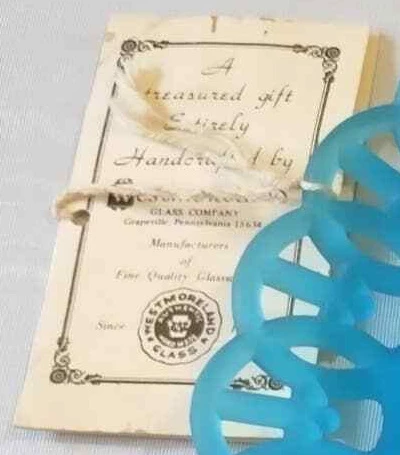
A treasured gift / Entirely Handcrafted by / WESTMORELAND GLASS COMPANY / Grapeville, Pennsylvania / Manufacturers of Fine Quality Glassware / Since 1889
Rectangular decorative gift tag with address and company wording; not a permanent mould mark.
label · Foil/paper on glass · Grapeville, Pennsylvania
About Westmoreland Glass Co
Westmoreland Glass Company grew from the move of the Specialty Glass Company of East Liverpool, Ohio, to Grapeville, Pennsylvania, in 1889. Construction began that autumn and commercial glass production followed in 1890. Charles and George West, with financial support from Ira Brainard, developed the works as the Westmoreland Specialty Company. Natural gas in the district helped make Grapeville an attractive manufacturing location.
The company made tableware, novelties and containers, later becoming especially familiar for its opaque white milk glass. Its range also included clear and colored glass, hand painting, cutting, engraving and gilding. The extensive decorating department of the 1920s treated both tableware and ornamental pieces. The firm adopted the Westmoreland Glass Company name during the 1920s, and the Brainard family became its long-term owners.
Pressed patterns and hand decoration remained important during the postwar years. Interlocking WG initials appeared on many pieces, while removable labels supplied additional branding. David Grossman acquired the business in the early 1980s, but the works closed in 1984. Moulds passed to other manufacturers, some of whom retained the old marks, so a Westmoreland logo does not by itself establish that a piece was made at the Grapeville factory.
Also known as: Westmoreland Specialty Company · WG · Westmoreland · Westmoreland Glass Company
Look-alikes & how to tell them apart
Plum Glass
Successor users of Westmoreland equipment and moulds used a P in a keystone; read the central letter carefully.
L. G. Wright and other mould owners
Related shapes and retained factory marks can occur in later output. Attribute the actual production, not just the mould design.
Westite Glass
Its W is in a diamond, rather than the stepped Pennsylvania keystone of early Westmoreland.