
FabergéMaker name
1842–1920
Mark image
Russia
Specialties | | 1860 | 1870 | 1884 | 1897 | 1900 | 1918 | Workmasters
Designer marks
Faberge marks are associated with jewelry and silver and gold objects from Russia. Faberge marks include dated examples from 1842–1920.
Original Russian firm 1842–1918, with production disrupted in 1917. Later licensed and relaunched Fabergé branding is a separate history; modern jewelry relaunched in 2009.
1842–1920
Russia
Specialties | | 1860 | 1870 | 1884 | 1897 | 1900 | 1918 | Workmasters
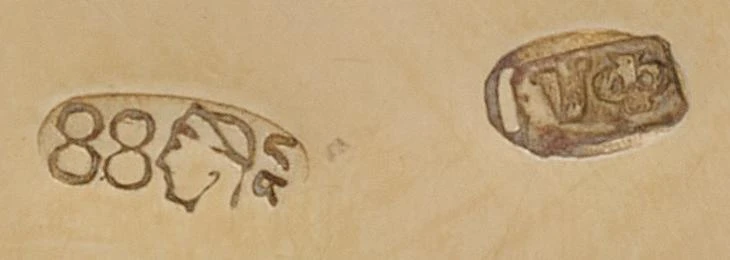
1899–1908
The separate workmaster punch attributes manufacture; the adjacent assay mark supplies a different part of the chronology.
struck · silver-gilt · St Petersburg, Russia
The auction identifies the initials as Afanassiev’s.
Undated

Undated
Russia
Drawing of the Cyrillic КФ punch. The original house’s activity and Carl Fabergé’s life dates do not establish this die’s complete use interval.
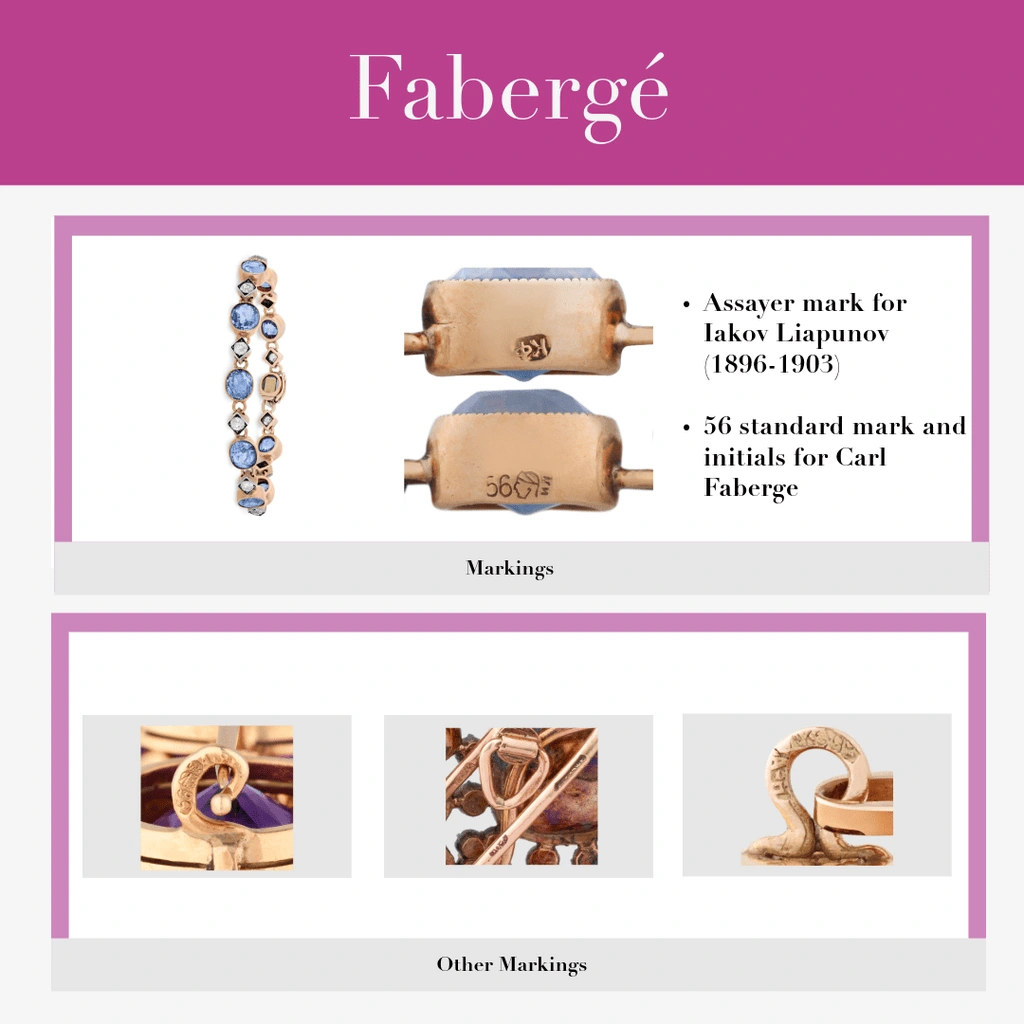
Undated
mark drawing
Composite sheet of hallmark impressions and jewelry emblems.
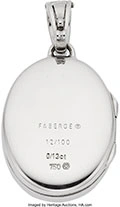
Undated
Later-brand FABERGE / 750 pendant inscription; no individual object year is established. Do not assign the original imperial firm’s activity range.
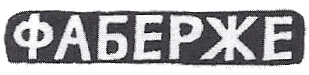
Undated
Full Cyrillic name distinguishes it from the abbreviated КФ and Roman-letter export versions.
struck-mark drawing · St Petersburg, Russia
Mark drawing.
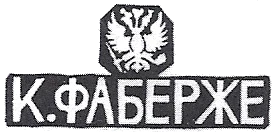
Undated
Initial K plus eagle is associated with the Moscow branch, unlike the plain St Petersburg name.
struck-mark drawing · Moscow, Russia
Drawing of the mark.
Gustav Fabergé opened his jewelry business in St Petersburg in 1842. His son Carl took charge in 1872 and expanded it into a large enterprise. Rather than one workshop producing everything, the house relied on specialist workmasters responsible for their own teams. Gold and silver objects could carry the firm’s name, a workmaster’s initials and official assay marks.
The range extended well beyond the imperial Easter eggs. It included jewelry, table silver, enamelled boxes, frames, hardstone carvings and small decorative objects. Precious stones and translucent enamel over engraved metal became important parts of its vocabulary. Branch and export marking could differ: Cyrillic Fabergé names and initials occur on Russian work, while Roman-letter FABERGE or CF appears on pieces supplied through London.
Revolution ended the original business in 1917–1918, and Carl died in exile in 1920. The name later passed through separate commercial and licensing histories. A new luxury-jewelry business acquired the trademarks in 2007 and relaunched jewelry in 2009. Modern FABERGE and fineness stamps therefore belong to a different production context from the imperial Russian house.
Also known as: Faberge · Карл Фаберже · К. Фаберже · Fabergé Limited (modern brand) · House of Fabergé
The name continued through later commercial uses and a modern relaunch.
Compare modern Roman lettering and millesimal fineness stamps with the original Russian firm/workmaster/assay combinations; do not date a modern pendant from Carl’s lifetime.
The same official assay symbols and fineness numbers occur on many firms’ work.
A kokoshnik or 56/88 alone identifies neither Fabergé nor a workmaster. Read the separate name and initials.