

c. 1935
REG KTF 1935
The tall central T stands between K and F; added REG and 1935 distinguish this specimen from plain KTF.
stamped · plated metal · United States
Designer marks
Trifari marks are associated with costume jewellery and hair ornaments from United States. Some of Trifari’s Lines: was active from 1918.
1918 refers to the Trifari–Krussman partnership; antecedent Trifari work is often dated 1910. Fishel joined and the business incorporated in 1925. The brand passed through later owners; no final closure established.
c. 1935
The tall central T stands between K and F; added REG and 1935 distinguish this specimen from plain KTF.
stamped · plated metal · United States
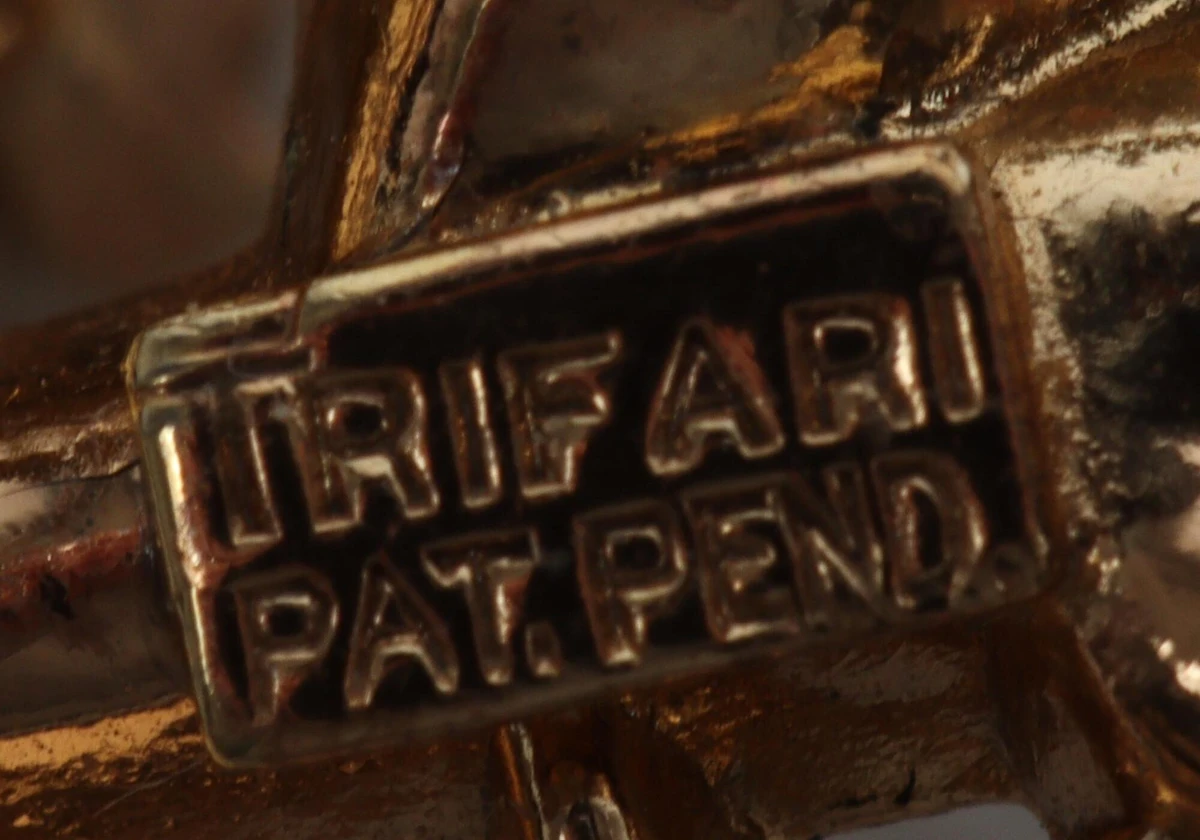
c. 1936–1955
Patent-pending wording distinguishes this plaque from plain crown/name and later copyright signatures.
stamped · plated metal · United States
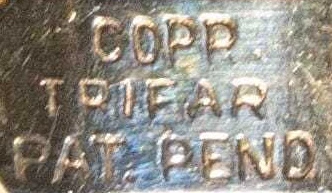
c. 1948–1949
COPR above the name coexists with patent-pending wording, earlier than the familiar later © signature.
stamped · plated metal · United States
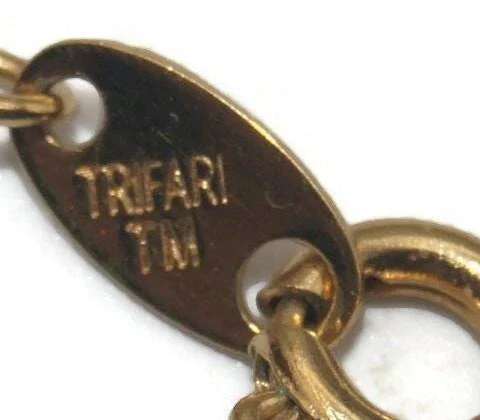
c. 1988–1999
TM appears below the upright name without the earlier crown device.
stamped · plated metal · United States
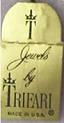
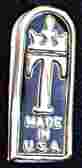
Undated
Line: Tie-Ups Aug. 1957 Photo courtesy Susan at Eureka.
Gustavo Trifari and Leo Krussman joined forces in 1918. Trifari brought jewellery-making experience, while Krussman handled sales. Carl Fishel joined in 1925, when the New York business became Trifari, Krussman & Fishel. Early products included hair ornaments and jewelled shoe buckles. The company established a manufacturing presence in Providence, Rhode Island, during the 1930s.
Trifari developed into a major American costume-jewellery house. Alfred Philippe worked as a designer from 1930 until 1968, and the firm also employed a succession of other designers. Rhinestones, imitation pearls, coloured glass and carefully finished metal settings supported many different collections. During wartime restrictions it used sterling silver, often with a gold-coloured finish. Patented mechanisms allowed paired dress clips to be worn together as a brooch.
The early KTF monogram gave way to the full Trifari name and the familiar crown above the T. Patent, copyright and trademark wording changed over time. Hallmark bought the company in 1975, followed by Crystal Brands in 1988 and the Monet Group in the 1990s. Liz Claiborne acquired the Monet Group in 2000, when production moved out of the United States. Later reissues and named collections added further signatures to the brand’s long history.
Also known as: Trifari & Krussman · KTF · TKF · Crown Trifari · Jewels by Trifari · Trifari, Krussman & Fishel, Inc.
Both made rhinestone costume jewellery and paired clips. Compare the signature and mechanism: Coro’s Duette name differs from Trifari Clip-Mates.
Similar settings and motifs can be copied. A matching design, signature and construction are more useful together than a crown motif alone.