About Thonet
Michael Thonet took over his father’s carpentry workshop in Boppard in 1819. He experimented with bending thin layers of wood to form furniture, seeking an alternative to carving curved parts from solid timber. After moving to Vienna in 1842, he developed the business with his five sons. In 1853 it became Gebrüder Thonet, or Thonet Brothers, while Michael retained an active managerial role.
Experiments in the mid-1850s made it possible to bend solid beech with steam and metal supports. This process helped turn a craft workshop into an industrial furniture business. The model No. 14 chair, introduced in 1859, became especially successful. Standardised parts could be packed for shipment and assembled near the customer. Numbered catalogues and international sales outlets supported a growing network of factories across Central Europe.
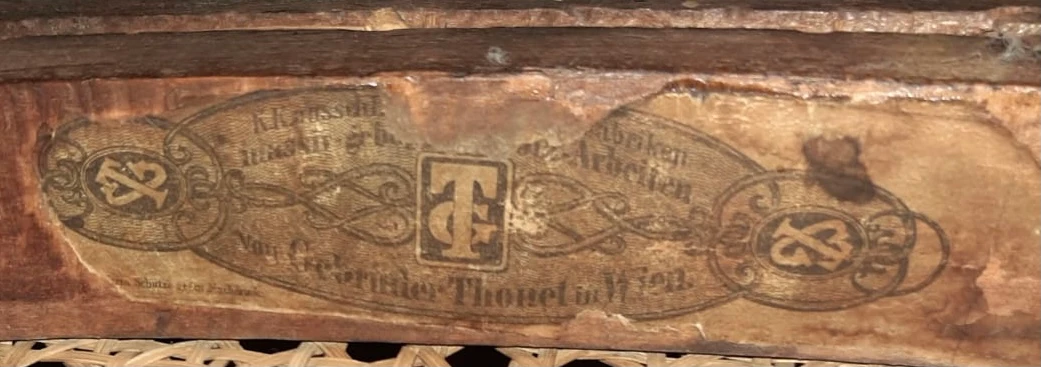
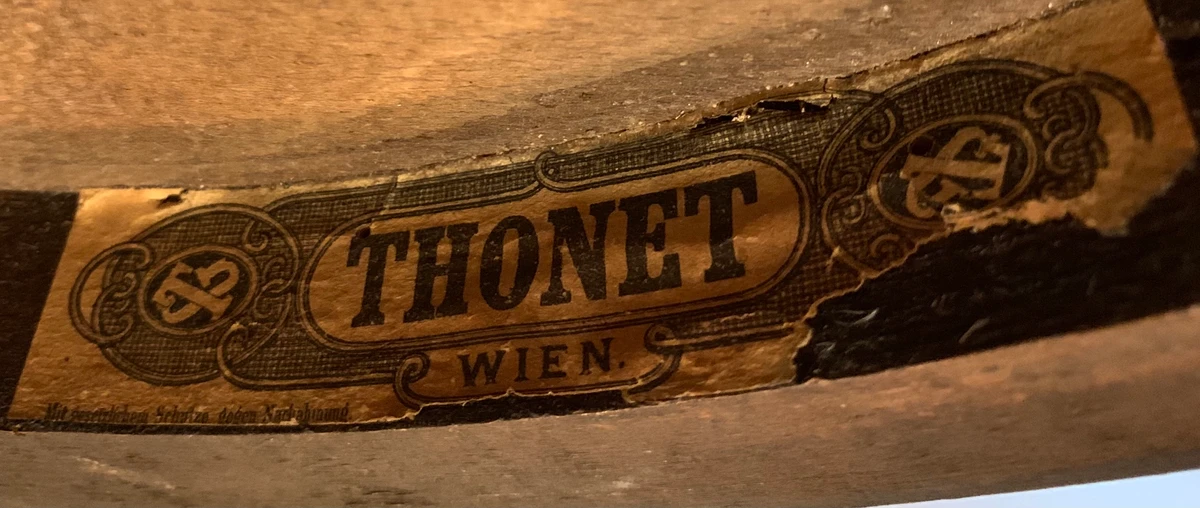
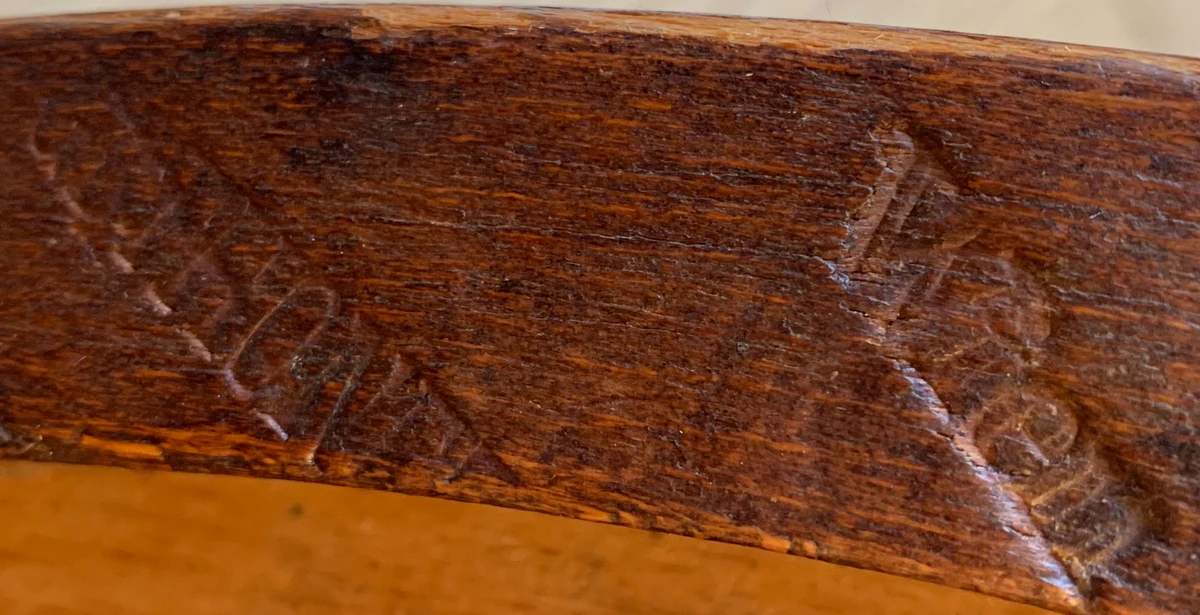
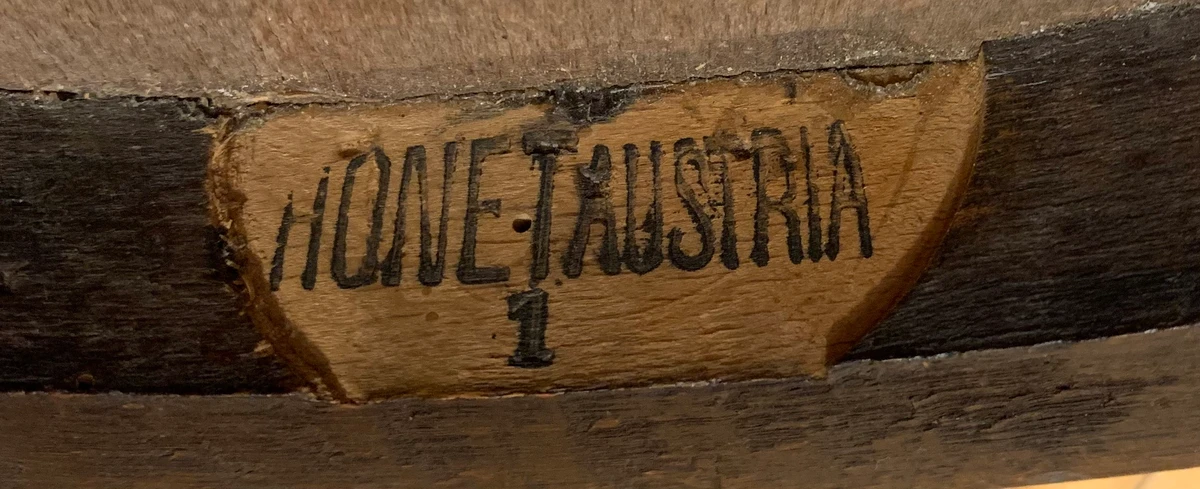
Thonet made café and domestic chairs, armchairs, rocking chairs, tables and other furnishings. Paper labels, impressed names and black stamps appeared in different combinations, with wording adapted for export markets. A factory opened at Frankenberg in Germany in 1889. Twentieth-century ownership changes and nationalisation divided parts of the earlier manufacturing network. Thonet in Germany and TON at the former Bystřice factory continued separate operations, while the Thonet name remained closely associated with bentwood furniture.