
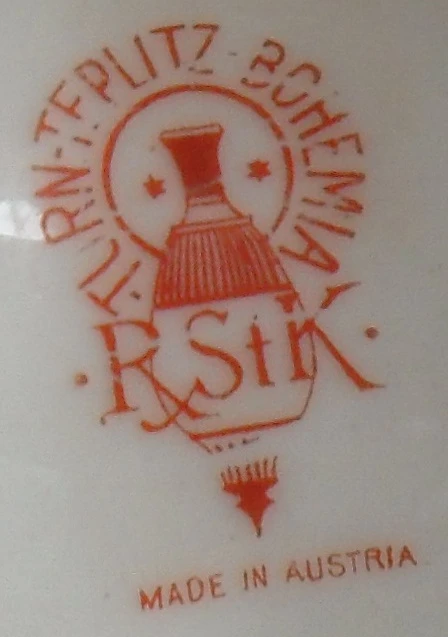
c. 1899–1905
TURN-TEPLITZ-BOHEMIA; RStK; MADE IN AUSTRIA
Red urn-and-initials stamp; the separate three-rifle device at left is Max Emanuel’s retailer mark.
printed · pottery or porcelain · Turn-Teplitz, Bohemia
Pottery & porcelain
Amphora pottery marks include printed “AMPHORA” on pottery or porcelain dated c. 1918–1945 in Turn-Teplitz, Bohemia.
Independent Amphora factory 1892–1945; nationalized in 1945 and incorporated into a larger ceramics organization after the war.
c. 1899–1905
Red urn-and-initials stamp; the separate three-rifle device at left is Max Emanuel’s retailer mark.
printed · pottery or porcelain · Turn-Teplitz, Bohemia
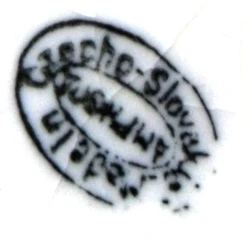
c. 1918–1938
Country wording encircles Amphora within an oval.
printed · pottery or porcelain · Turn-Teplitz, Bohemia
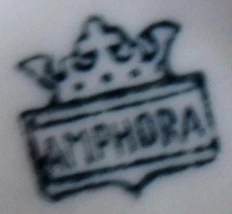
c. 1918–1945
Blue crown above a rectangular pointed cartouche.
printed · pottery or porcelain · Turn-Teplitz, Bohemia
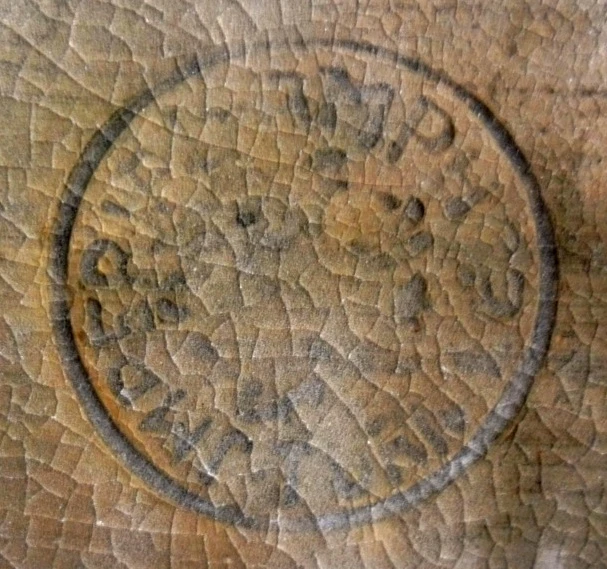
Undated
Circular wording surrounds the imperial eagle.
stamped · pottery or porcelain · Turn-Teplitz, Bohemia
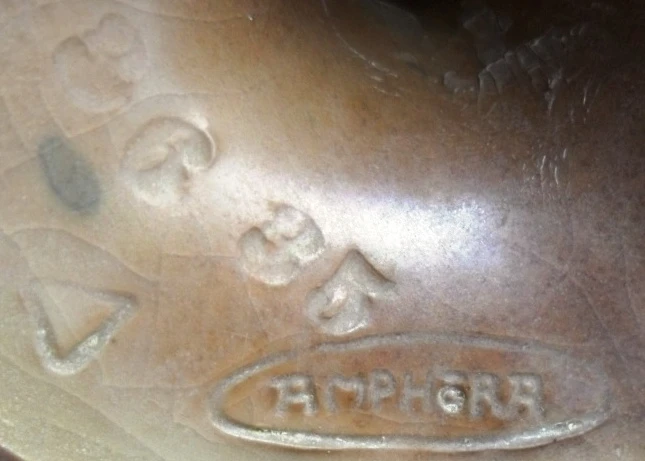
Undated
Plain incuse oval; adjacent 3635 is a model number.
impressed · pottery or porcelain · Turn-Teplitz, Bohemia
Riessner, Stellmacher & Kessel established its ceramics factory at Turn-Teplitz in Bohemia in 1892. The town is now Trnovany, part of Teplice in the Czech Republic. The firm’s initials, RStK, appear on early pieces, while Amphora became the name most closely associated with its production. Its range included ornamental vases, figures and other decorative objects in porcelain and pottery.
The factory developed elaborate Art Nouveau designs with flowers, insects, animals and female figures. Modelled surfaces, contrasting glazes, gilding and applied decoration gave the wares their distinctive appearance. Eduard Stellmacher and Paul Dachsel were important designers. International exhibitions and export sales brought the factory’s work to European and American buyers.
Stellmacher left the partnership in 1904 and established a separate factory in 1905. The original concern continued as Riessner & Kessel; after Kessel’s departure in 1910 it operated as Amphora Works Riessner. Production continued beyond the Art Nouveau period into Art Deco and more ordinary decorative wares. After the First World War, Czechoslovakia wording appeared among its marks. The company was nationalized in 1945 and joined the postwar ceramics industry in Teplice.
Also known as: RStK · R. St. K. · Reissner, Stellmacher & Kessel · Riessner & Kessel · Amphora Works Riessner · Imperial Amphora · Amphora Turn-Teplitz · Riessner, Stellmacher & Kessel; later Amphora-Werke Riessner
Stellmacher made designs for the original Amphora factory before opening his own Turn-Teplitz concern in 1905. His separate marks spell STELLMACHER and can include Potterie or TEPLITZ, rather than the RStK partnership device.