
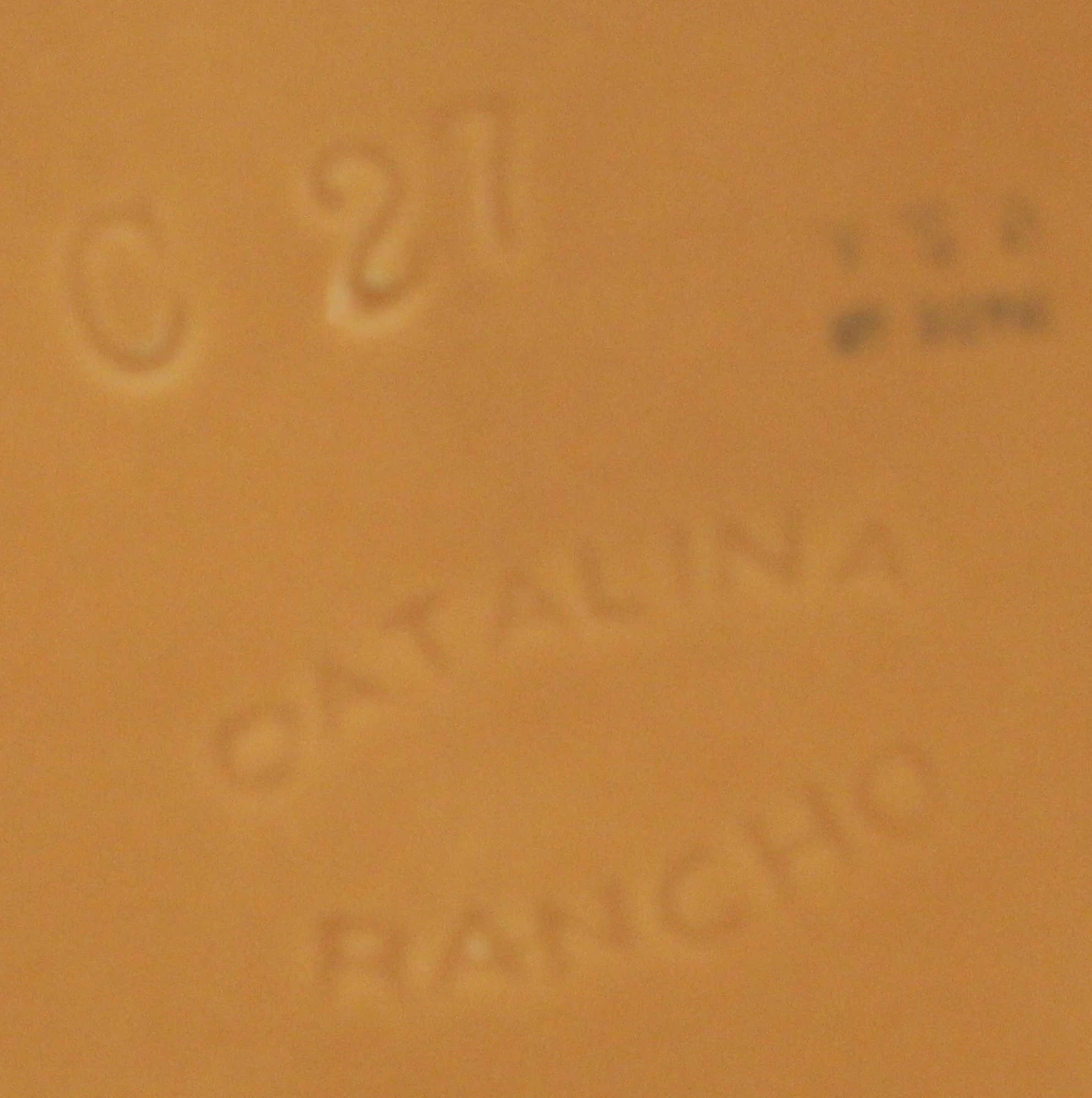
c. 1937–1941
Catalina / RANCHO
Script Catalina above the distinct RANCHO line.
moulded/impressed · Glazed earthenware · Glendale, California
Pottery & porcelain
The name “CATALINA / ISLAND” appears among Catalina pottery marks on Glazed earthenware from Santa Catalina Island, California.
Island factory 1927–1937; mainland Catalina Rancho 1937–1941 and artware through 1942. Later independent Catalina-related pottery is outside this production scope.
c. 1937–1941
Script Catalina above the distinct RANCHO line.
moulded/impressed · Glazed earthenware · Glendale, California
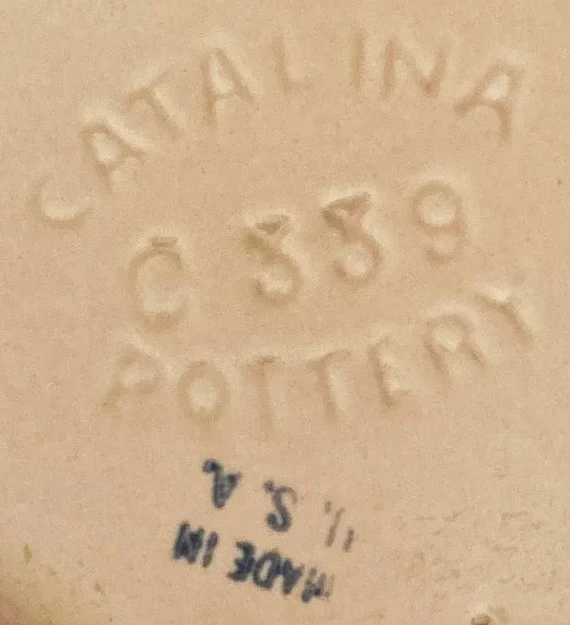
c. 1937–1942
POTTERY replaces ISLAND, with mould code C339 and a separate ink country mark.
moulded/impressed with printed country stamp · Glazed earthenware · Glendale, California
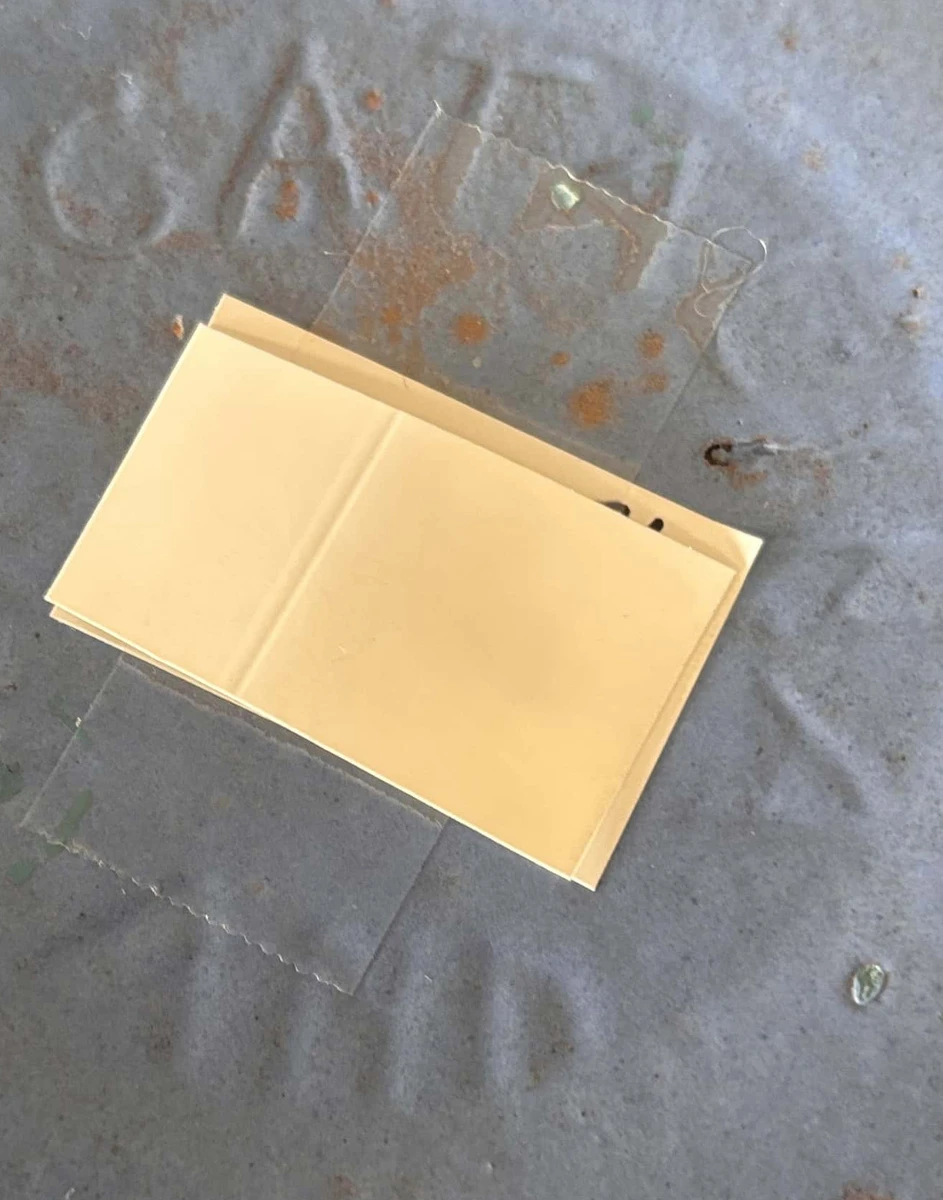
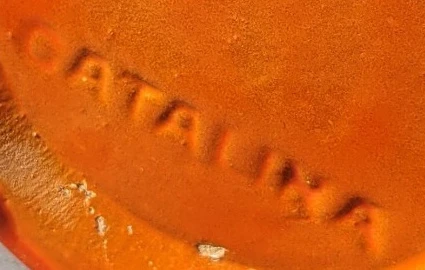
Undated
Widely spaced arched lettering differs from the compact straight-line stamp; modern shop sticker partly covers the center.
impressed · Glazed earthenware · Santa Catalina Island, California
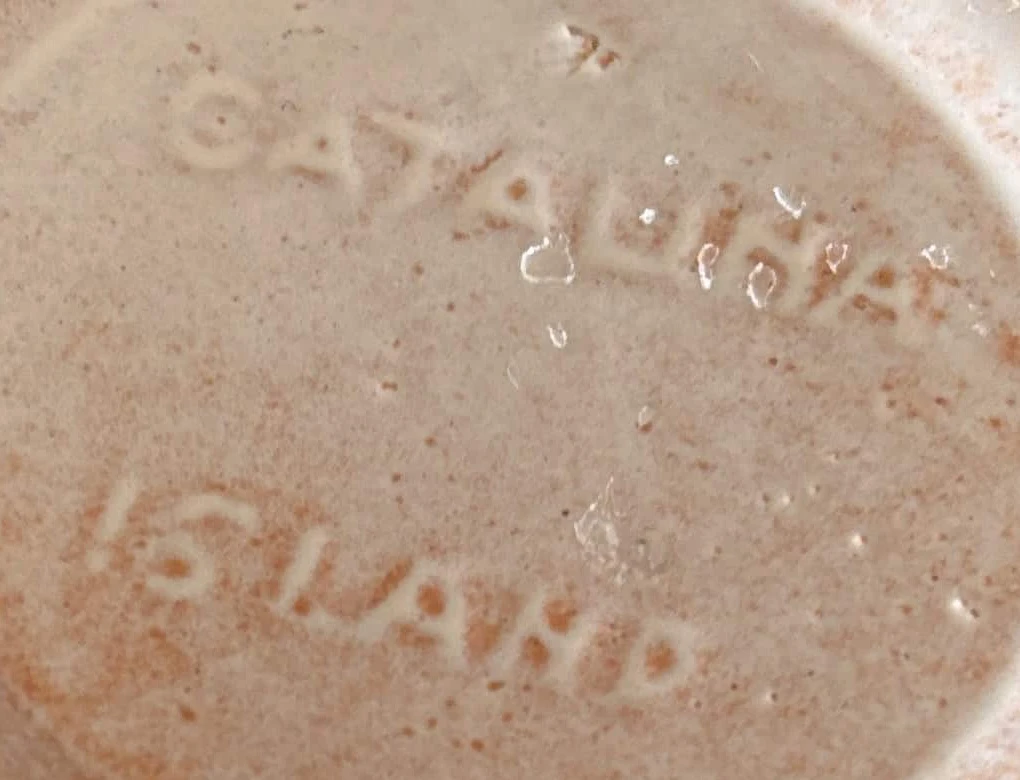
Undated
Two separate, relatively straight lines on an exposed red-clay base.
impressed · Glazed earthenware · Santa Catalina Island, California
Catalina Clay Products began operating on Santa Catalina Island, California, in 1927. William Wrigley Jr.’s island company developed the works to supply bricks and roofing tiles for Avalon while providing employment beyond the tourist season. Early souvenir pieces were followed by glazed tableware, vases, lamps, garden pottery and decorative tiles. The factory’s colorful products also became part of the island’s buildings and interiors.
Early pottery used local red clay. Imported white clay was introduced later, allowing a different range of surfaces and colors. The pottery developed recognizable glazes including Catalina Blue, Descanso Green, Monterey Brown and Toyon Red. Dinnerware and decorative designs reflected the Spanish Revival and Art Deco tastes of the period. Potters and decorators produced both plain colored forms and more elaborate painted pieces.
Island production ended in 1937. Gladding, McBean acquired the name, moulds and other assets and continued a Catalina range at its mainland factory in Glendale. Its marks commonly use Catalina Pottery or Catalina Rancho, sometimes with Made in U.S.A. The Rancho dinnerware line was made from 1937 to 1941; Catalina artware continued into 1942. Later pottery using related shapes or the Catalina name requires separate identification from the original island factory.
Also known as: Catalina Island Pottery · Catalinaware · Catalina Rancho · Catalina Clay Products; later Catalina lines of Gladding, McBean & Co.
Later mainland production used some former Catalina-related moulds. Its Weil branding, including a burro device, identifies another business.
Her Catalina Lucie factory work differs from later Lucie Handmade pottery. In 1950–1951 she again worked on the island; Lucie Hand Made on Catalina wording does not automatically date a piece to the 1930s factory.