
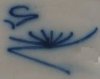
Pottery & porcelain
Delfts pottery marks
Dated Delfts pottery marks extend from 1700 to 1968. Italian and Spanish earthenware soon began to be imitated by potters from Netherlands.
- Products
- earthenware, porcelain
- Marks
- 6
Dated marks & timeline
6 marks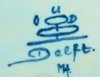
1940–1968
u o D Delft
painted · Nijmegen
Oud Delft was established in in 1920 and moved to Waddinxveen in 1996.

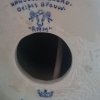
Undated
N.V
Arnhem
Plateelbakkerij Ram, , and gives factory production dates of 1935–1945 rather than dates for this mark.
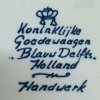
Undated
Mark image
Seen on a vase dated 1912; this does not establish the mark’s general use interval.
Royal Goedewaagen mark on the vase.
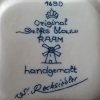
Undated
RAM
painted
RAAM Delfter Faience took over moulds and employees after production stopped in 1945. Its fully handpainted production ended when the factory closed in the early 1980s; these are factory dates, not a mark-use interval.
About Delfts
Second half of the 16th century is a time of increase in majolica production in Italy and Spain. Majolica is a tin glazed earthenware. Italian and Spanish earthenware soon began to be imitated by potters from Netherlands. Moreover in the beggining of the 17th century these Dutch potters were met with chinese porcelain competition. The effect of the situation was creation of delftware. Potters in Netgerlands used the tin-glaze technique to imitate Chinese porcelain.
The center of the delftware production became Delft. The city gained in importance after fall of Antwerp, the largest Dutch city as well as cultural, economic and financial centre of Netherlands. In 1585 potters fleeing from Antwerp settled in Delft. In 17th and 18th century Delft was a capital of European ceramics production. In 1710 in German Meissen began history of European porcelain, which also started to be produced in Netherlands.
In 1840 there was only one delftsware company left - De Porceleyne Fles. Popularity od delftware returned in the second half of 19th century. Here you can find clues how to date De Porceleyne Fles items.