
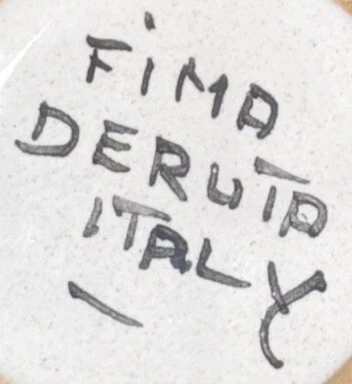
FIMA
Undated
FIMA / DERUTA / ITALY
FIMA workshop name above Deruta and Italy; the 1960 foundation is only a company-date lower bound.
painted inscription · maiolica / glazed earthenware · Deruta, Umbria, Italy
Ware & regional marks
Deruta Italy pottery marks include painted inscription “GERIBI / DERUTA / ITALY” on maiolica / glazed earthenware in Deruta, Umbria, Italy.
Production extends from the Middle Ages through the Renaissance to modern workshops. Deruta is a town and ceramic tradition, not a single company with a founding date.
FIMA
Undated
FIMA workshop name above Deruta and Italy; the 1960 foundation is only a company-date lower bound.
painted inscription · maiolica / glazed earthenware · Deruta, Umbria, Italy
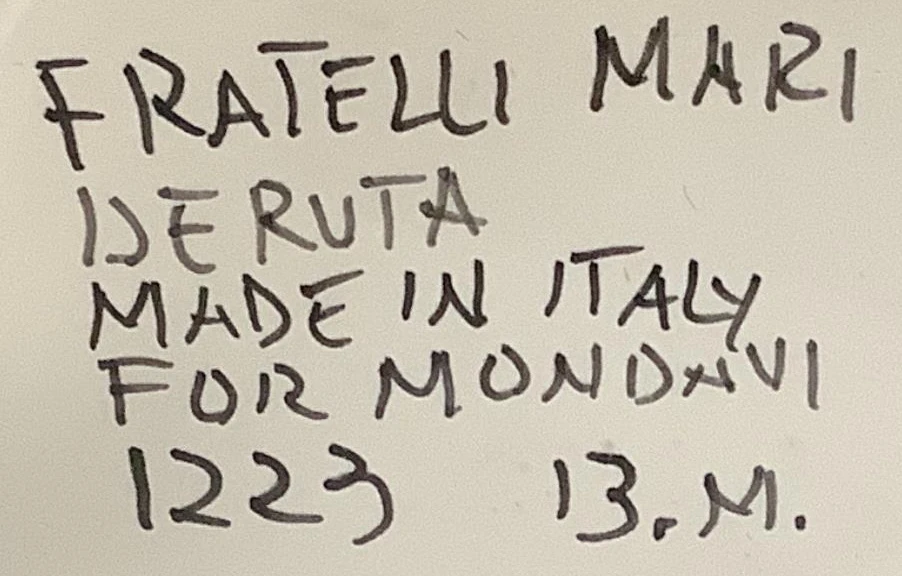
Fratelli Mari
Undated
Full Fratelli Mari wording with a separate customer name and number; 1223 is not a year.
painted inscription · maiolica / glazed earthenware · Deruta, Umbria, Italy
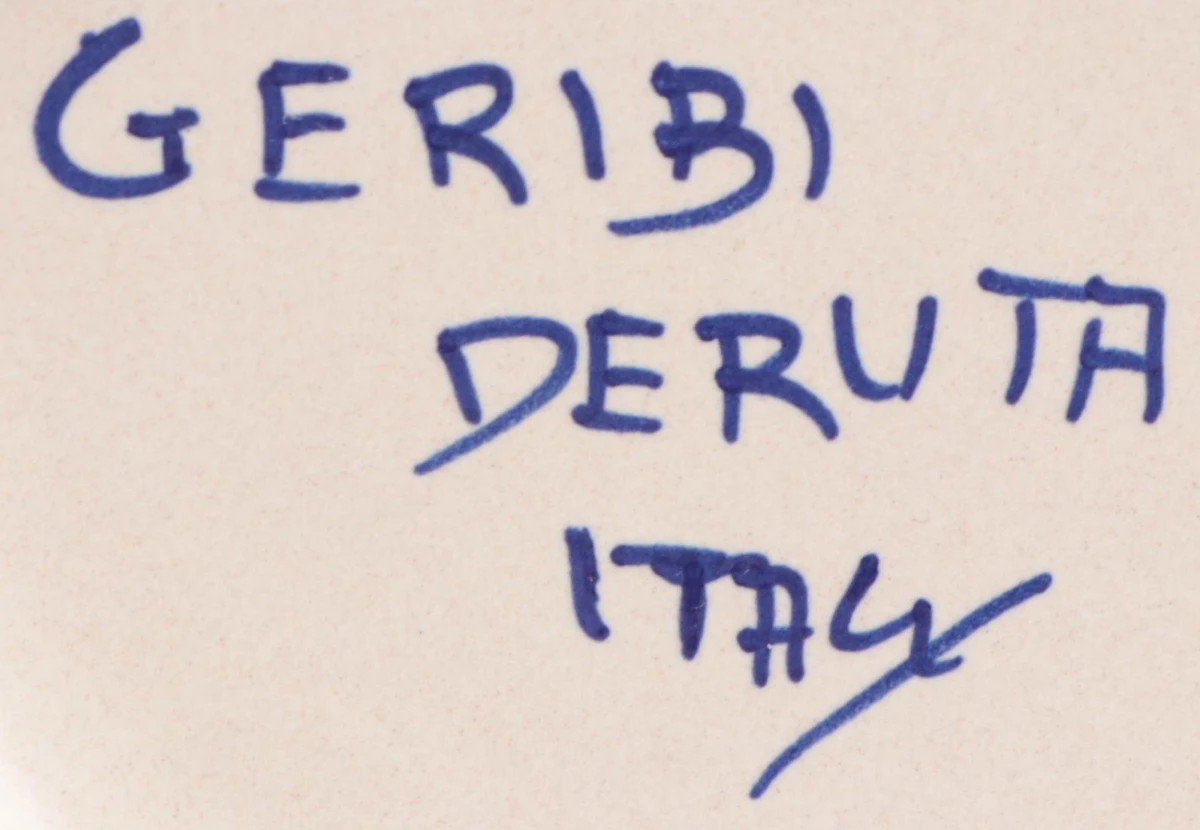
Geribi
Undated
Three-line blue handwritten format explicitly names Geribi rather than just the town.
painted inscription · maiolica / glazed earthenware · Deruta, Umbria, Italy
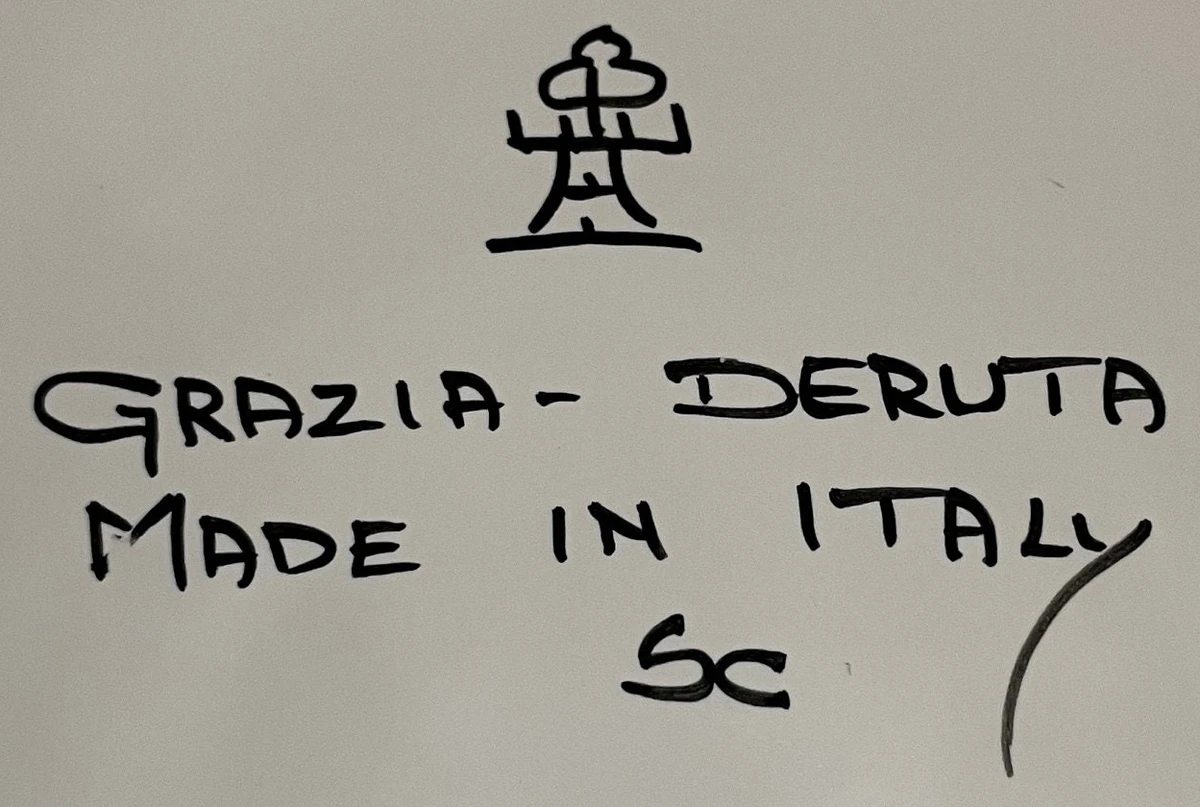
Grazia
Undated
Small emblem above the Grazia workshop name; SC below is an additional initial group, not a year.
painted inscription · maiolica / glazed earthenware · Deruta, Umbria, Italy
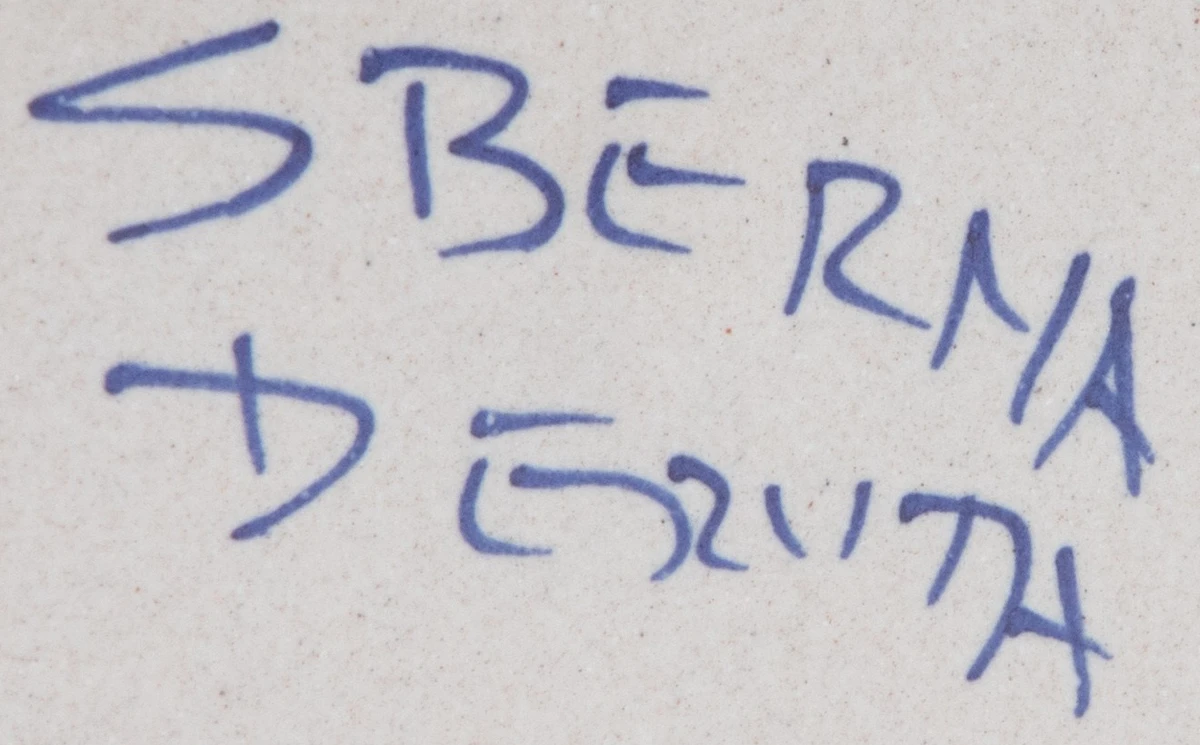
Sberna
Undated
Blue angular letters name Sberna; no country word or year appears in this example.
painted inscription · maiolica / glazed earthenware · Deruta, Umbria, Italy
Deruta is a pottery town in Umbria, central Italy, with a ceramic tradition extending back to the Middle Ages. Early workshops made everyday vessels decorated in copper green and manganese brown. By the fifteenth century, local maiolica had developed a wider palette and a growing decorative role. Plates, bowls, jugs and display pieces carried floral ornament, figures, grotesques and heraldic designs.
Renaissance workshops became known for lustre decoration, which added metallic effects to the glazed surface. Deruta shared techniques and visual themes with other Italian pottery centres, while painters adapted drawings, prints and earlier designs. Later production included quickly painted compendiario decoration and calligraphic patterns. Ceramic floor tiles and devotional plaques formed other important parts of the town’s output.
Training, collecting and renewed interest in historic designs supported later production. The Regional Ceramics Museum, founded in 1898, preserved older wares and helped local craftspeople study traditional designs. Modern workshops continue tableware and decorative ceramics, often drawing on Renaissance patterns. Grazia, Geribi, Sberna, FIMA and Fratelli Mari are separate producers whose names accompany Deruta on their wares. A town inscription identifies the place; the additional workshop name identifies the maker.
Also known as: Deruta pottery · Deruta maiolica · Deruta majolica · Deruta Italy marks · Maiolica of Deruta, Umbria, Italy
Another Umbrian centre known for lustre decoration. The shared technique does not make it Deruta; a named workshop or town inscription provides a different clue.
Another major Italian production centre with overlapping forms and painted themes. Faenza and Deruta are place names, each encompassing multiple makers.