
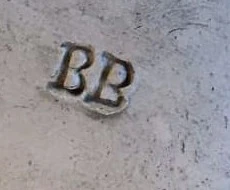
Undated
BB
BB alone, without a place name or country line.
impressed · glazed earthenware · Dubí (Eichwald), Bohemia
Pottery & porcelain
The name “Eichwald / CZECHOSLOVAKIA” appears among Eichwald pottery marks on glazed earthenware from Dubí (Eichwald), Bohemia.
1869 refers to the Tschinkel predecessor at Eichwald, not the beginning of Bloch ownership. Bloch acquired Hohenstein in 1871; the Eichwald businesses changed names and ownership in the twentieth century. No single final closure date established.
Undated
BB alone, without a place name or country line.
impressed · glazed earthenware · Dubí (Eichwald), Bohemia
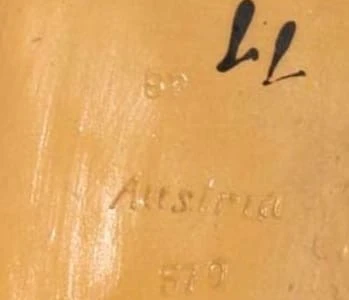
Undated
Austria accompanies the BB initials; the country line differs from later Czechoslovakia wording.
impressed · glazed earthenware · Dubí (Eichwald), Bohemia
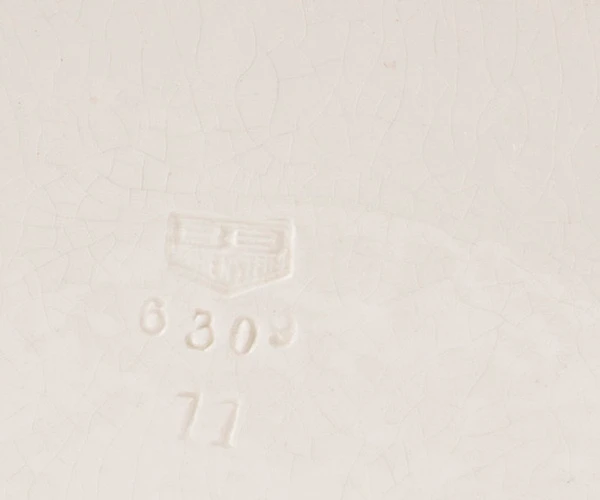
Undated
HOHENSTEIN identifies the related Bloch factory at Unčín, rather than proving manufacture at the Eichwald site.
impressed · glazed earthenware · Unčín (Hohenstein), Bohemia
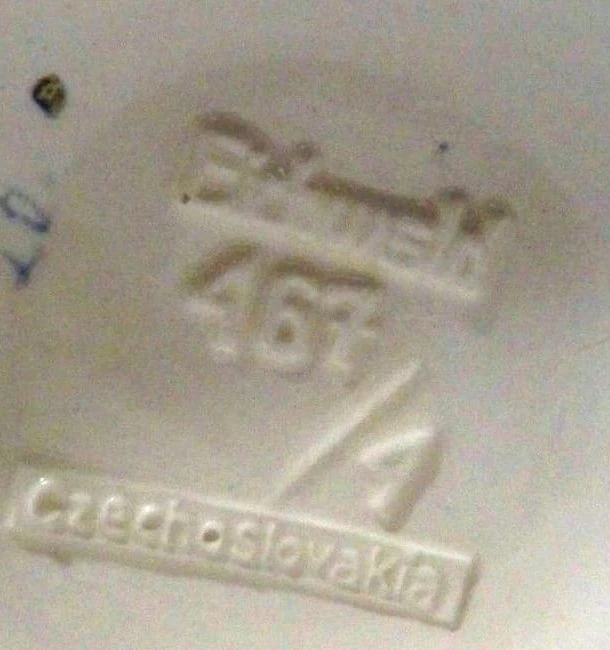
Undated
The Czechoslovakia panel distinguishes this composite mark from the name-only impression.
moulded in relief · glazed earthenware · Dubí (Eichwald), Bohemia
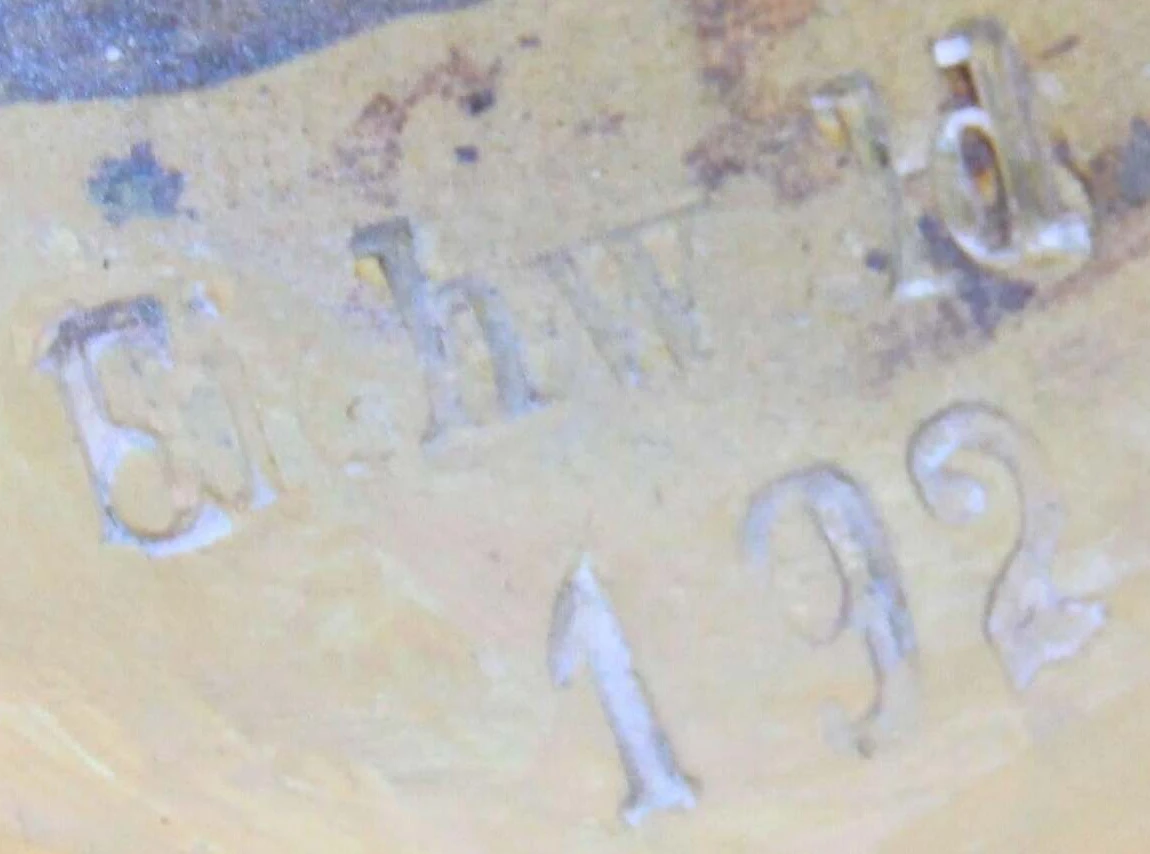
Undated
The full Eichwald name is sunk into the body, without the raised country panel.
impressed · glazed earthenware · Dubí (Eichwald), Bohemia
Eichwald was a ceramics centre in northern Bohemia, now Dubí in the Czech Republic. Anton Tschinkel established a factory there in 1869. Bernhard Bloch, also known as Bernard Bloch, built a larger manufacturing group by purchasing existing works. His first pottery was the Hohenstein business, at present-day Unčín, acquired in 1871. Later purchases added majolica and porcelain production at Eichwald. The Meissen Stove and Porcelain Factory at Eichwald came into his ownership in 1899.
The Bloch factories made ornamental and table wares in several ceramic bodies. Their majolica included jardinieres, smoking accessories, decorative vessels and elaborate figural compositions. Moulded natural forms and richly coloured glazes were prominent features. By 1906 the group employed about 750 people and sold through representatives in major European cities. Eichwald became a recognisable name on its earthenware, while BB initials also appeared on factory products.
The businesses separated around 1921 into an Eichwald company and a B. Bloch enterprise associated with Stella Bloch at Hohenstein. The Eichwald works subsequently operated under the Dr. Widera name. Marks therefore preserve different factory and ownership contexts: BB, Eichwald and BB Hohenstein belong within the wider history but do not always identify the same production site. Country wording also reflects the political changes from Austria-Hungary to Czechoslovakia.
Also known as: Bernhard Bloch · Bernard Bloch · Eichwalder Porzellan- und Ofenfabrik · Eichwald majolica · B. Bloch & Co., Eichwald pottery and porcelain factories
Both made Bohemian majolica with elaborate moulding. Schiller uses WS&S, sometimes in a raised cartouche; Bloch uses BB or an Eichwald factory name.
Similar Art Nouveau majolica can carry Austria wording. Dressler’s characteristic device is a tower above JDB, rather than BB or Eichwald.