About Fiesta
Fiesta dinnerware was introduced by the Homer Laughlin China Company in January 1936 at the Pittsburgh Pottery and Glass Exhibit. Designed by Frederick Hurten Rhead, the range combined simple shapes, concentric rings and strongly coloured glazes. Customers could buy individual pieces and mix colours rather than purchasing a single matching service. The pottery was made at the company’s works in Newell, West Virginia.
The original range included plates, cups, bowls, pitchers and a broad assortment of serving pieces. Red, yellow, cobalt blue, green and ivory formed the first colour group, with other colours and shapes added over the following decades. Its ringed surfaces and distinctive handles linked practical tableware with the streamlined design of the period. Production of the original Fiesta line ended in 1973.
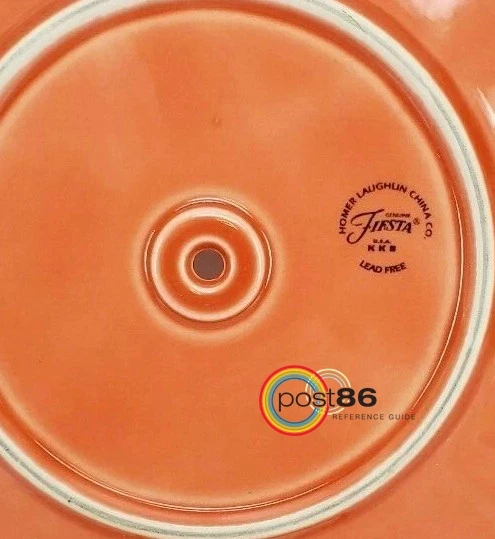
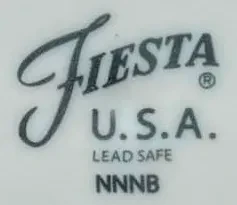
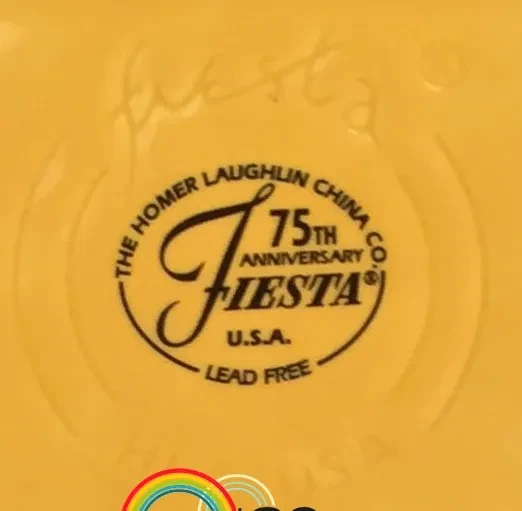
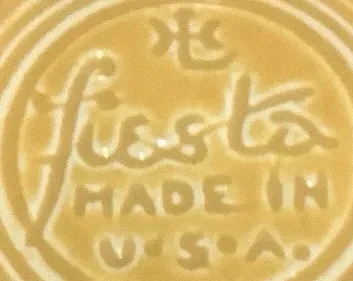
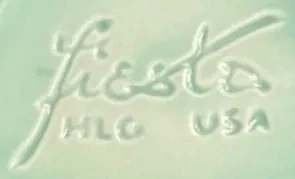
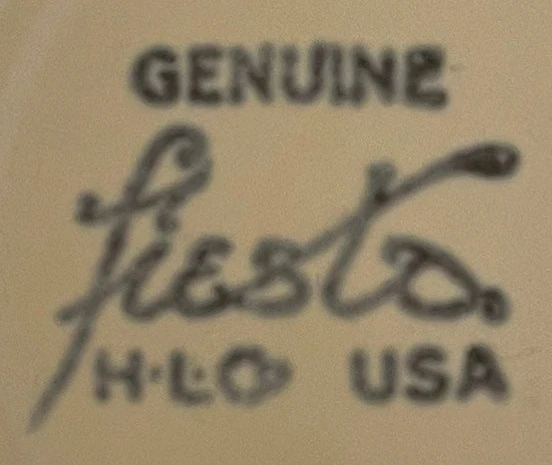
Fiesta returned in 1986 for its fiftieth anniversary, with new colours and a revised ceramic body. The revived range developed its own backstamps, including factory names, production codes and anniversary designs. Impressed marks occur on moulded hollow pieces, while many flat pieces carry an ink stamp beneath the glaze. Both methods remain part of Fiesta’s marking history.