
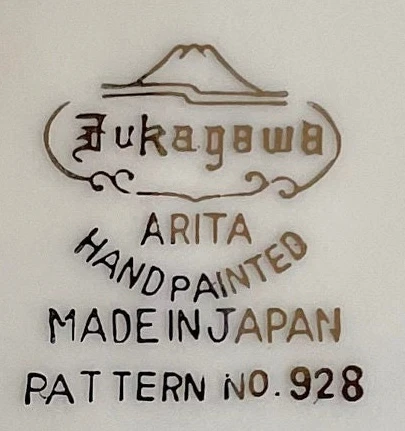
Undated
Fukagawa / ARITA / HAND PAINTED / MADE IN JAPAN / PATTERN NO. 928
English name in decorative brackets above Arita and hand-painted wording. Other pattern numbers with this layout are not additional designs.
printed
Pottery & porcelain
Fukagawa Porcelain marks include printed “Fukagawa / ARITA / HAND PAINTED / MADE IN JAPAN / PATTERN NO. 928” lettering.
Founded 1894; continues in operation. Earlier Fukagawa-family and Koransha production is distinguished from this company.
Undated
English name in decorative brackets above Arita and hand-painted wording. Other pattern numbers with this layout are not additional designs.
printed
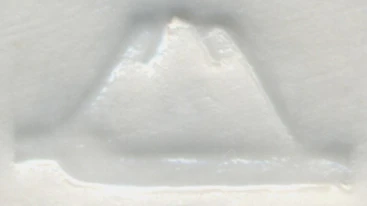
Undated
Simple mountain-only recess on the six-poets chopstick rest; the separate river below the fan-rest mark is absent.
impressed
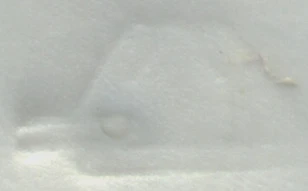
Undated
Uncolored recessed mountain-and-stream device on the fan-shaped chopstick rest; different construction from the blue printed mark.
impressed
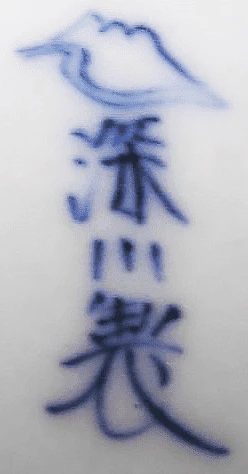
Undated
Vertically written Fukagawa sei below a small mountain; name characters distinguish it from the wordless emblem.
painted underglaze
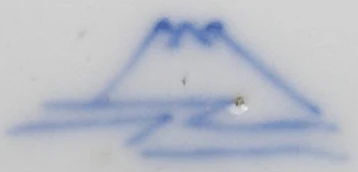
Undated
Wordless blue emblem with a winding stream under the mountain, unlike the plain impressed mountain.
printed underglaze
Fukagawa Seiji was founded in Arita, Saga Prefecture, in 1894 by Fukagawa Chūji. His family had worked in porcelain for generations, and his father, Fukagawa Eizaemon VIII, had helped establish Koransha. Chūji developed a separate business with an emphasis on artistic design and technical refinement. Mount Fuji and flowing water became its identifying trademark.
The company gained international recognition through the large decorated vases shown at the Paris exposition in 1900 and the St. Louis exposition in 1904, where it received gold awards. European sales developed through the Watt firm in Birmingham. Its production included elaborate exhibition pieces, decorative vases and tableware. Translucent white porcelain and carefully graduated underglaze blue became characteristic of its work.
Fukagawa Seiji became a supplier to the Imperial Household in 1910. It also supplied dinner services for naval officers and passenger ships. The company began producing bone china in 1963. Its work continued through later generations of the family, combining daily tableware with ornamental pieces. Older imperial services can require replacement pieces made to match their original dimensions, decoration and weight, preserving demanding workshop techniques alongside newer designs.
Also known as: Fukagawa Seiji · Fukagawa Porcelain · 深川製磁 · Fukagawa Arita · Fukagawa Seiji Co., Ltd.
The related Fukagawa-family business uses an orchid device. It is a separate manufacturer from Chūji’s 1894 company, whose principal emblem is Mount Fuji and a stream.
Some similar devices include Nippon or Made in Japan and lack the Fukagawa characters. Match the full inscription and mountain drawing; a landscape emblem alone is insufficient.