
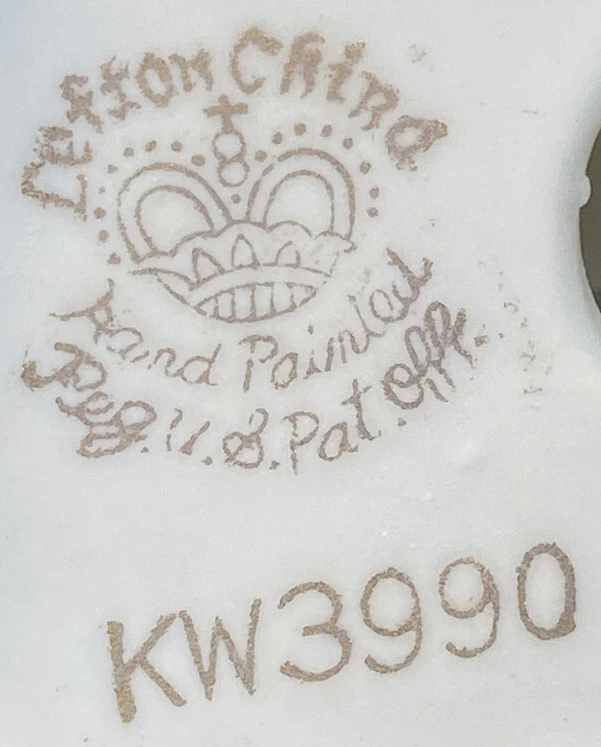
c. 1949–1955
Lefton China / Hand Painted / Reg. U.S. Pat. Off.; KW3990
Adds Reg. U.S. Pat. Off. beneath the crown-and-name design; KW3990 is a separate model number.
printed · ceramic · Japan
Pottery & porcelain
Lefton marks are associated with porcelain giftware and figurines from United States. Lefton marks include dated examples from 1949–1955.
Established circa 1940–1941; giftware division sold to OMT in 2005 and continued under its name at that time.
c. 1949–1955
Adds Reg. U.S. Pat. Off. beneath the crown-and-name design; KW3990 is a separate model number.
printed · ceramic · Japan
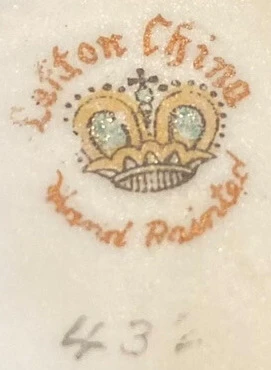
Undated
Crown encircled by the name and Hand Painted, without registration wording.
printed · ceramic
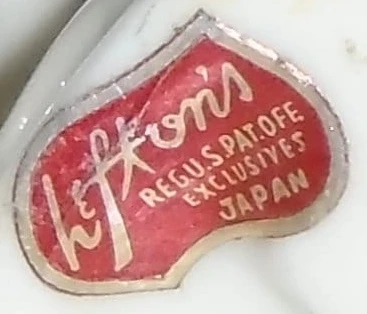
Undated
Red and gold applied label with registration wording and JAPAN; differs from Trade Mark/Taiwan label.
foil label · ceramic · Japan
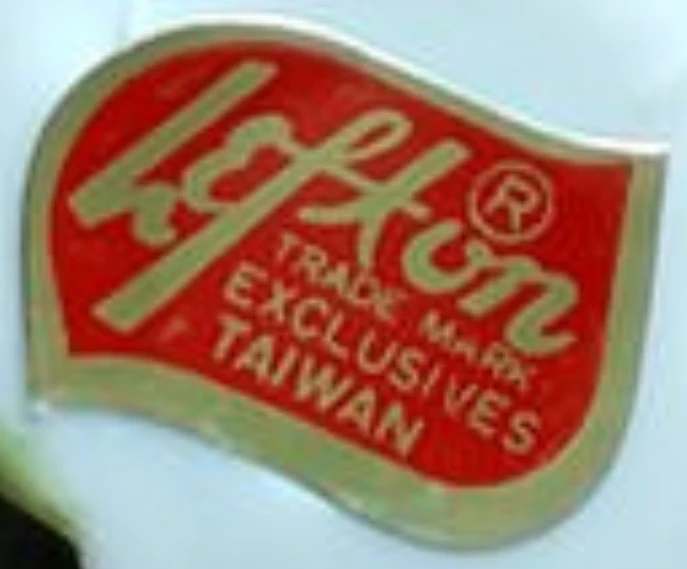
Undated
Trade Mark wording replaces the patent-office phrase and Taiwan replaces Japan.
foil label · ceramic · Taiwan
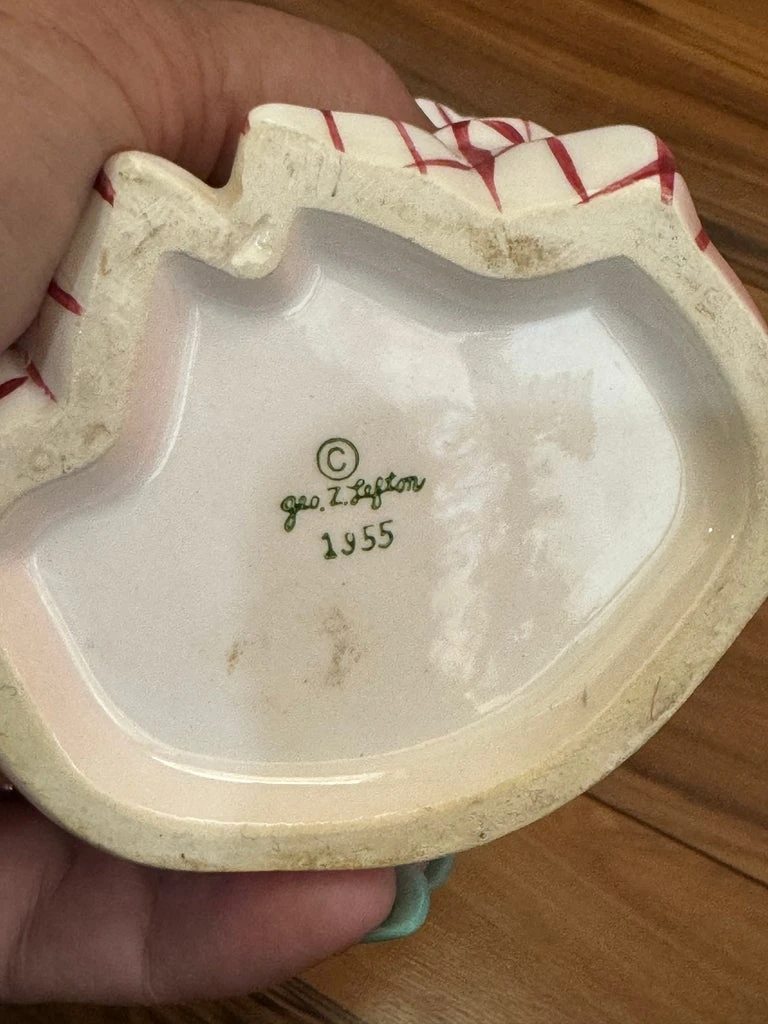
Undated
Founder’s abbreviated name in script instead of the circular crown mark; copyright year below.
printed · ceramic
George Zoltan Lefton emigrated from Hungary to the United States in 1939. He had worked in sportswear design and manufacturing and collected porcelain. Around 1940–1941, he established a business in Chicago to import and distribute decorative goods. Lefton was an importer and wholesaler rather than one porcelain factory; its name could accompany wares made by different suppliers.
After the Second World War, Japan supplied most of its ceramic goods. The range included tea sets, figurines, planters, wall pockets, cookie jars and salt and pepper shakers. Bluebirds, angels and the cat character Miss Priss became recognisable subjects. The company also distributed some metal and wooden objects. During the 1970s its sourcing expanded beyond Japan to countries including Taiwan, Malaysia and China.
Lefton used several marking systems: permanent printed stamps, removable labels and model numbers. Some objects retained both a fired crown mark and a red foil importer’s label. The wording and country of origin changed while familiar symbols continued. In April 2005, OMT Enterprises of Gardena, California, announced its purchase of the Lefton giftware division and continuation of the brand.
Also known as: Lefton China · George Zoltan Lefton Company · Lefton-Pacific Inc. · G.Z.L. · Geo. Zoltan Lefton Company / The Lefton Company
Another importer of Japanese decorative ceramics with similar figurines and household subjects. Compare the actual importer’s name and label rather than the subject alone.
Decorative Japanese imports can share the same period and subject matter. Its Ardalt wording is different from Lefton’s crown and name.