
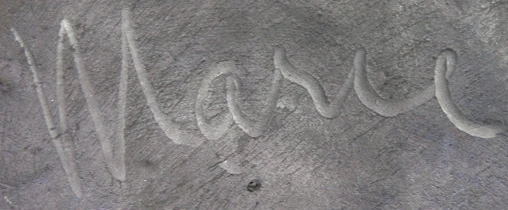
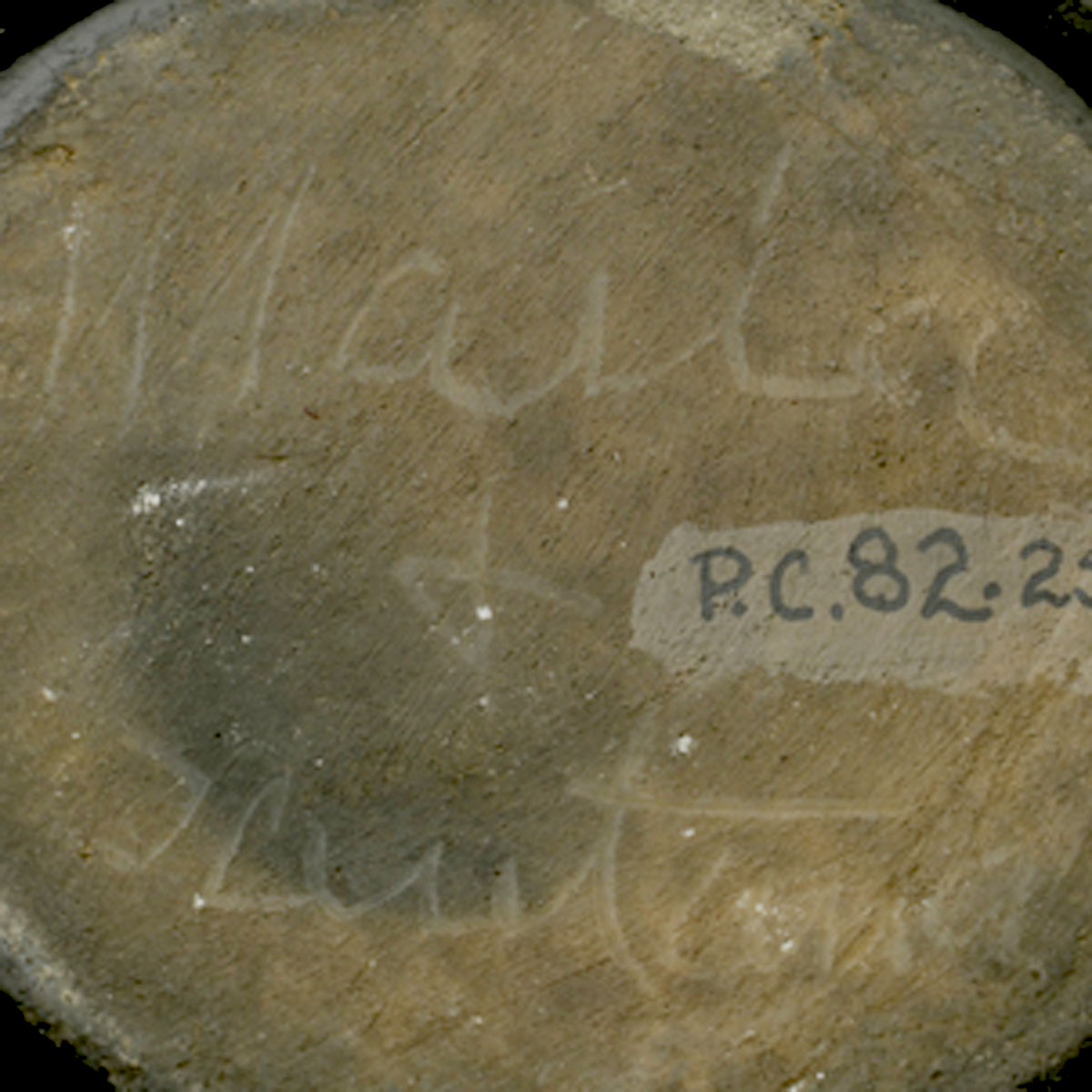
c. From 1923
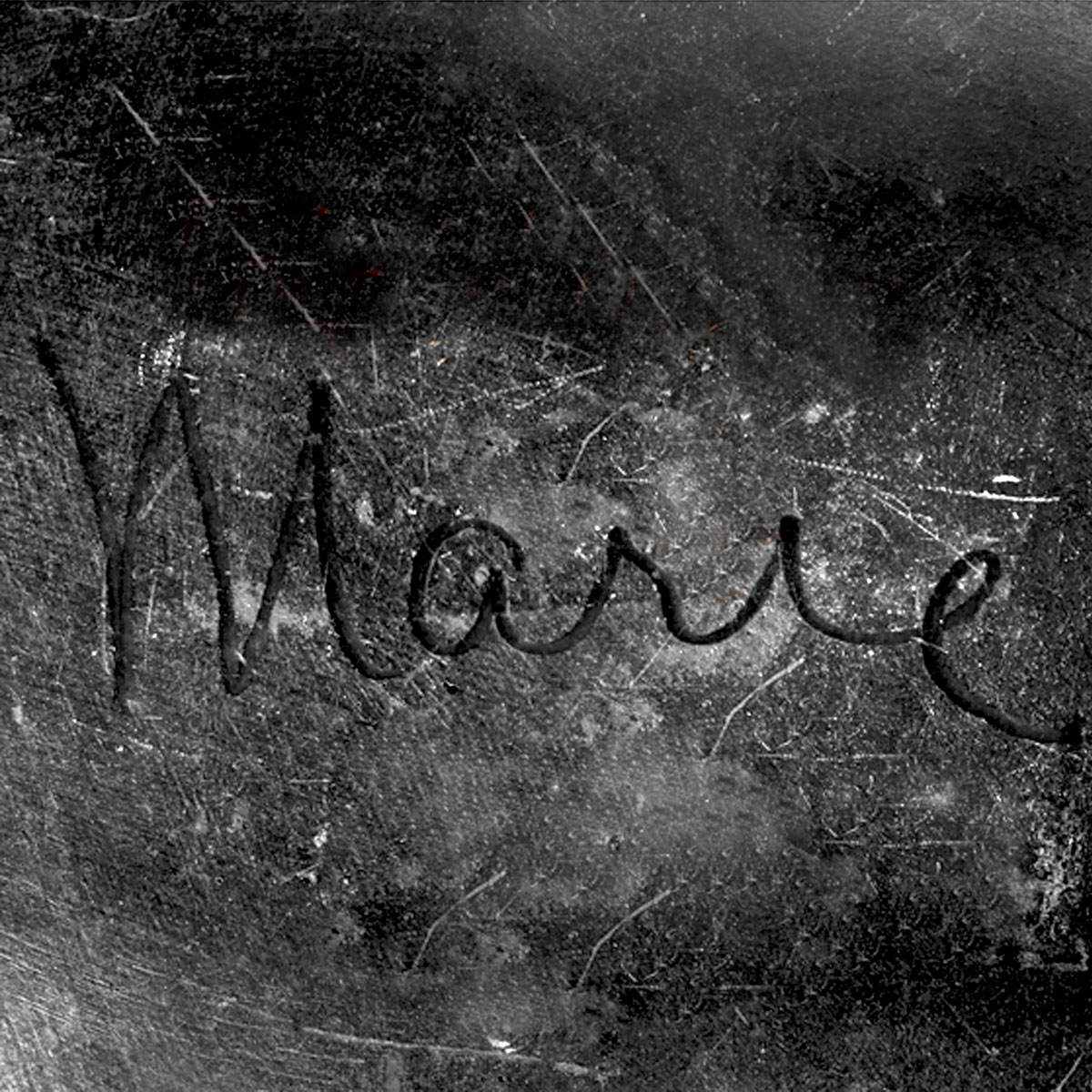
Marie
Single anglicized first name; Julian may still have decorated the pot.
incised signature · Earthenware · San Ildefonso Pueblo, New Mexico, United States
Pottery & porcelain
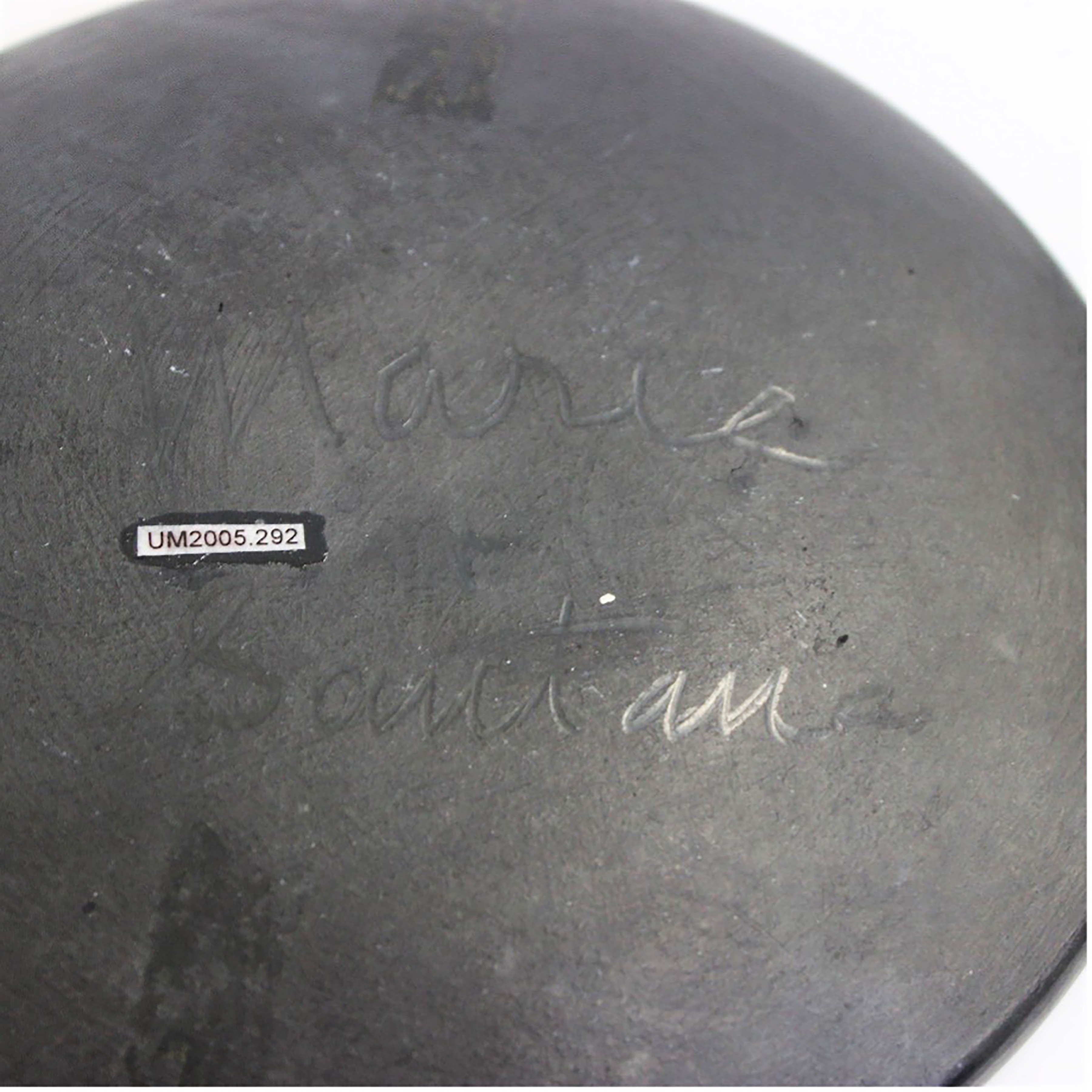
On Earthenware from San Ildefonso Pueblo, New Mexico, United States, Maria Martinez signature carries “Maria + Santana”.
Making pottery by 1904; retired in the 1970s. Born c.1886–1887, died 1980; birth year varies between institutional records.
c. From 1923
Single anglicized first name; Julian may still have decorated the pot.
incised signature · Earthenware · San Ildefonso Pueblo, New Mexico, United States
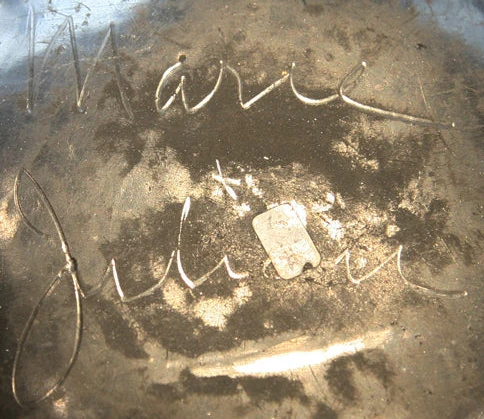
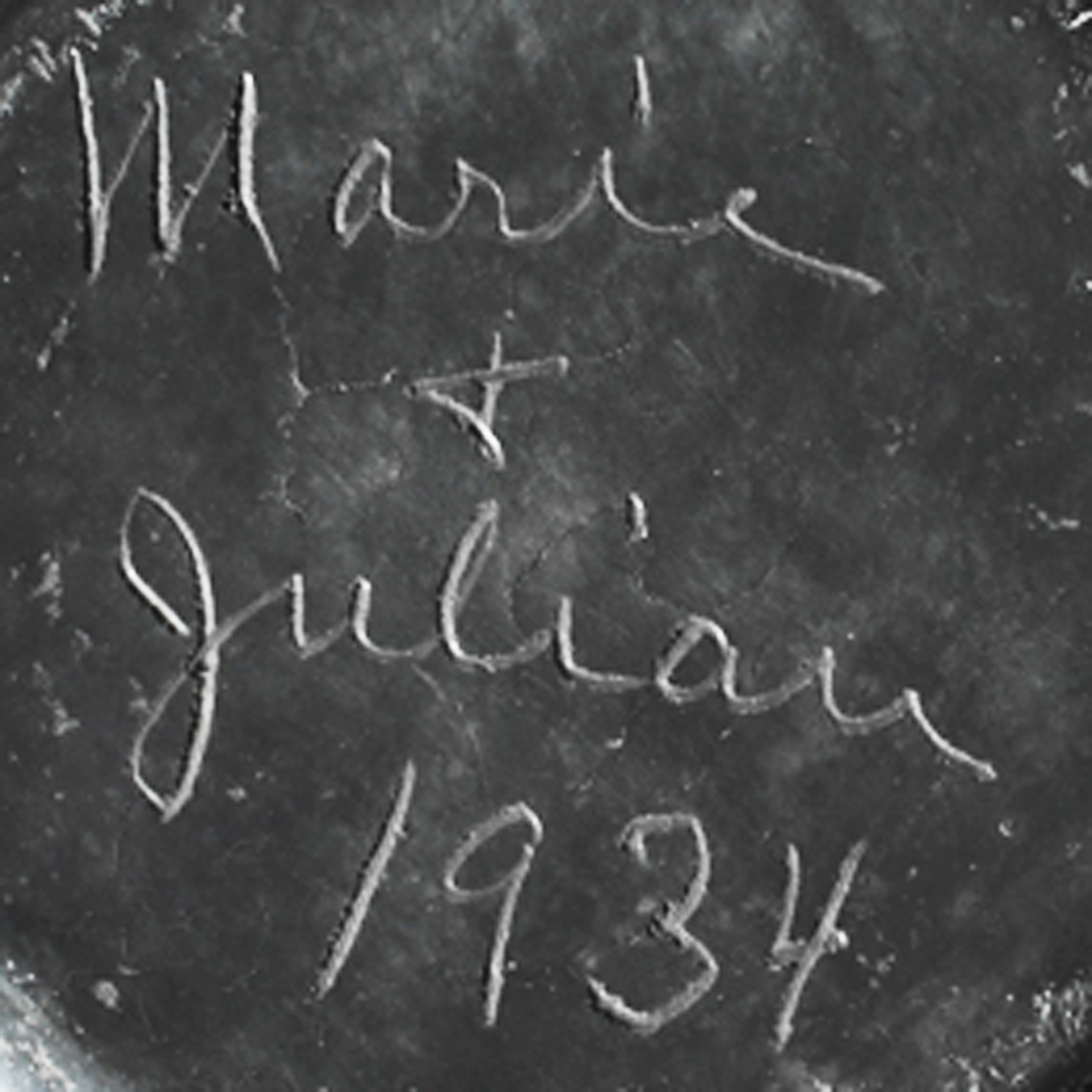
c. 1925–1943
Both Marie and Julian appear, rather than a single first name.
incised signature · Earthenware · San Ildefonso Pueblo, New Mexico, United States
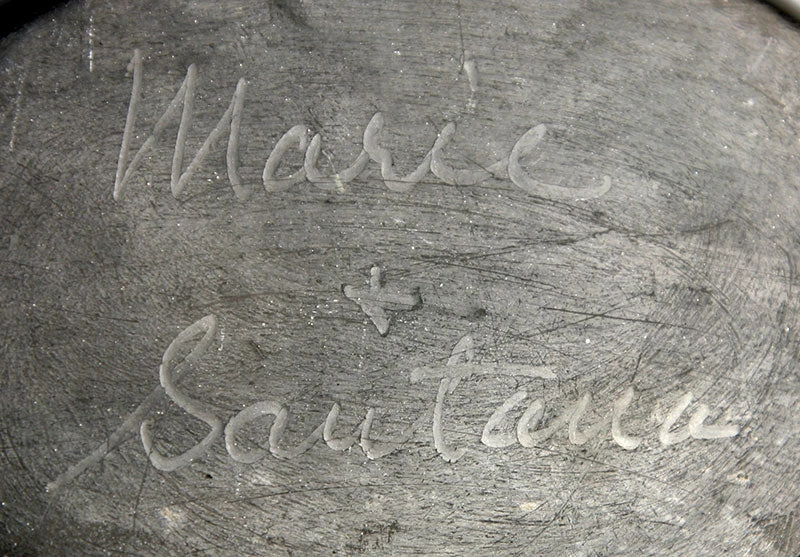
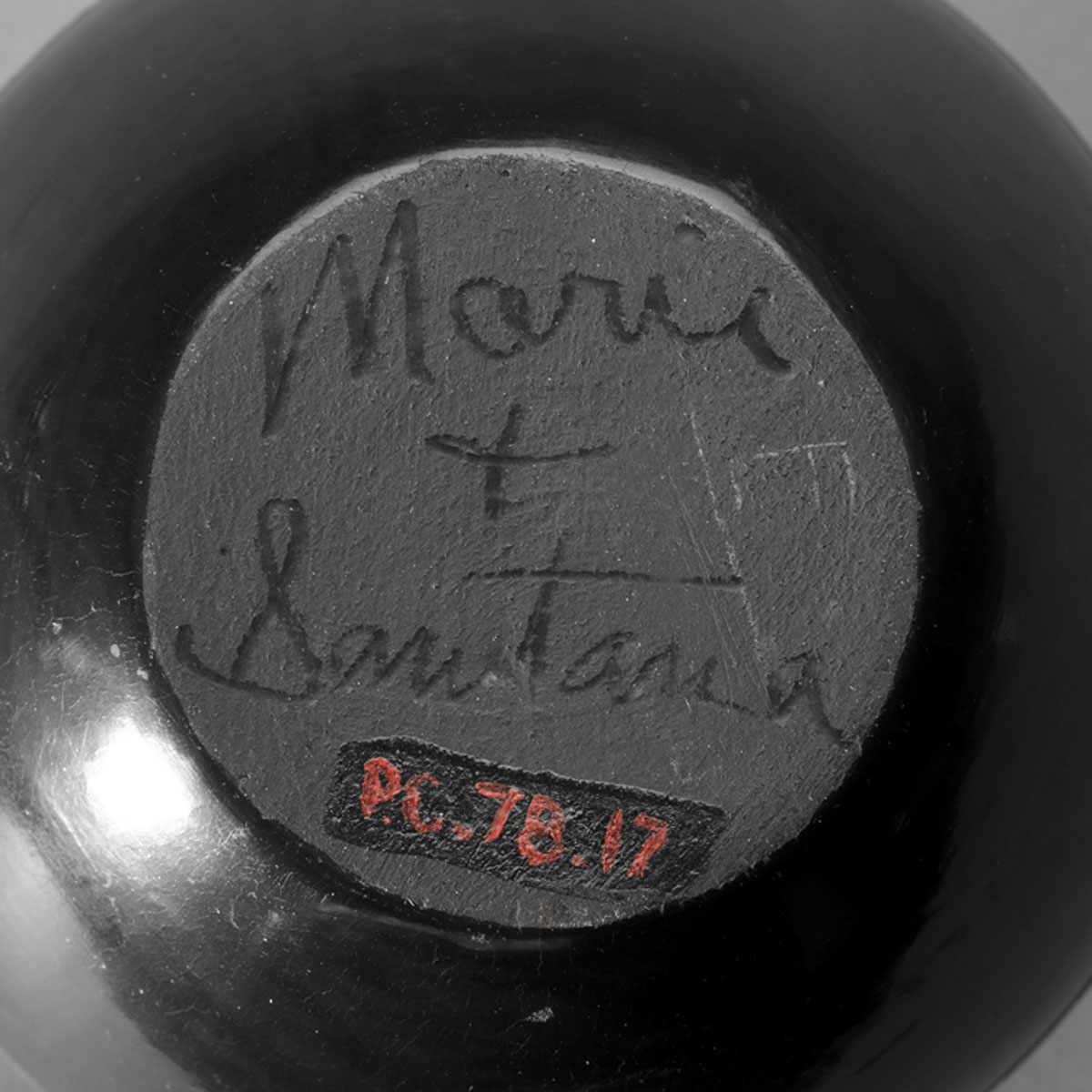
c. 1943–1956
Marie with final e, paired with Santana.
incised signature · Earthenware · San Ildefonso Pueblo, New Mexico, United States
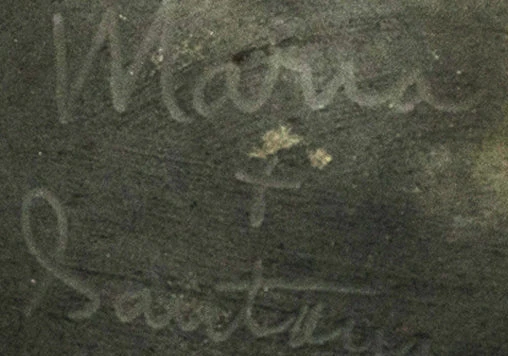
c. 1954–1956
Maria with final a, paired with Santana.
incised signature · Earthenware · San Ildefonso Pueblo, New Mexico, United States
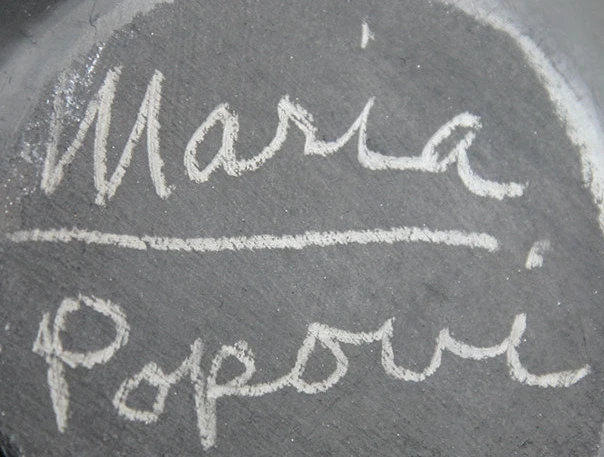
c. 1956–1971
Popovi below a horizontal divider; no firing date in this example.
incised signature · Earthenware · San Ildefonso Pueblo, New Mexico, United States
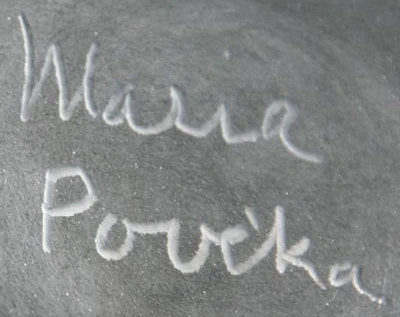
c. From 1956
Poveka instead of a decorator’s name; associated with undecorated ware.
incised signature · Earthenware · San Ildefonso Pueblo, New Mexico, United States
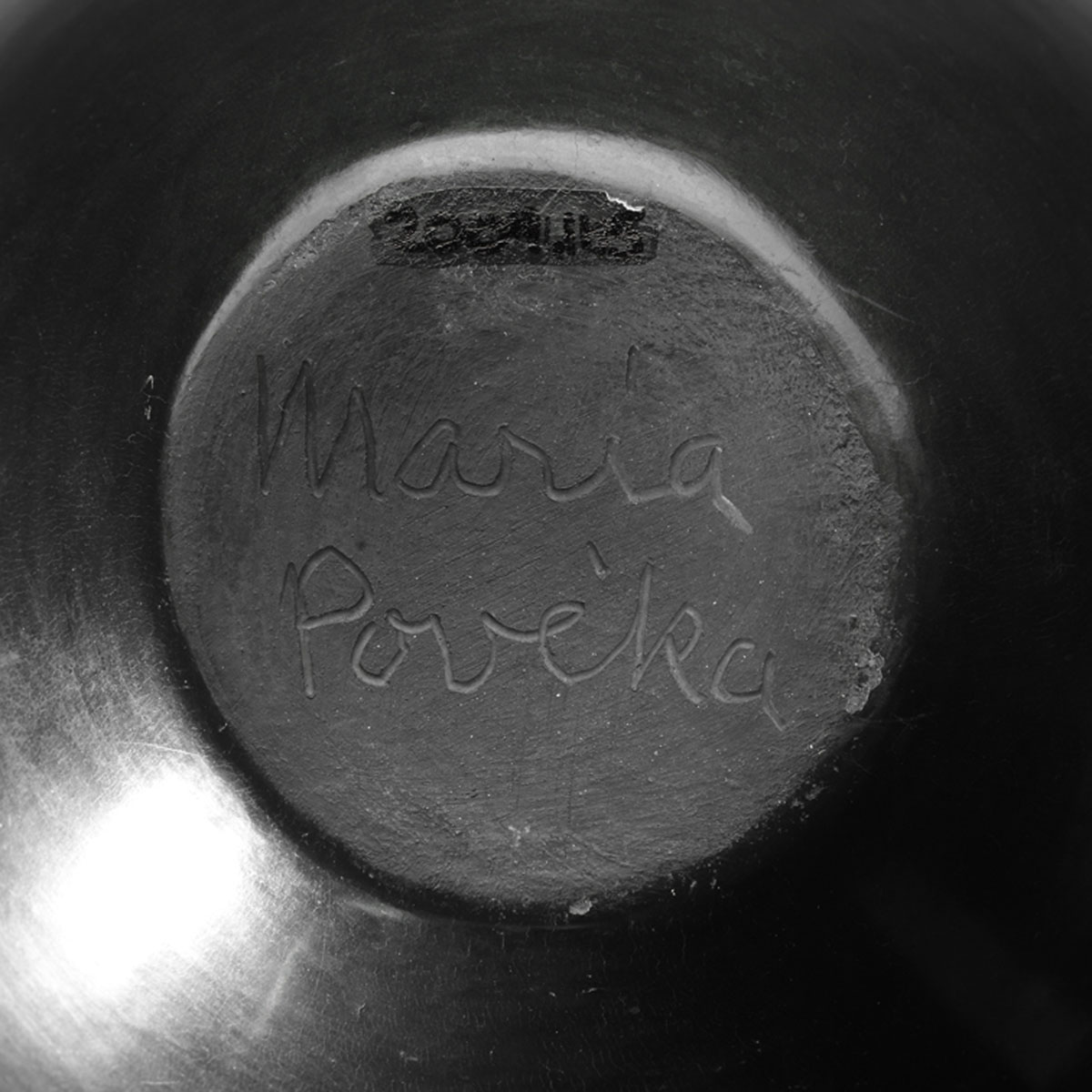
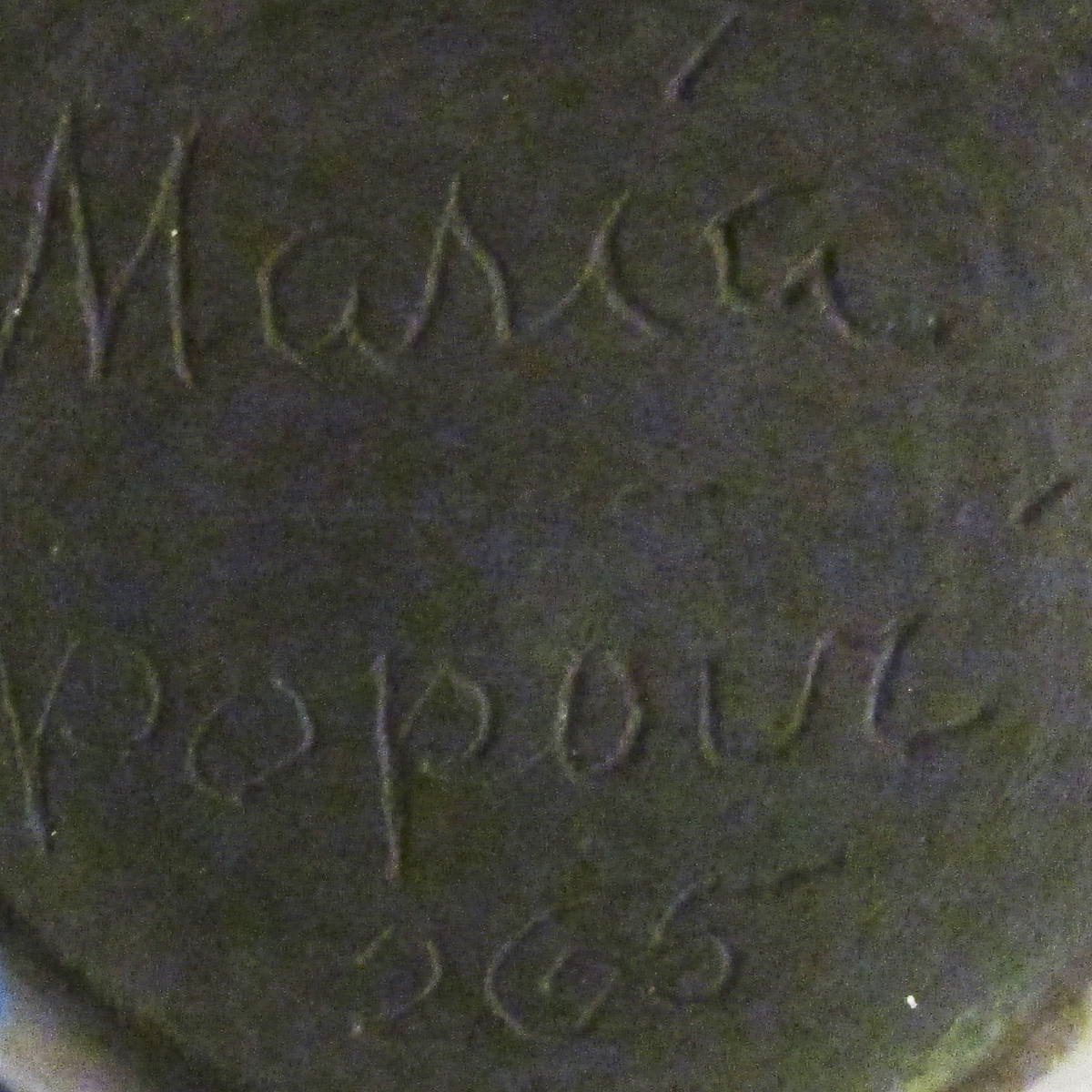
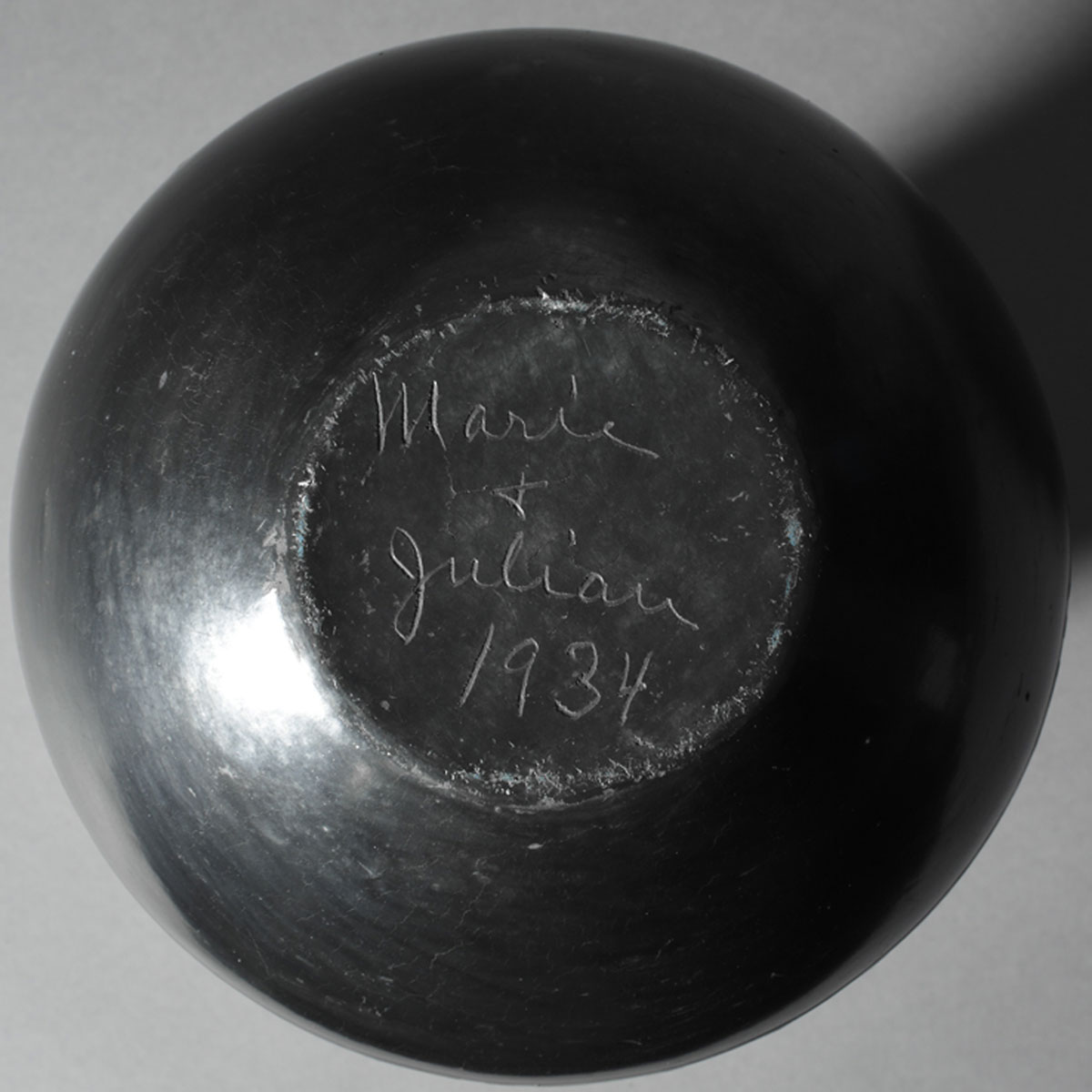
Undated
Example dated 1934.
local clay
Illustrated object: Vase. Method: coiled. Surface: burnished, slip.
Maria Montoya Martinez was a Tewa potter from San Ildefonso Pueblo, New Mexico. She learned pottery making within her family and was already an accomplished maker when she married Julian Martinez in 1904. She formed and polished the vessels, while Julian painted their designs and helped fire them. Their early work included the polychrome pottery of their community. Archaeologist Edgar Lee Hewett encouraged the couple to study and reproduce ancestral Pueblo pottery.
Around 1918–1920, Maria and Julian developed the black-on-black ware for which they became particularly well known. Matte painted designs contrast with a polished black surface, produced through a firing with reduced oxygen. Their vessels reached collectors beyond the pueblo, and Maria began signing pots in 1923. Her signatures initially used the spelling Marie and later included collaborators’ names.
Julian died in 1943. Maria then worked with her daughter-in-law Santana, followed by her son Popovi Da from 1956. Popovi decorated and fired her vessels and introduced additional finishes. Plain polished pots could carry Maria’s name with Poveka, her Tewa name. Maria retired during the 1970s and died in 1980. Several generations of her family continued making pottery.
Also known as: Maria · Marie · Poveka · Po’ve’ka · Maria Montoya Martinez
They made their own pottery, signed Santana & Adam, after working with Maria. Those names alone do not signify a pot formed by Maria.
He made independent work as well as collaborations. Popovi Da alone differs from the two-name Maria/Popovi signature.