
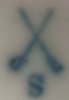
1885–1896
Crossed sword S Schlesische Porzellanfabrik Louis Lövinsohn and P. Donath
porcelain · Tiefenfurt, Silesia
Pottery & porcelain
From 1865 · 23 marks.
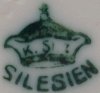
1885–1896
porcelain · Tiefenfurt, Silesia
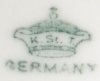
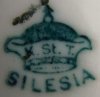
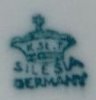
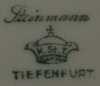
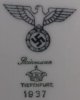
1919–1938
porcelain · Tiefenfurt, Silesia
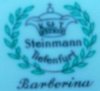
Steinmann K.St.T Tiefenfurt, Steinmann, Porzellanfabriken GmbH mark.
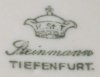
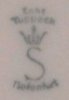
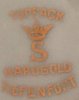


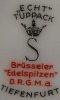
1919–1944
porcelain · Tiefenfurt, Silesia
"Echt" Tuppack S Brusseler "Edelspitzen" D.R.G.M.a. Tiefenfurt mark.
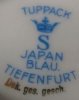
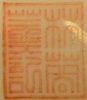
c. 1925–1944
porcelain · Tiefenfurt, Silesia
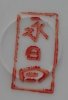
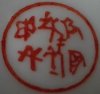
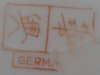
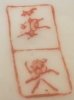
Tuppack Tiefenfurt chinese style mark ca. .
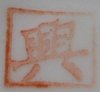
c. 1930–1935
porcelain · Tiefenfurt, Silesia
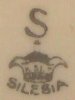
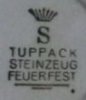
K. Steinmann Porzellanfabriken, Abt. II, 'S Silesia' ca. mark.
Tiefenfurt had three porcelain and faience factories. One, founded by Johann Heinrich Nicolai Matthiesen in 1808, later passed to Louis Lövinsohn, Paul Donath and, in 1918, Carl Hans Tuppack, who operated it until 1944. A second factory began under Christian Mathiesen in 1832 and was acquired by Kuno Steinmann in 1901. A third, founded by Carl Rädisch in 1865, passed to Kuno Steinmann in 1883 and shifted towards oven-proof ceramics in 1929.
The source gives conflicting accounts of the Steinmann business ending: a sale in 1932 during the Depression or the partly Jewish family being forced out by the Nazis in 1938.