
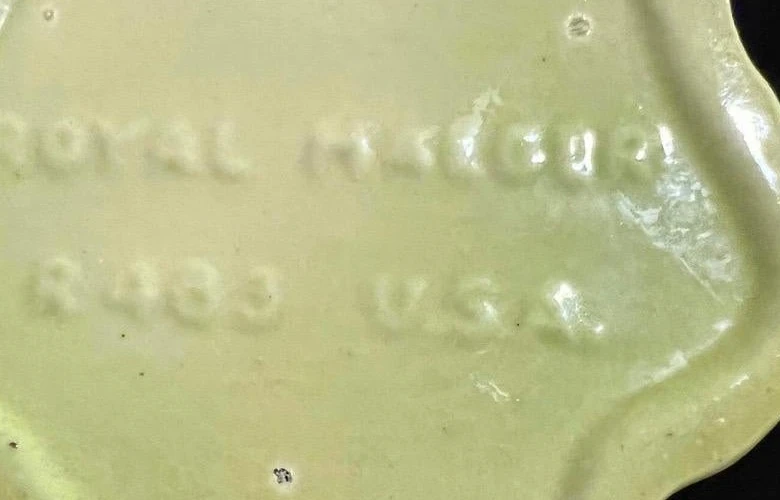
c. 1940
ROYAL HICKMAN / R-483 / USA
Designer name without HAEGER; maker attribution here relies on the identified Haeger R-483 shell model, not on Hickman’s name alone.
moulded · glazed ceramic
Pottery & porcelain
The name “ROYAL HAEGER / BY / ROYAL HICKMAN / U.S.A. / 455.” appears among Royal Haeger Pottery marks on glazed ceramic.
Royal Haeger line introduced 1938; parent Haeger business began in 1871. Factory operations ended in 2016. Designer Royal Arden Hickman’s career is not the line’s lifespan.
c. 1940
Designer name without HAEGER; maker attribution here relies on the identified Haeger R-483 shell model, not on Hickman’s name alone.
moulded · glazed ceramic
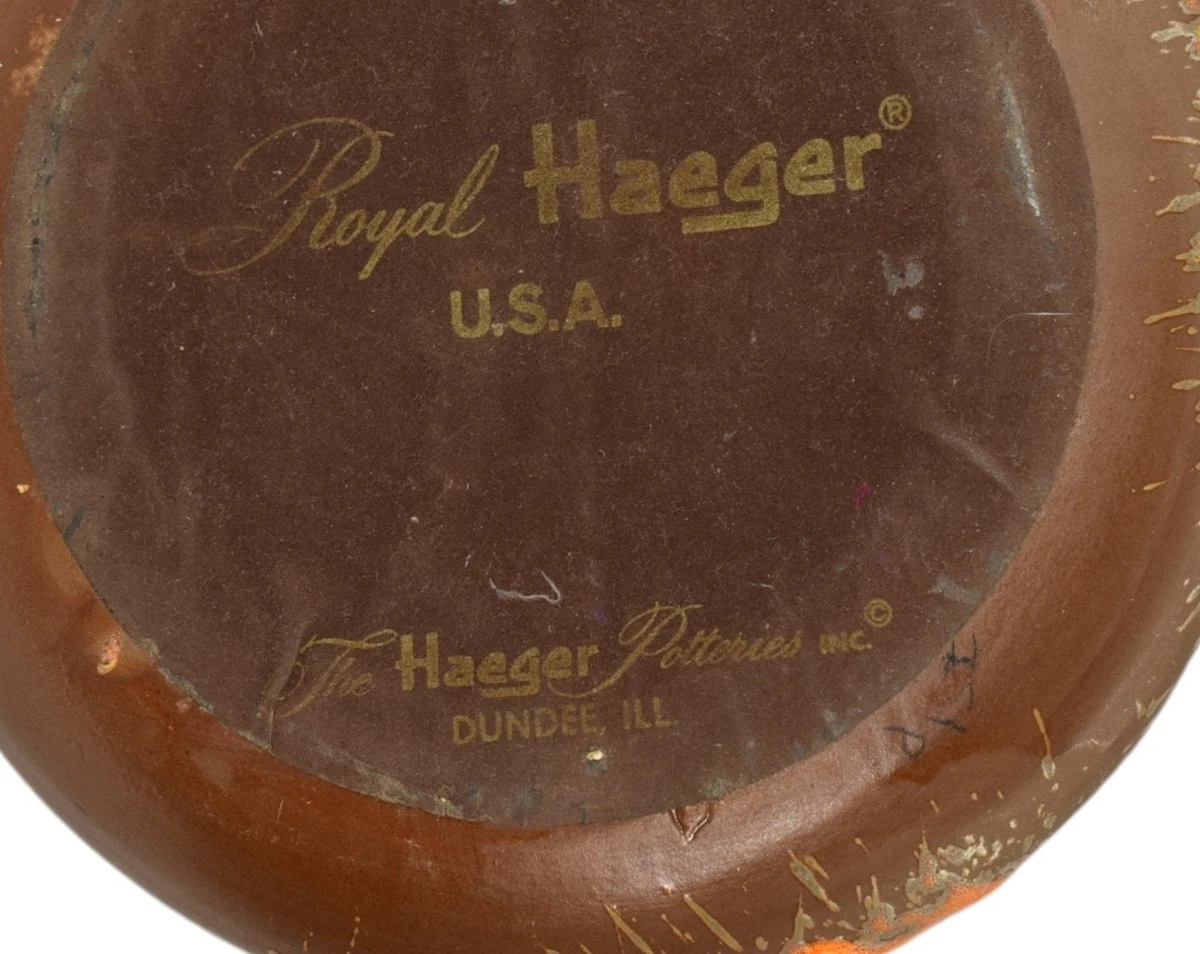
c. 1970–1979
Printed felt backing carries the company name and Dundee address; different from lettering formed in the ceramic base.
printed label · glazed ceramic; felt backing
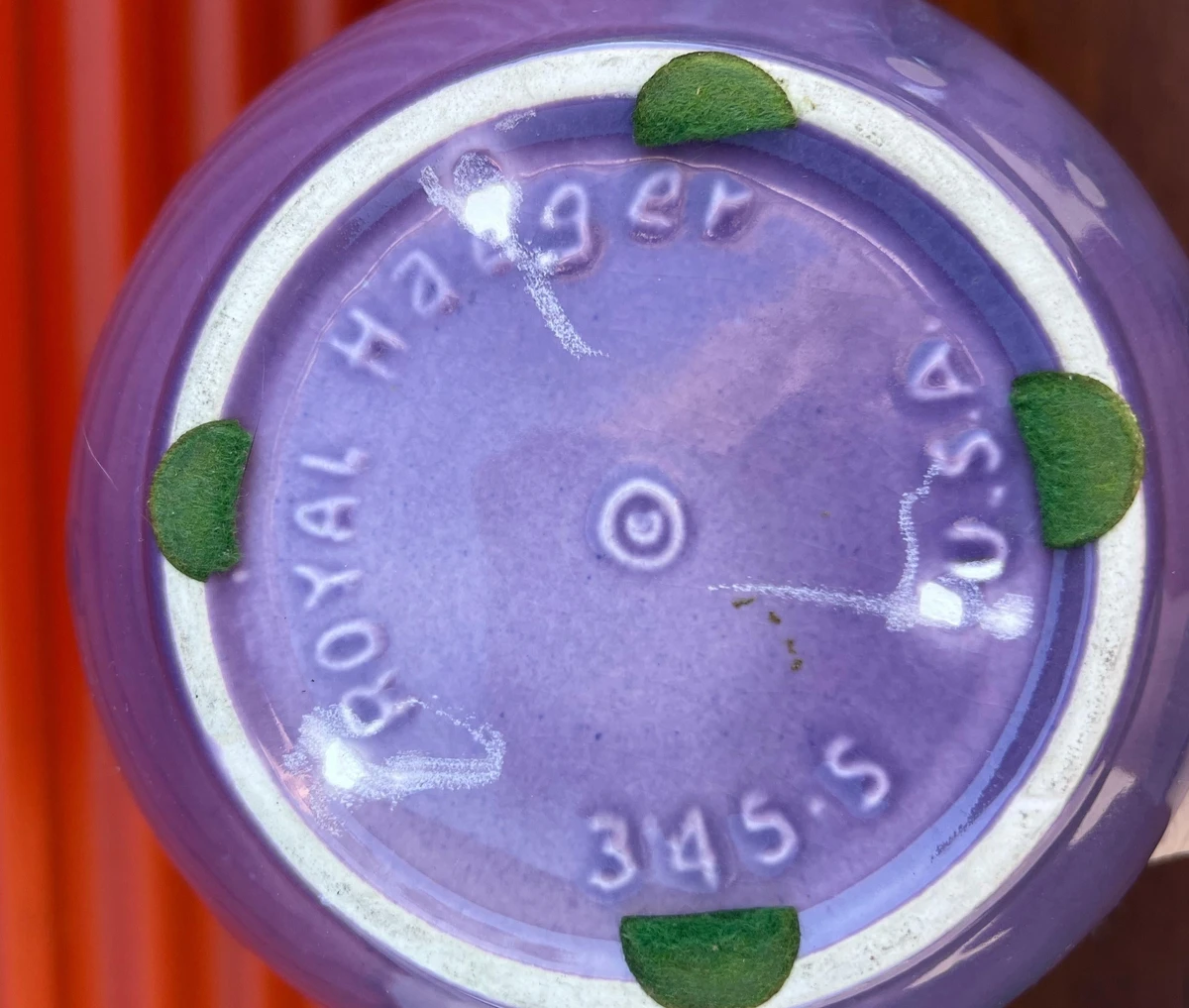
Undated
Central copyright symbol and separate mould number distinguish this layout; the number 345 S is a model identifier.
moulded · glazed ceramic
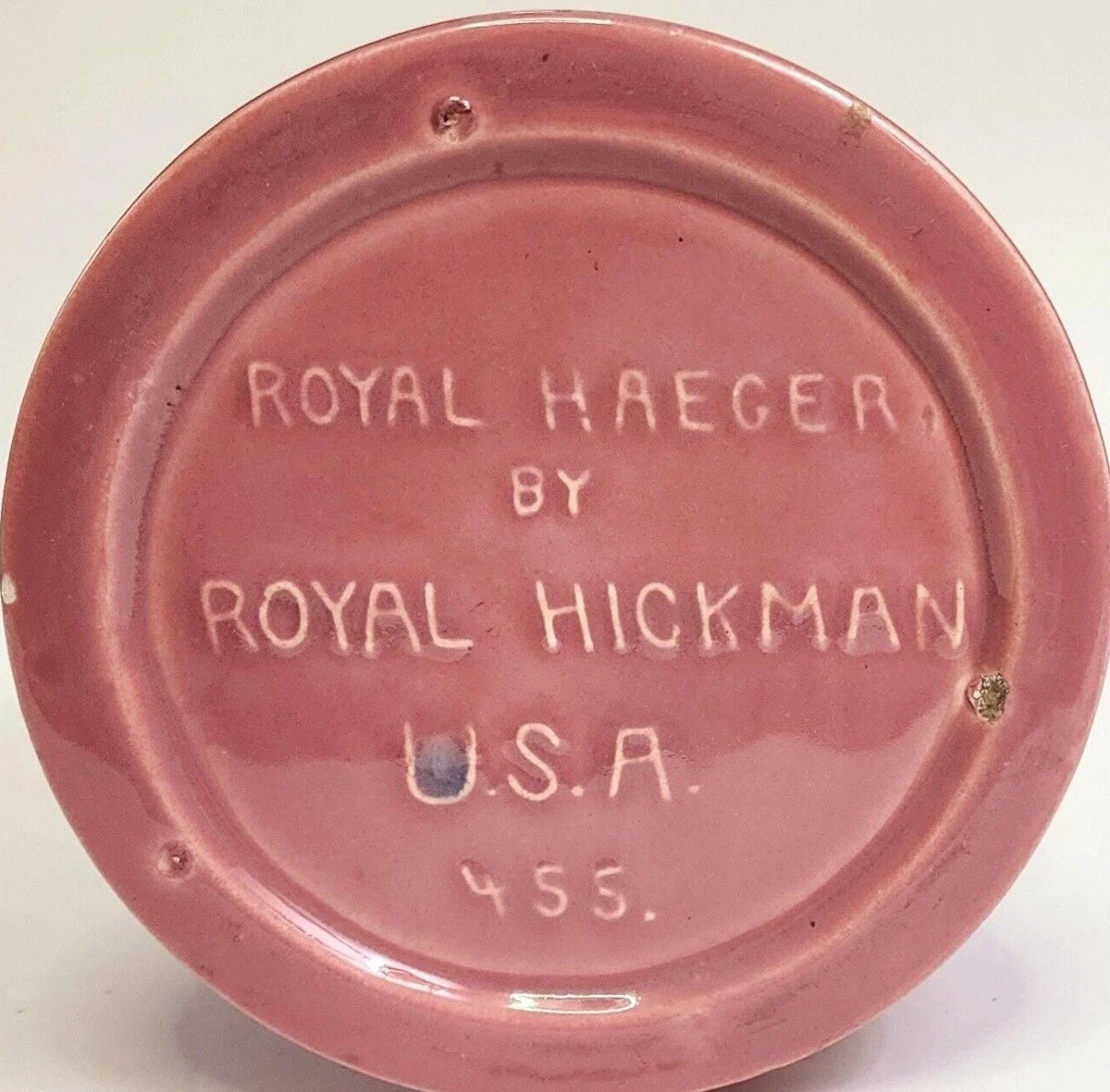
Undated
Explicit BY ROYAL HICKMAN distinguishes the designer-attribution format from company-only inscriptions.
moulded · glazed ceramic
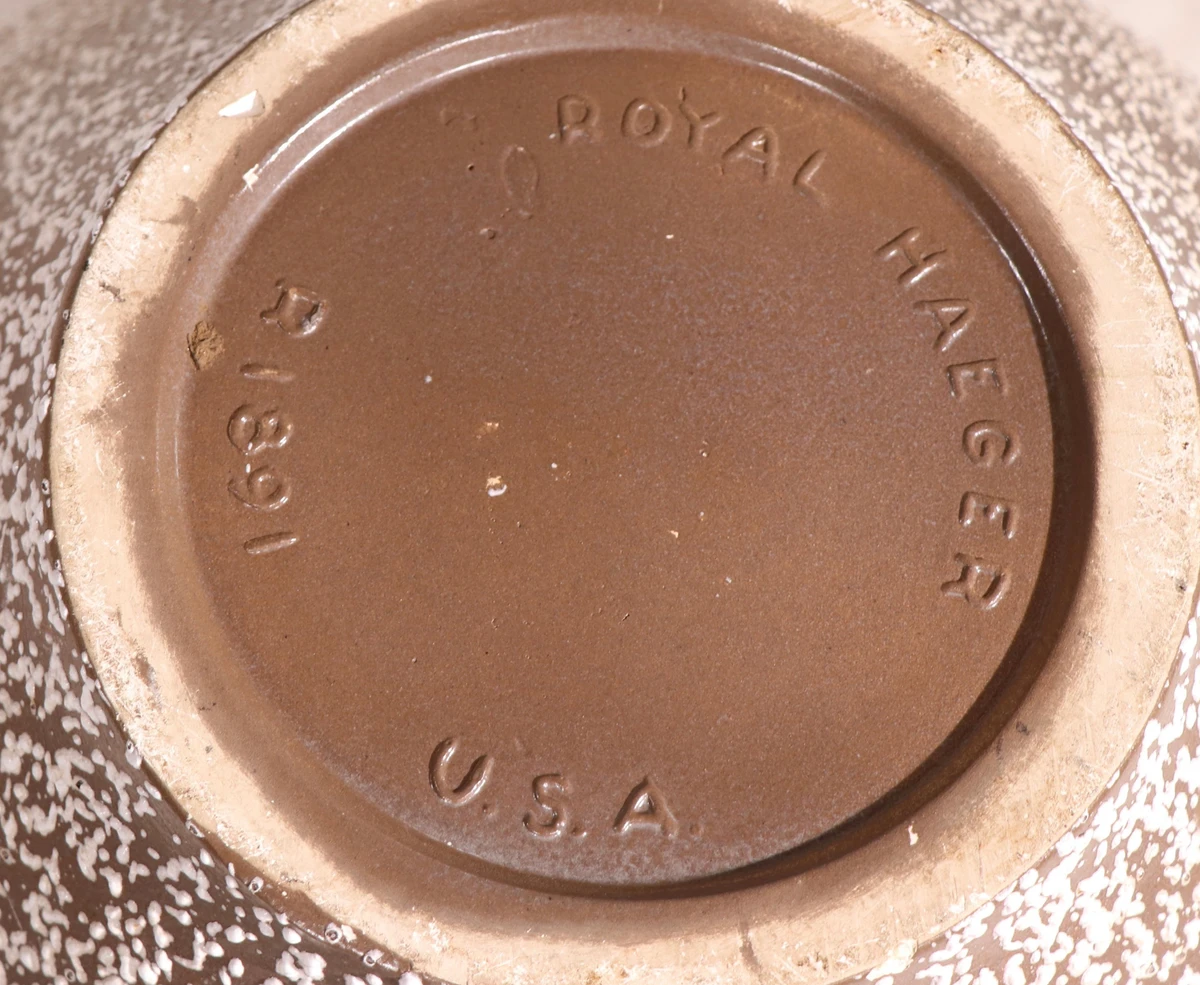
Undated
Widely spaced name around the foot without the central copyright symbol shown in the other selected circular arrangement.
moulded · glazed ceramic
Royal Haeger was an artware and lamp line introduced by Haeger Potteries in 1938. Its parent company began in 1871 when David H. Haeger acquired a brickyard in East Dundee, Illinois. Under his son Edmund, the business added art pottery in 1914. Haeger supplied decorative ceramics to department stores, gift shops and florists, combining design work with factory production. It demonstrated its manufacturing methods at Chicago’s Century of Progress exposition in 1934.
Joseph F. Estes directed the introduction of Royal Haeger. Royal Arden Hickman, chief designer from 1938 to 1944, contributed flowing forms, animal figures and innovative glazes. His stalking black panther entered production in 1941 and became one of the company’s best-known designs. Royal Haeger extended beyond vases to include planters, lamps, dinnerware and figurines.
The business remained under successive generations of the Haeger family. Later designers included Eric Olsen, C. Glenn Richardson and Kevin Bradley. Additional plants at Macomb served the florist and lamp trades. The company’s 1971 centennial celebrated both its origins in brickmaking and its development into an artware manufacturer. Haeger ended factory operations in 2016 after 145 years in business.
Also known as: Royal Haeger Pottery · The Haeger Potteries Inc. · Haeger Potteries · Royal Haeger artware, Haeger Potteries, Inc.