
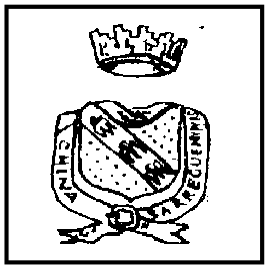
c. 1700–1999
SARREGUEMINES
printed · various colours · porcelain, faience · France
Late eighteenth to twentieth century.
Pottery & porcelain
The name “Sarreguemines et Digon France after” appears among Sarreguemines France pottery marks from Germany. Its mark period is 1920.
c.1790 foundation; 2007 closure refers to the Sarreguemines works. The broader trade names also appear on products of other works.
c. 1700–1999
printed · various colours · porcelain, faience · France
Late eighteenth to twentieth century.
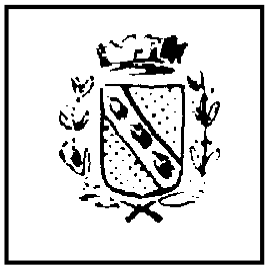
c. 1800–1999
printed · various colours · porcelain, faience · France
XIX—XX centuries. Mark printed in different colours.

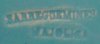
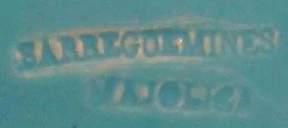
c. 1875
U & C accompanies the impressed town name; it identifies Utzschneider & Cie.
impressed · ceramic; body varies by mark and product · Sarreguemines, Lorraine, then German Empire
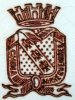
c. 1875–1899
Germany
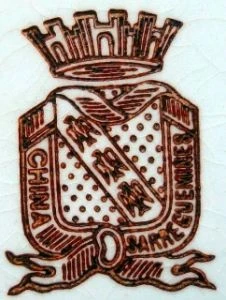
China Sarreguemines last quarter of 19th century mark.
c. 1875–1900
CHINA names a ceramic body, rather than the country of origin.
printed · ceramic; body varies by mark and product · Sarreguemines, Lorraine, then German Empire
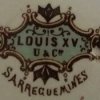
c. 1900
Germany
Sarreguemines U & Cie (Utzschneider and Companie) used mark.

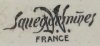
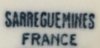
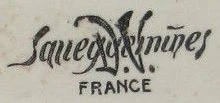
c. 1920–1950
FRANCE is printed beneath the script; compare the impressed name and crown-and-shield formats.
printed · ceramic; body varies by mark and product · Sarreguemines, Lorraine, France
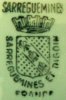
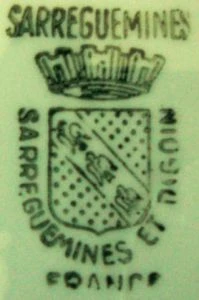
From 1920
DIGOIN joins SARREGUEMINES around the shield, with FRANCE at the base.
printed · ceramic; body varies by mark and product
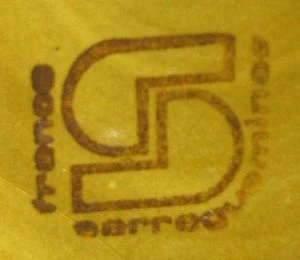
From 1983
The geometric S replaces the heraldic shield and older script name.
printed · ceramic; body varies by mark and product
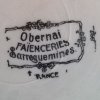
Undated
This example is on a mid-twentieth-century plate.
Germany
On the mid 20th century plate
The Sarreguemines pottery began around 1790, when Nicolas and Augustin Jacoby and Joseph Fabry established production in a former oil mill beside the Saar. Paul Utzschneider joined the business at the end of the decade and helped develop its technical range. Early products included fine earthenware and polished stoneware imitating coloured stones, followed by other bodies and printed decoration.
Alexandre de Geiger took over management in the 1830s. The Utzschneider & Cie business expanded with industrial production, new kilns and a wide range of tableware and decorative ceramics. Porcelain entered the range in the mid-nineteenth century, and coloured majolica became a prominent product. After the annexation of Lorraine in 1871, the group developed French operations at Digoin and Vitry-le-François alongside the Sarreguemines factories.
The businesses were divided in 1913 and reunited in 1920 as Faïenceries de Sarreguemines, Digoin et Vitry-le-François. Their marks reflect these changing company names, locations and ceramic bodies. Later production included restaurant ware and building ceramics. The Sarreguemines works closed in 2007; its surviving collections include faience, stoneware, porcelain, decorative panels and table services.
Also known as: Utzschneider & Cie · U & C · Sarreguemines et Digoin · SDV · Faïenceries de Sarreguemines; later Sarreguemines-Digoin-Vitry-le-François
Related works used the joined town names after the corporate reunion. DIGOIN in the backstamp identifies that corporate context; it does not establish firing at Sarreguemines.
A separate Sarreguemines ceramic business with overlapping family names. Read the full initials: U & J differs from Utzschneider & Cie’s U & C.
Historically connected through ownership and cooperation, but marked with its own names. Shared regional heraldry does not substitute for the full factory wording.