
Pottery & porcelain
Jugtown Pottery marks
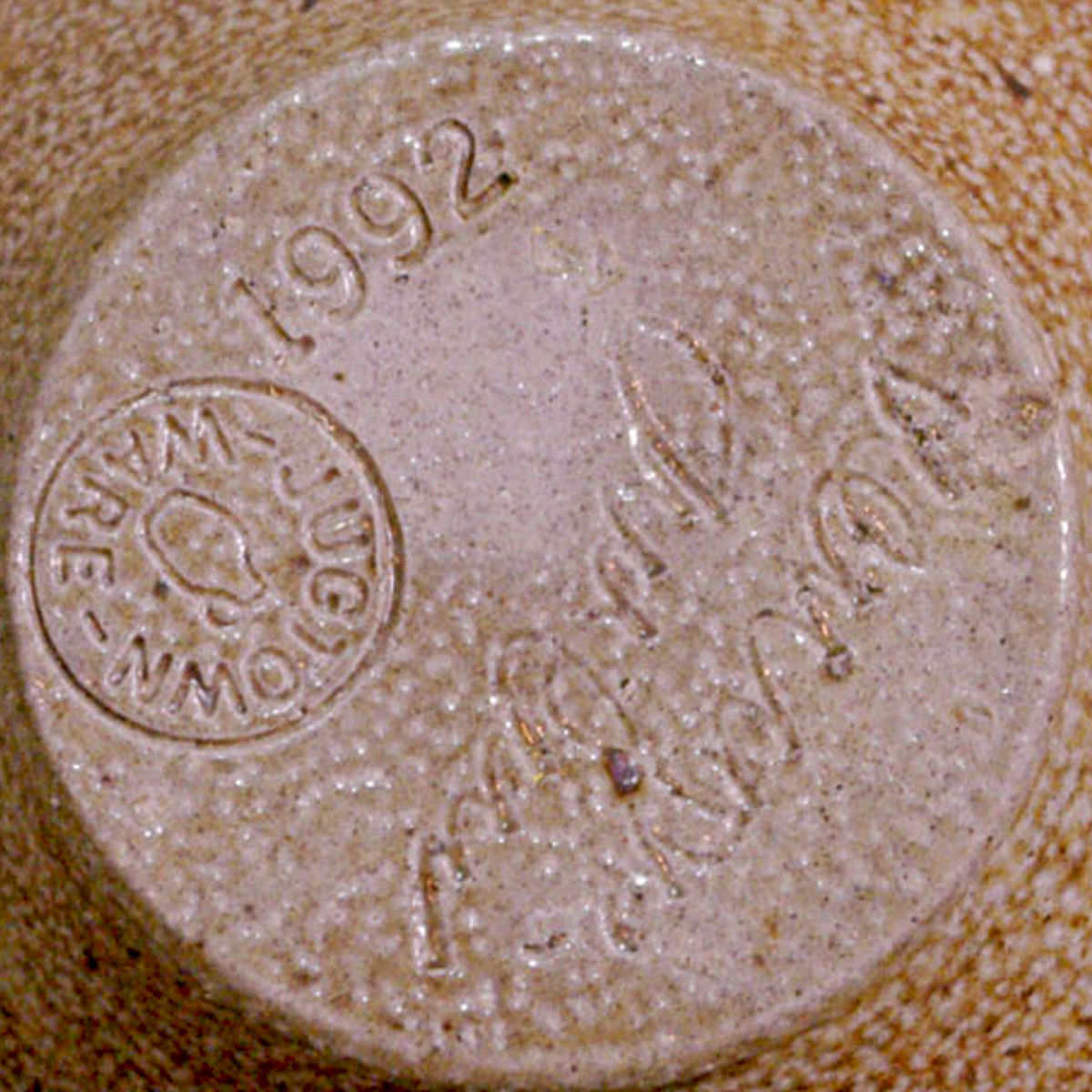
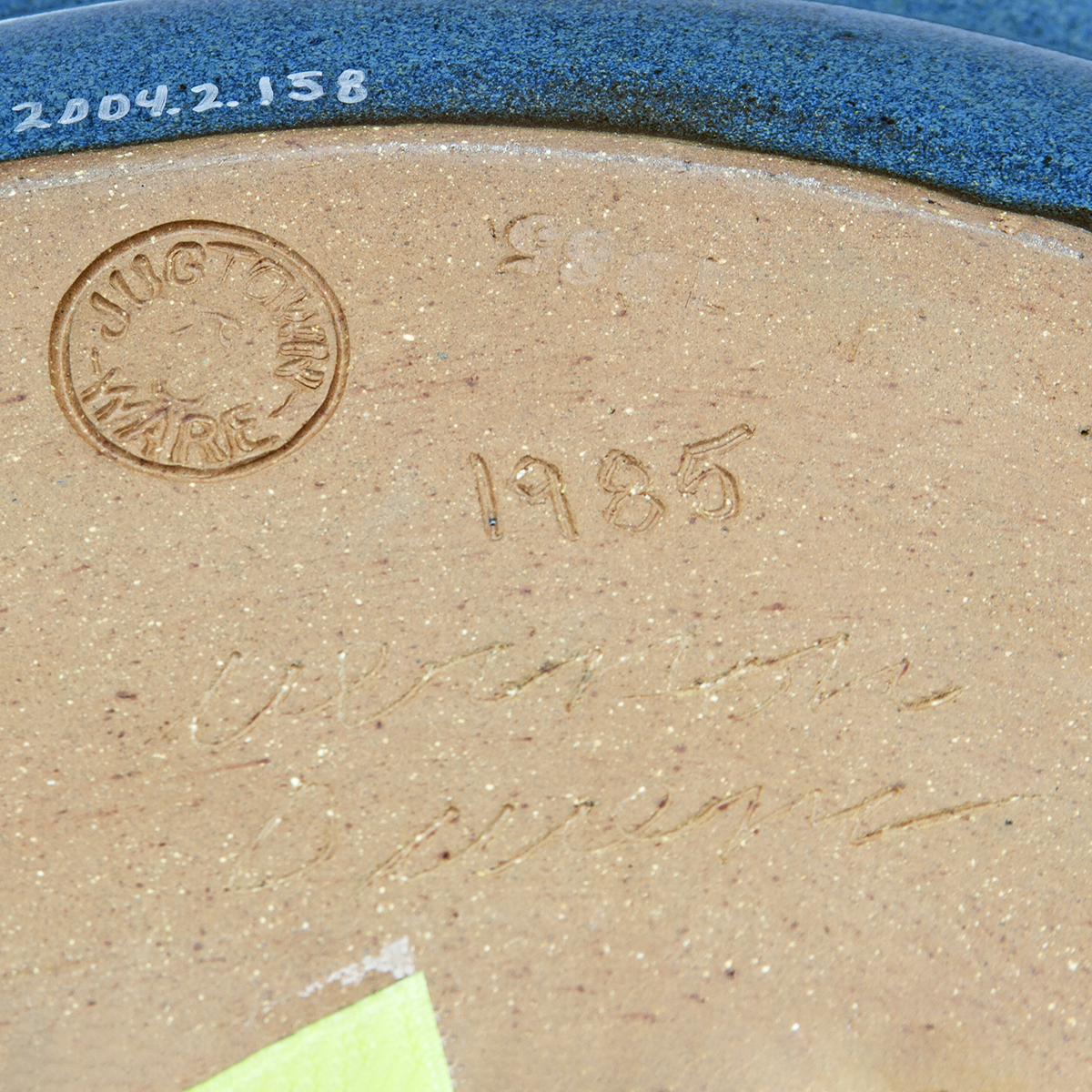
Jugtown Pottery marks include “JUGTOWN WARE” on earthenware. Individual makers could add their own signatures, initials or dates.
- Active years
- From 1923
- Country
- United States
- City / region
- Near Seagrove, Moore County, North Carolina
- Products
- earthenware, Hand-thrown jugs and pitchers, Vases and jars, Bowls and domestic tableware, Candlesticks, Wood-fired and salt-glazed pottery
- Marks
- 5
The Busbees’ pottery enterprise and New York marketing began in 1917. Workshop built in 1921; regular circular stamping began about 1921–1923. Still operating in 2026.
What to look for
- Read the circular JUGTOWN WARE stamp first, then any separate date and personal signature. The workshop emblem identifies Jugtown; it does not identify the person who threw the pot.
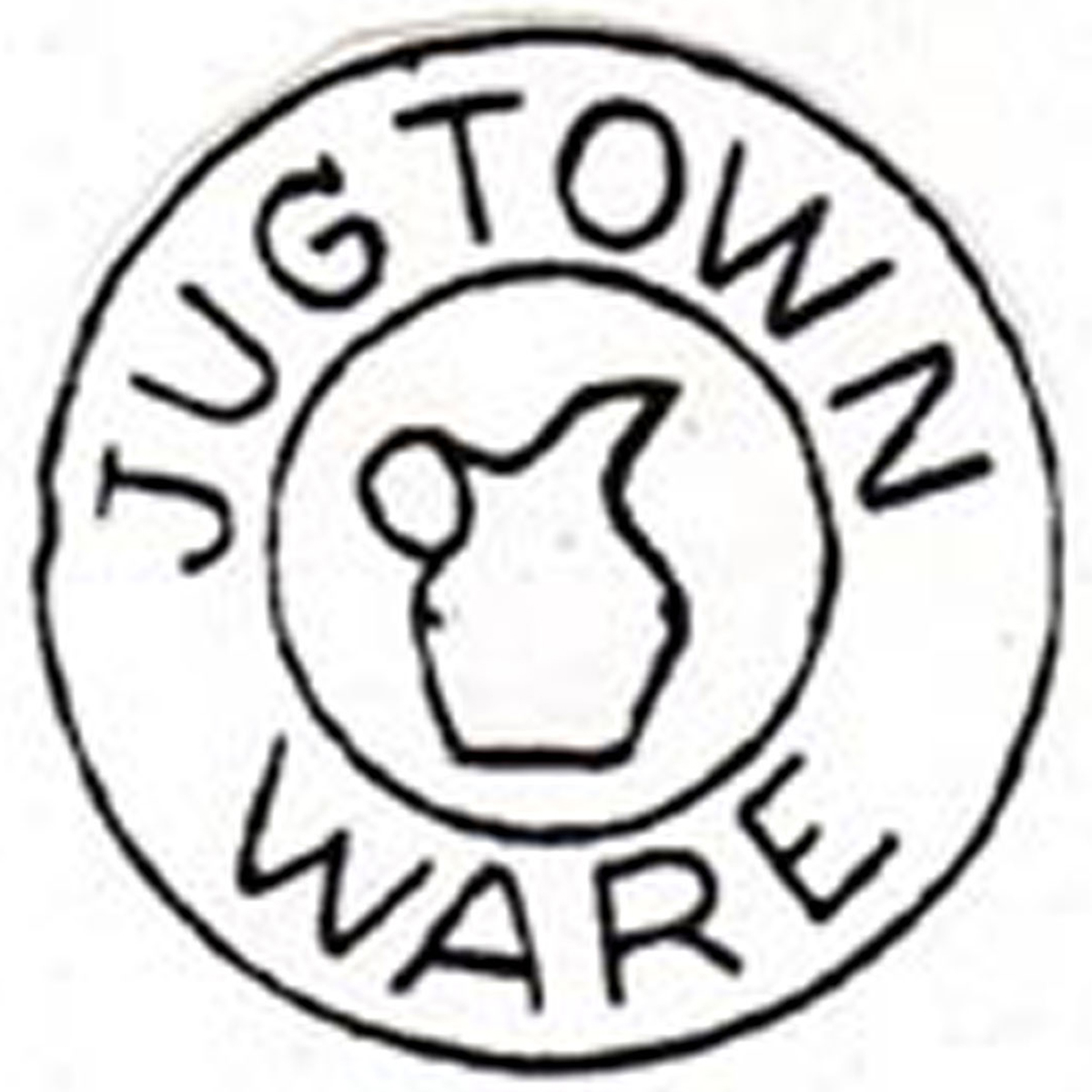
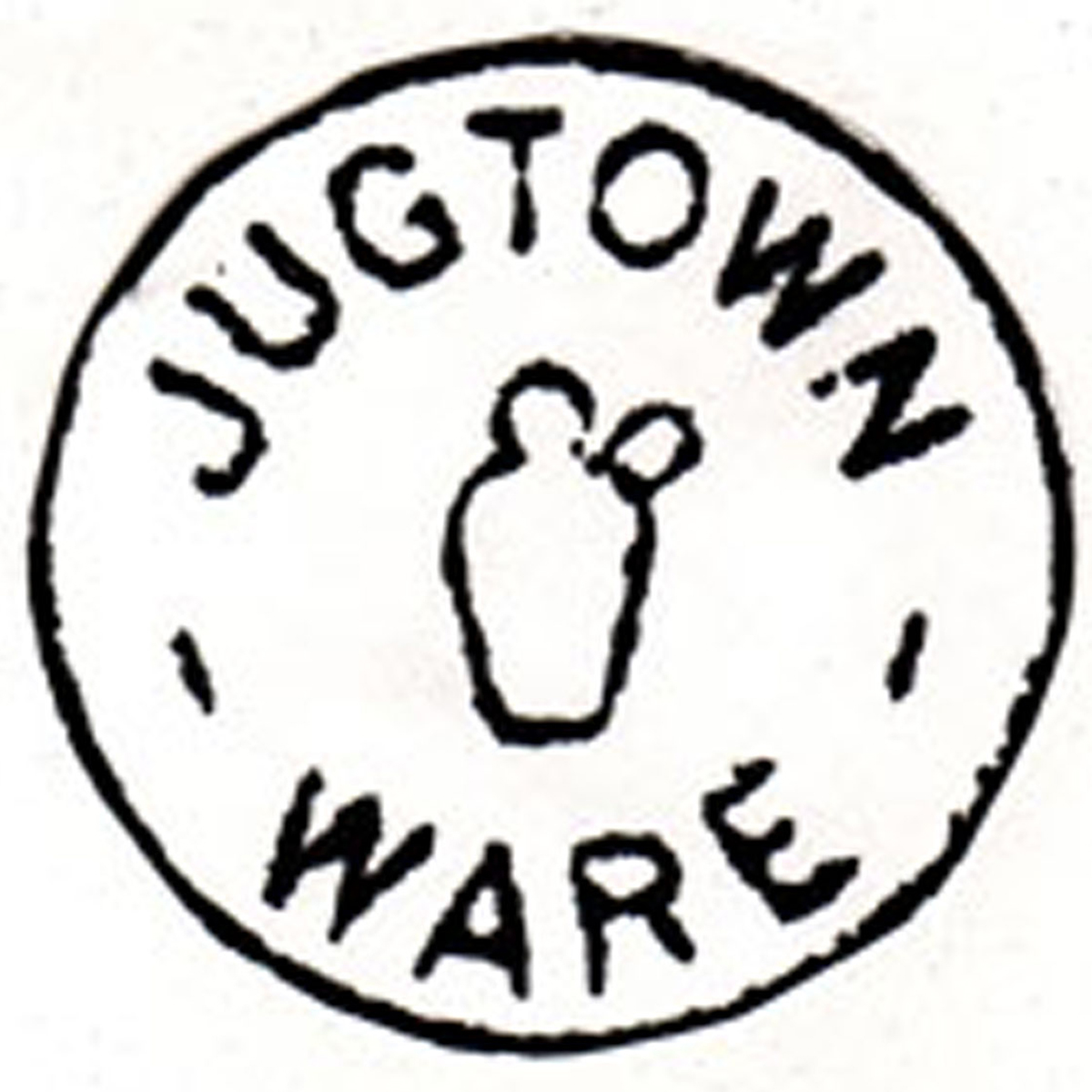
- The Original stamp has an ovoid jug. The Pitcher stamp shows a more open pitcher form. The Maré stamp has a straighter jug with a pronounced rounded top and handle.
- Judge the drawing, not just the diameter of an impression. Different clay shrinkage and recast stamps can change the apparent size without creating a new maker or a reliable date boundary.
- The dates beside the stamp usually date the individual piece. The Maré and Pitcher stamps were revived after their early use, so neither design has one simple, closed production interval.
Dated marks & timeline
5 marks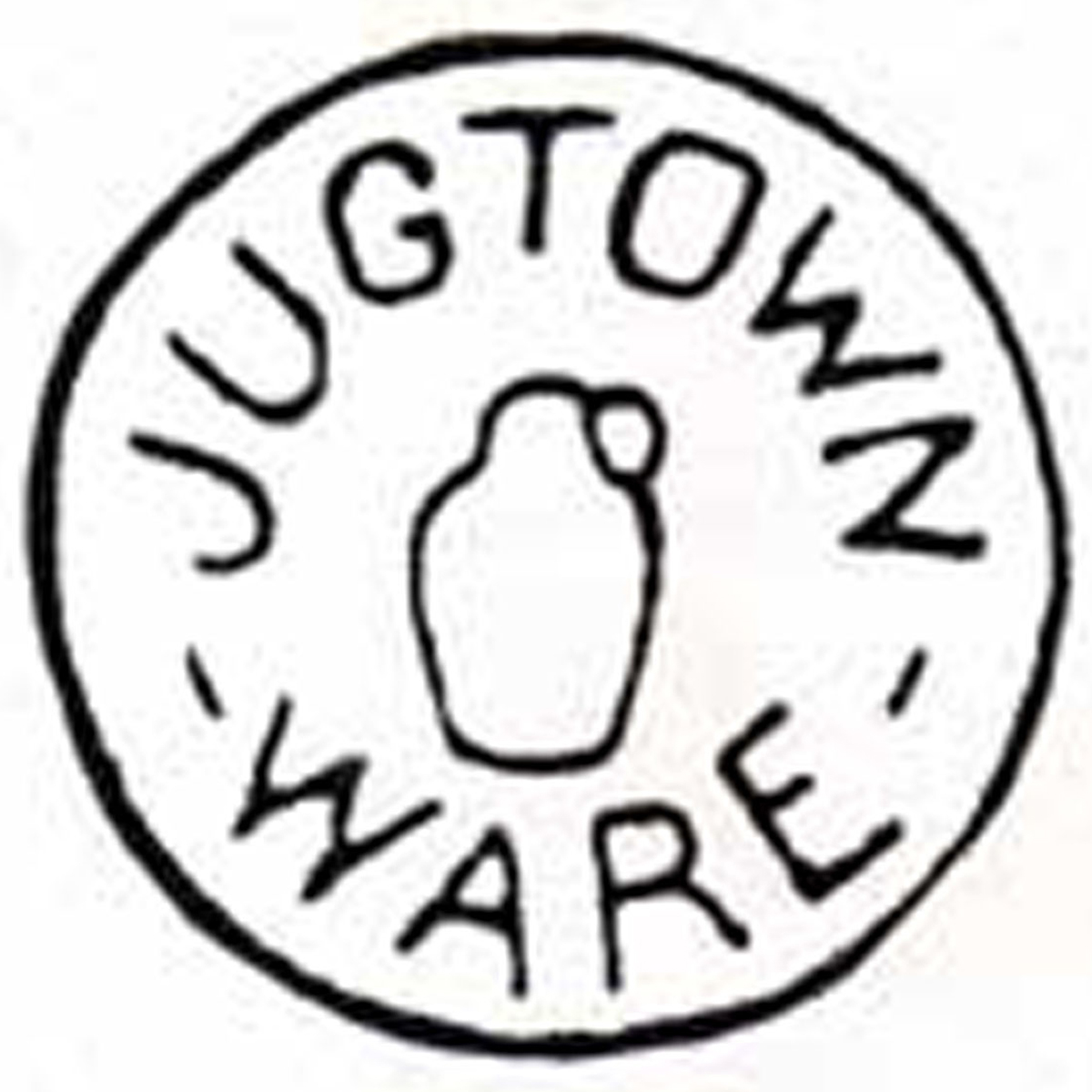
Undated
stoneware
Illustrated example dated 1985 - 1986.
stoneware
Illustrated object: Platter.
About Jugtown Pottery Vernon Owens
Jugtown Pottery grew from the work of Jacques and Juliana Busbee, artists from Raleigh who began promoting North Carolina pottery in 1917. They commissioned local potters and sold the wares through Juliana’s Village Store and Tea Room in New York. James H. Owen was an early collaborator, making pieces at his own workshop before the Jugtown workshop was built in 1921. Charlie Teague worked at the new site, and Ben Owen joined in 1923.
The Busbees combined North Carolina pottery skills with forms inspired by Asian ceramics. Jugs, jars, bowls and candlesticks received glazes such as Chinese Blue and Frogskin. The circular Jugtown Ware stamp identified the workshop rather than a single potter. Individual makers could add their own signatures, initials or dates.
After the Busbee period, John Maré acquired the pottery and employed Vernon Owens. Vernon leased the workshop after Maré’s death in 1962. Country Roads, Inc. bought Jugtown in 1968, and Nancy Sweezy developed glazes and an apprenticeship programme while Vernon continued making pots. In 1983 Vernon purchased the pottery. The Owens family continued the workshop, retaining traditional forms and wood firing while developing additional shapes and glazes.
Also known as: Jugtown Ware · Jugtown · Jugtown Pottery