
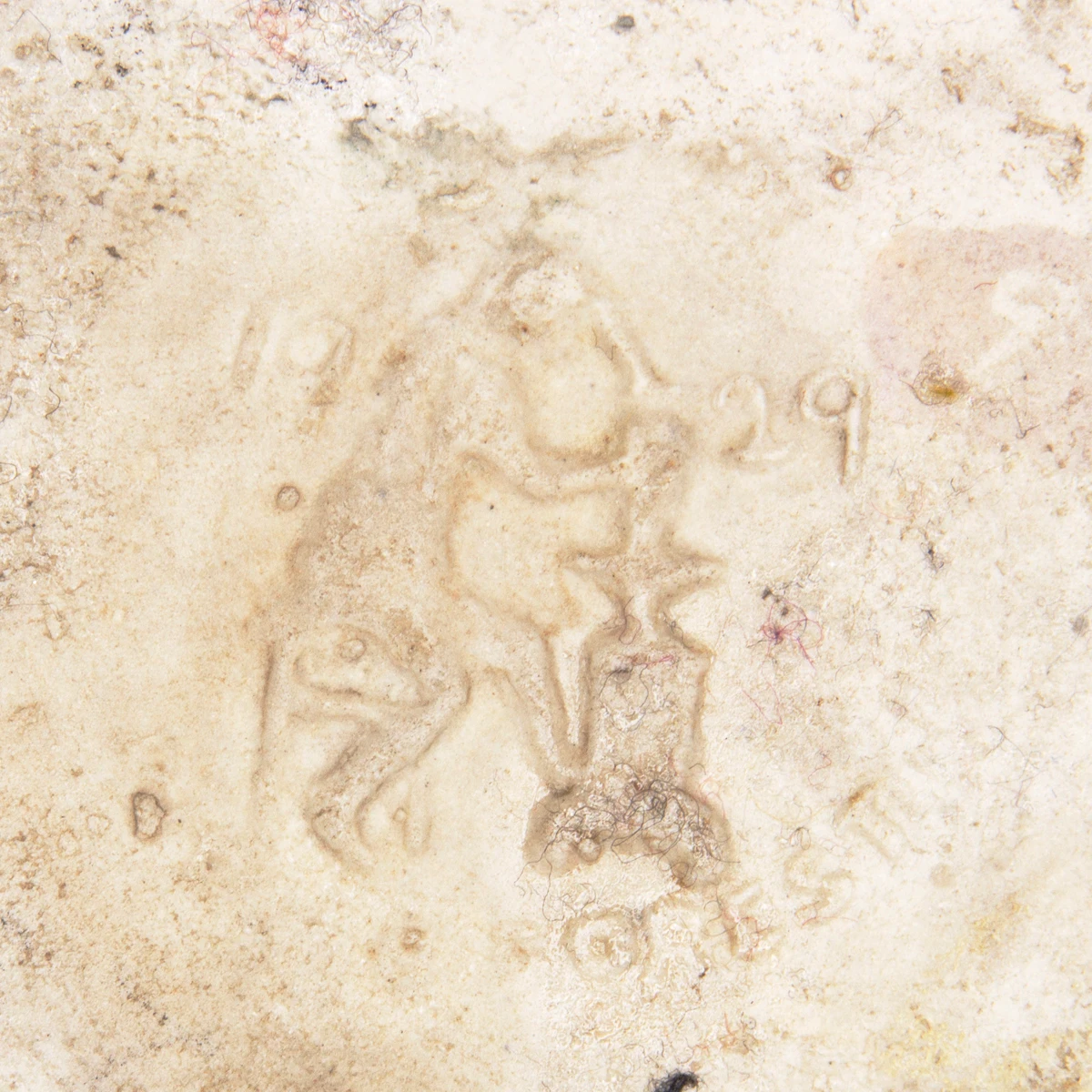
1929
19 / 29 / [PISGAH FOREST, faint]
Split year 19 and 29, standing figure and high wheel identify the 1929 plate.
impressed · stoneware · Arden, North Carolina, United States
Pottery & porcelain
The name “PISGAH / FOREST / [1946, faint]” appears among Pisgah Forest Pottery marks on stoneware from Arden, North Carolina, United States.
Conventional Pisgah Forest founding date 1926; Stephen died 1961 and successors continued. An architectural report places initial local firing earlier.
1929
Split year 19 and 29, standing figure and high wheel identify the 1929 plate.
impressed · stoneware · Arden, North Carolina, United States
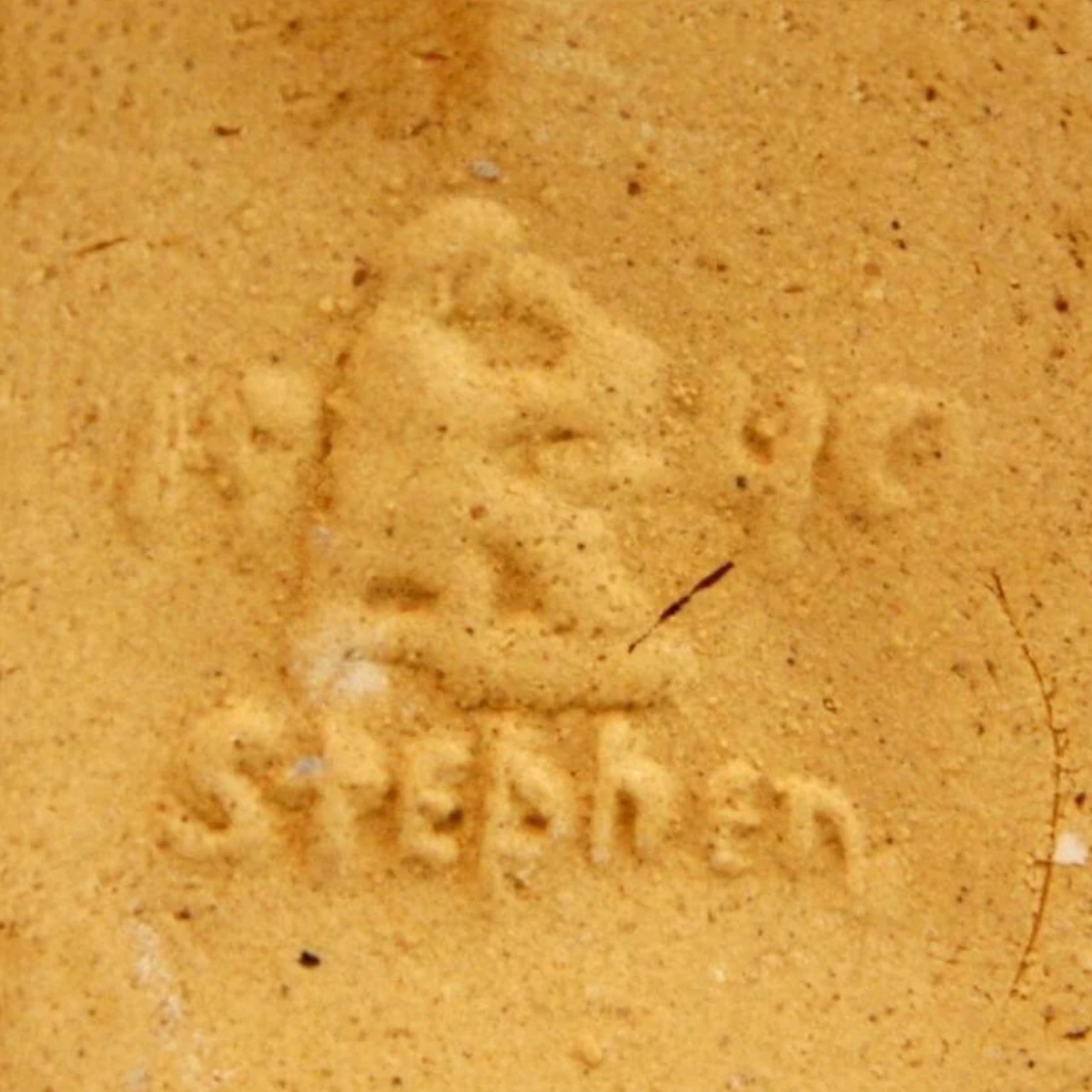
1940
STEPHEN below the seated potter and split 1940 date distinguish this plate.
impressed · stoneware · Arden, North Carolina, United States
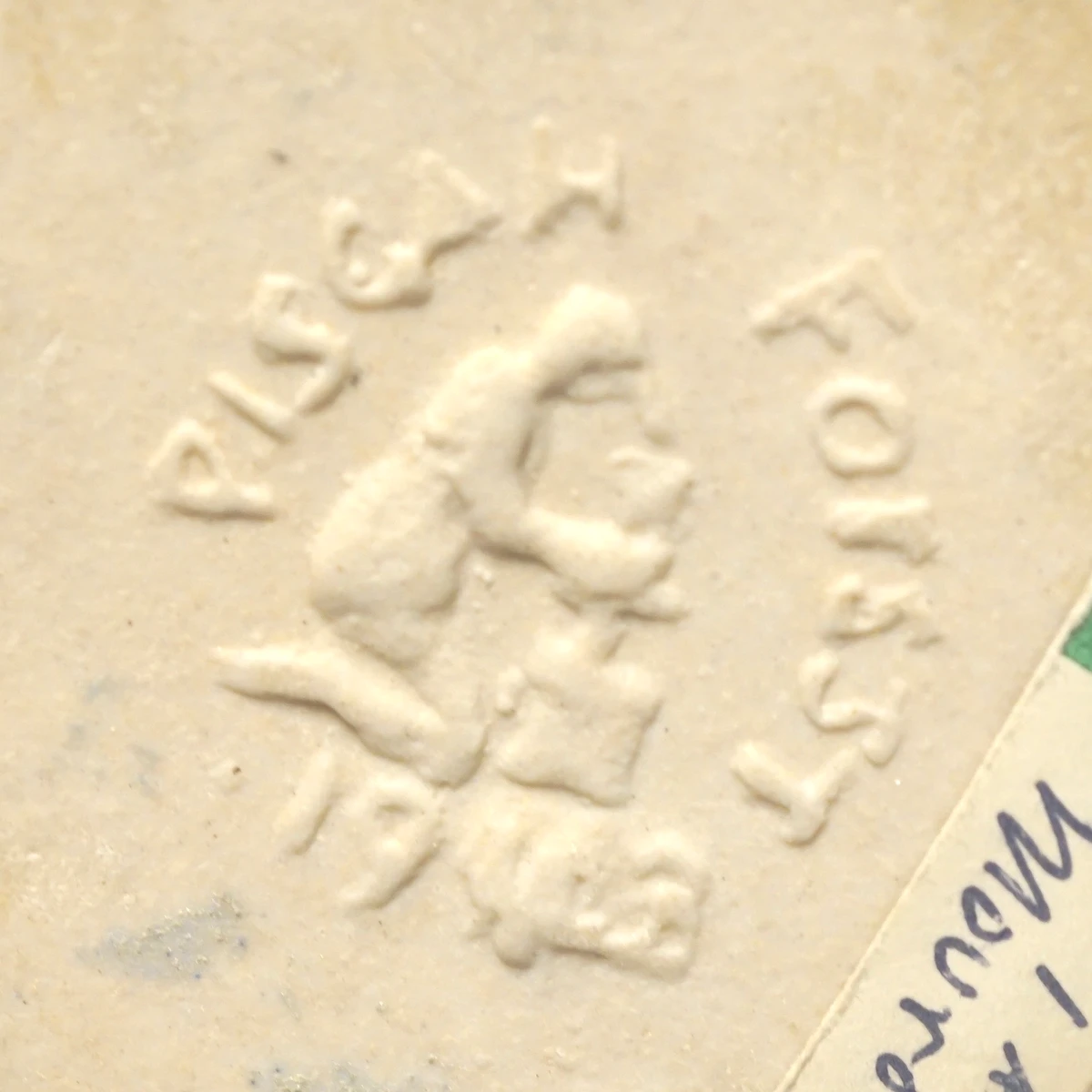
1943
Arched PISGAH FOREST and full year below the figure identify this 1943 example.
impressed · stoneware · Arden, North Carolina, United States
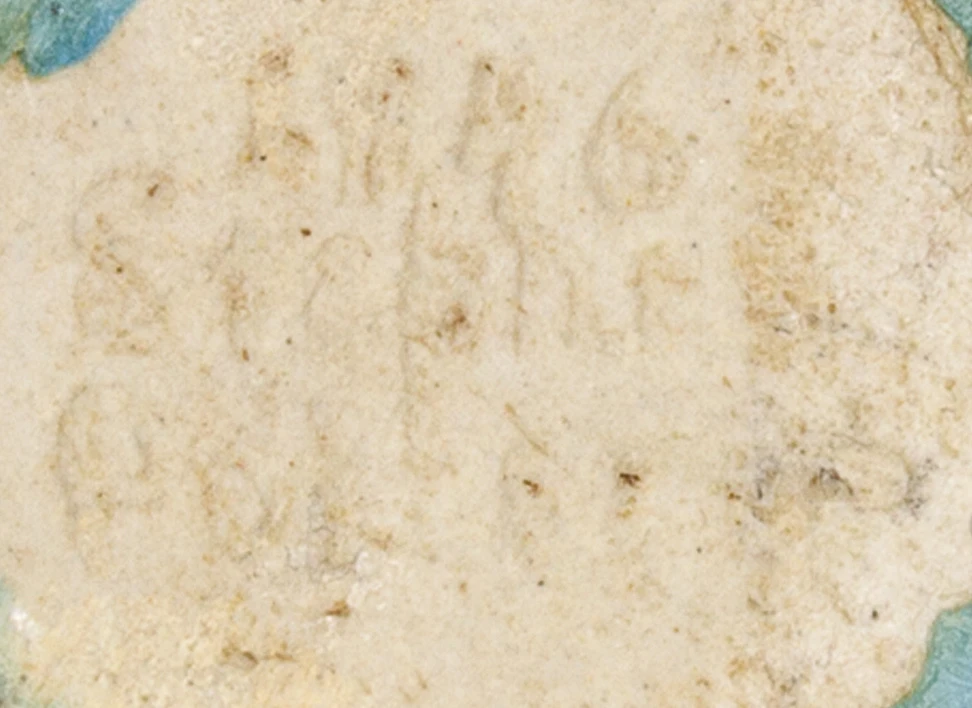
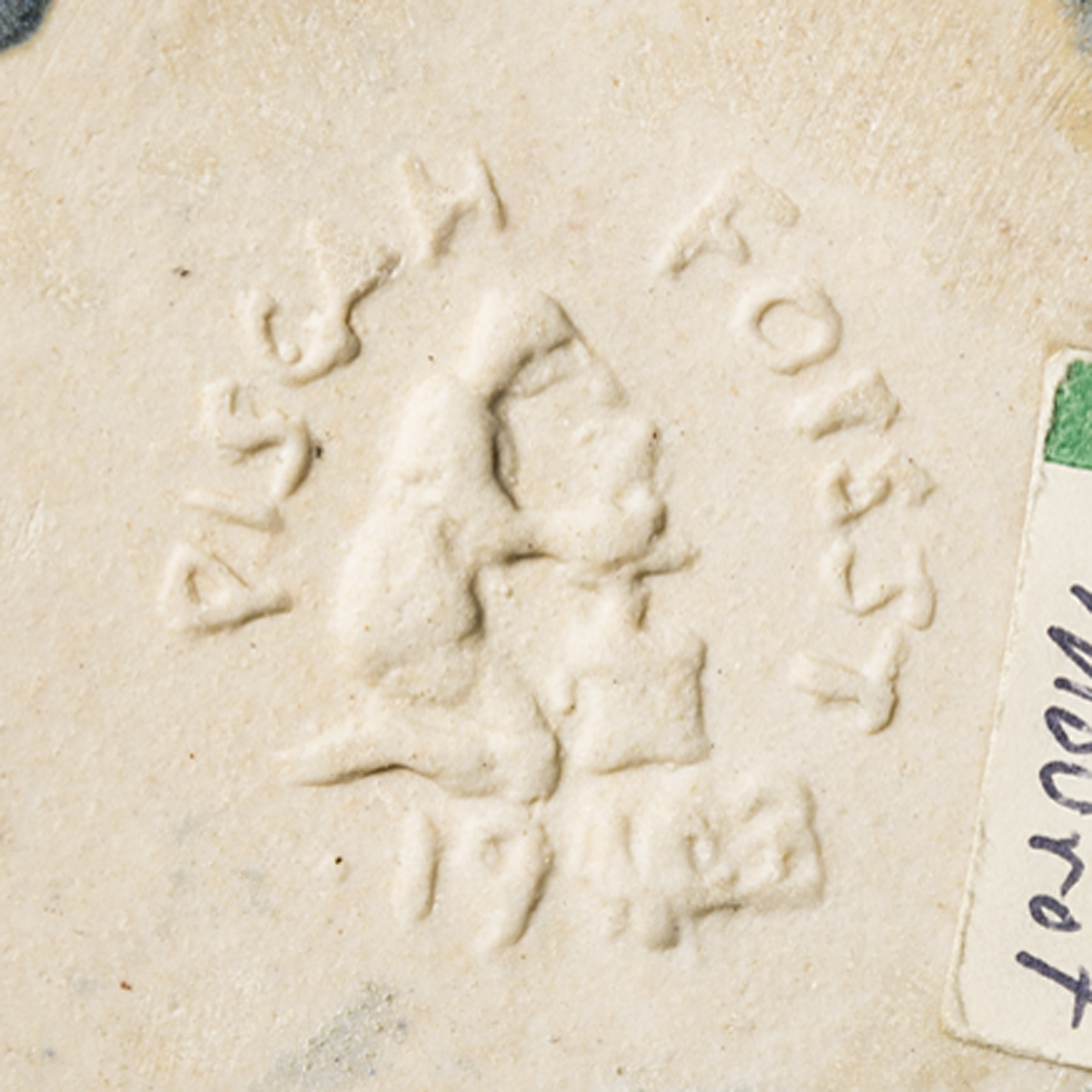
1946
Lettering-only layout differs from the potter stamps; catalogue identifies the bowl as 1946.
impressed · stoneware · Arden, North Carolina, United States
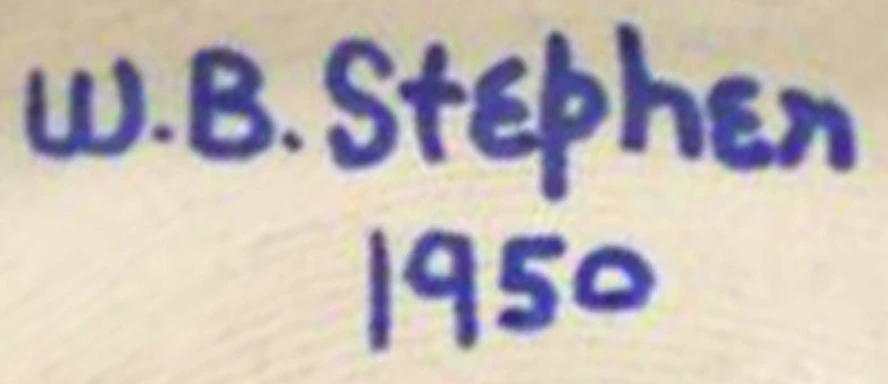
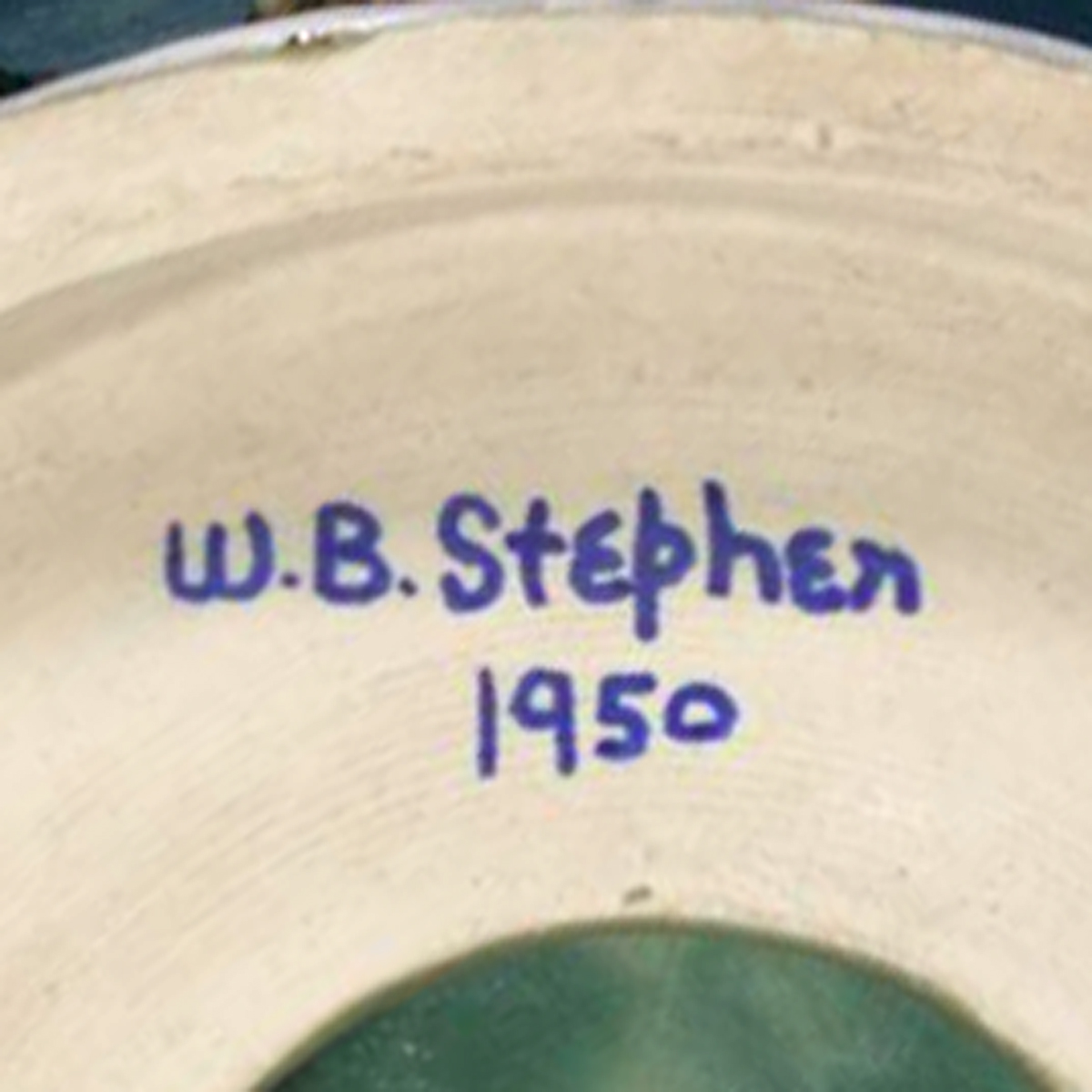
1950
Painted full surname and year distinguish this from the impressed production stamps.
painted · blue · stoneware · Arden, North Carolina, United States
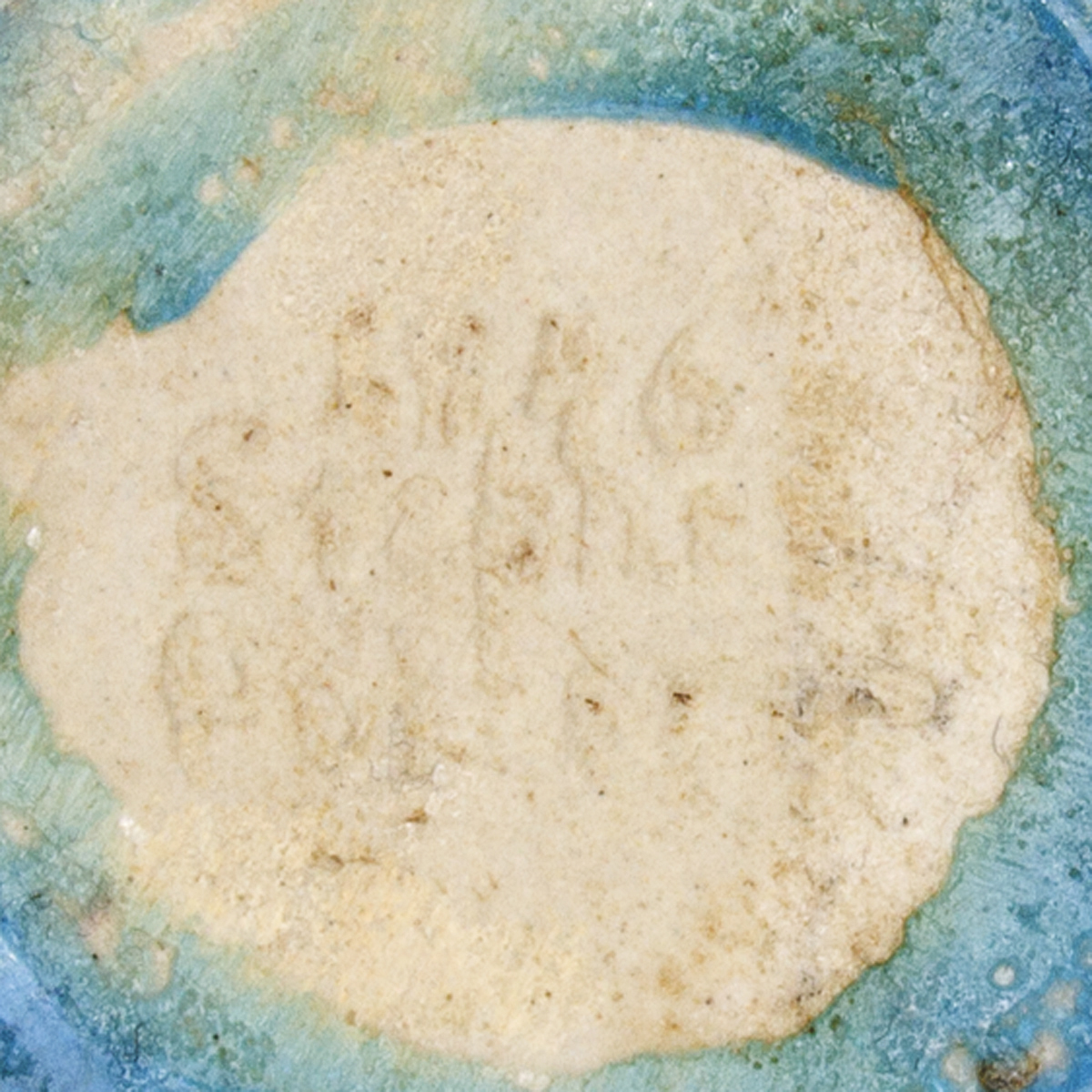
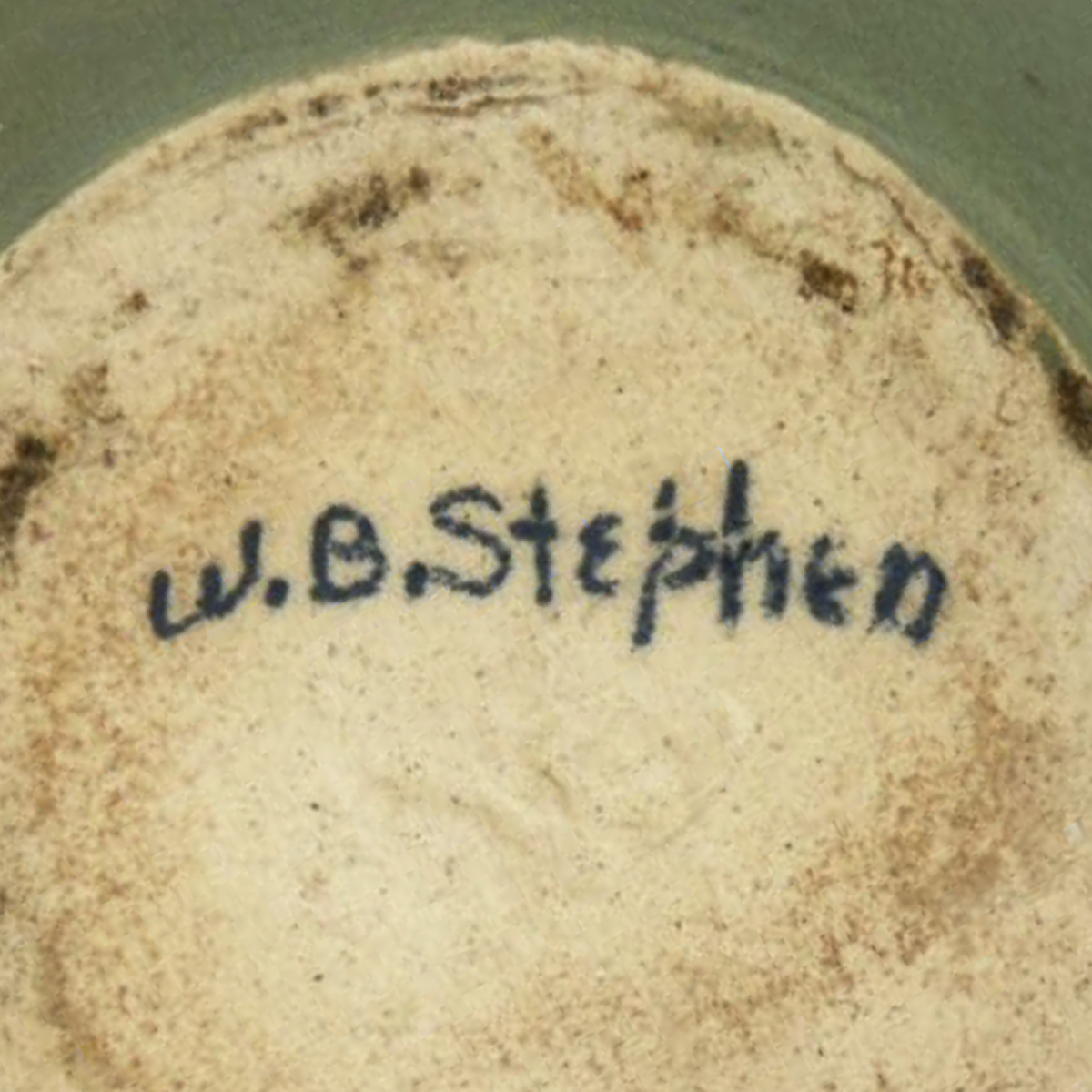
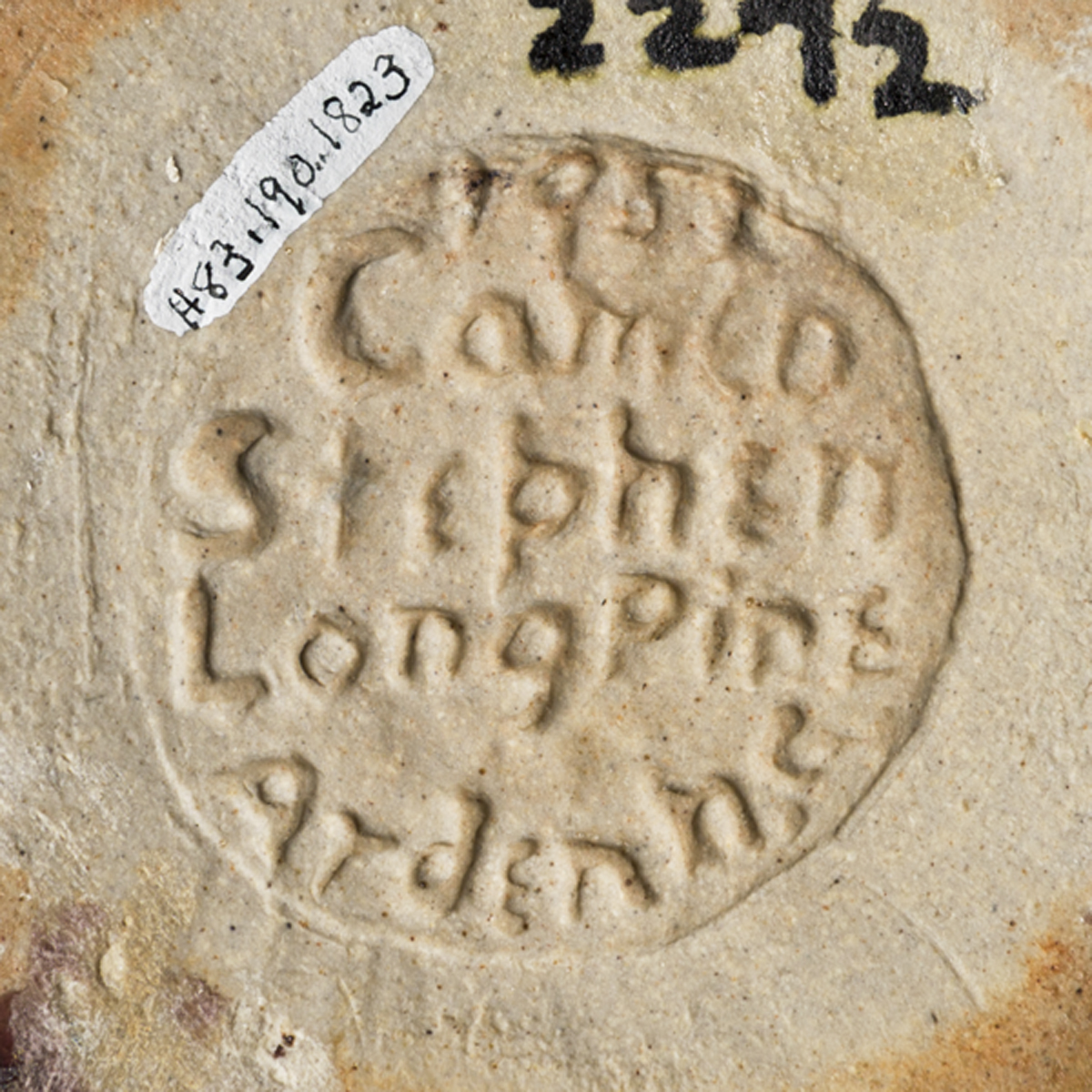
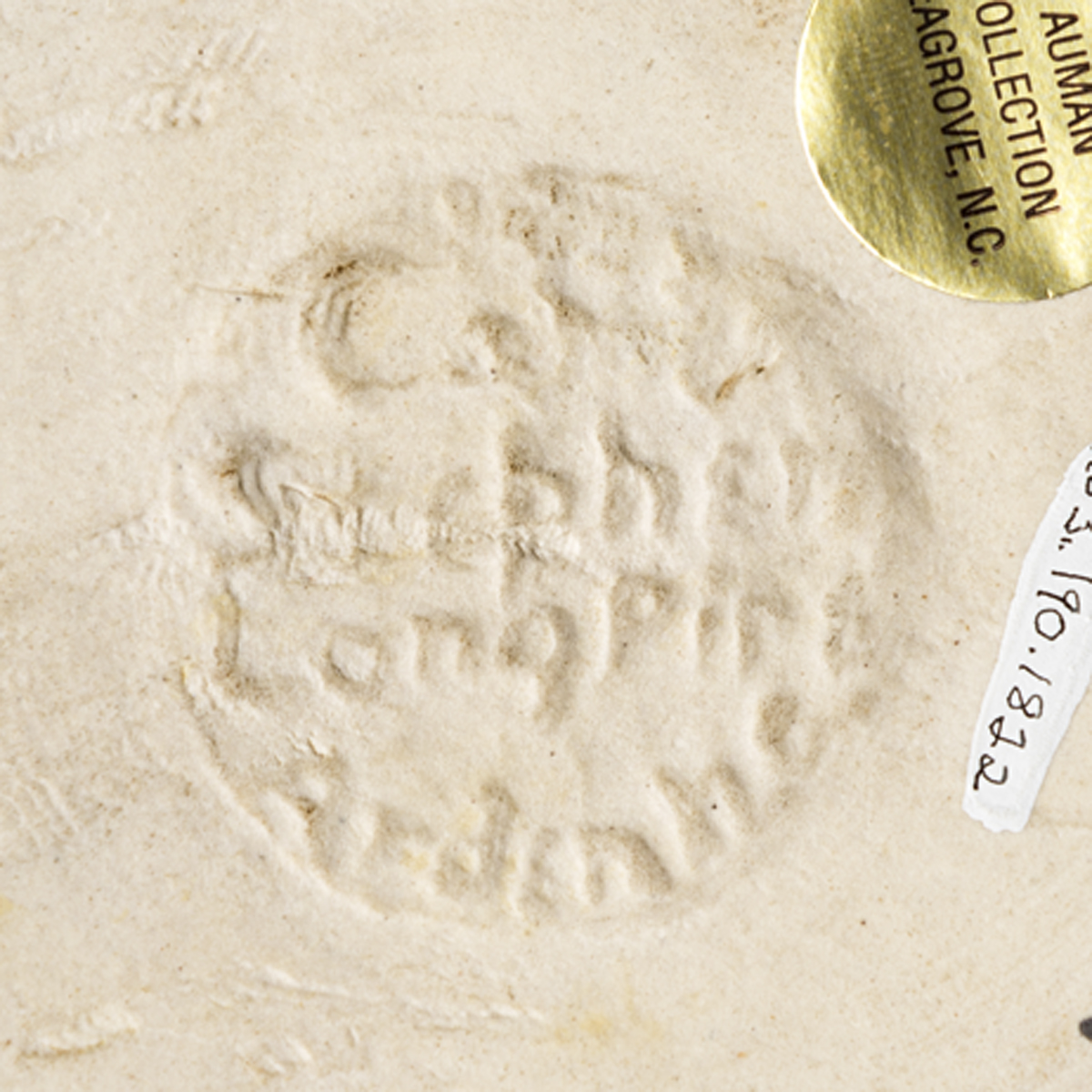
Undated
Illustrated example dated 1951.
stoneware
Illustrated object: Westward Ho Mug.
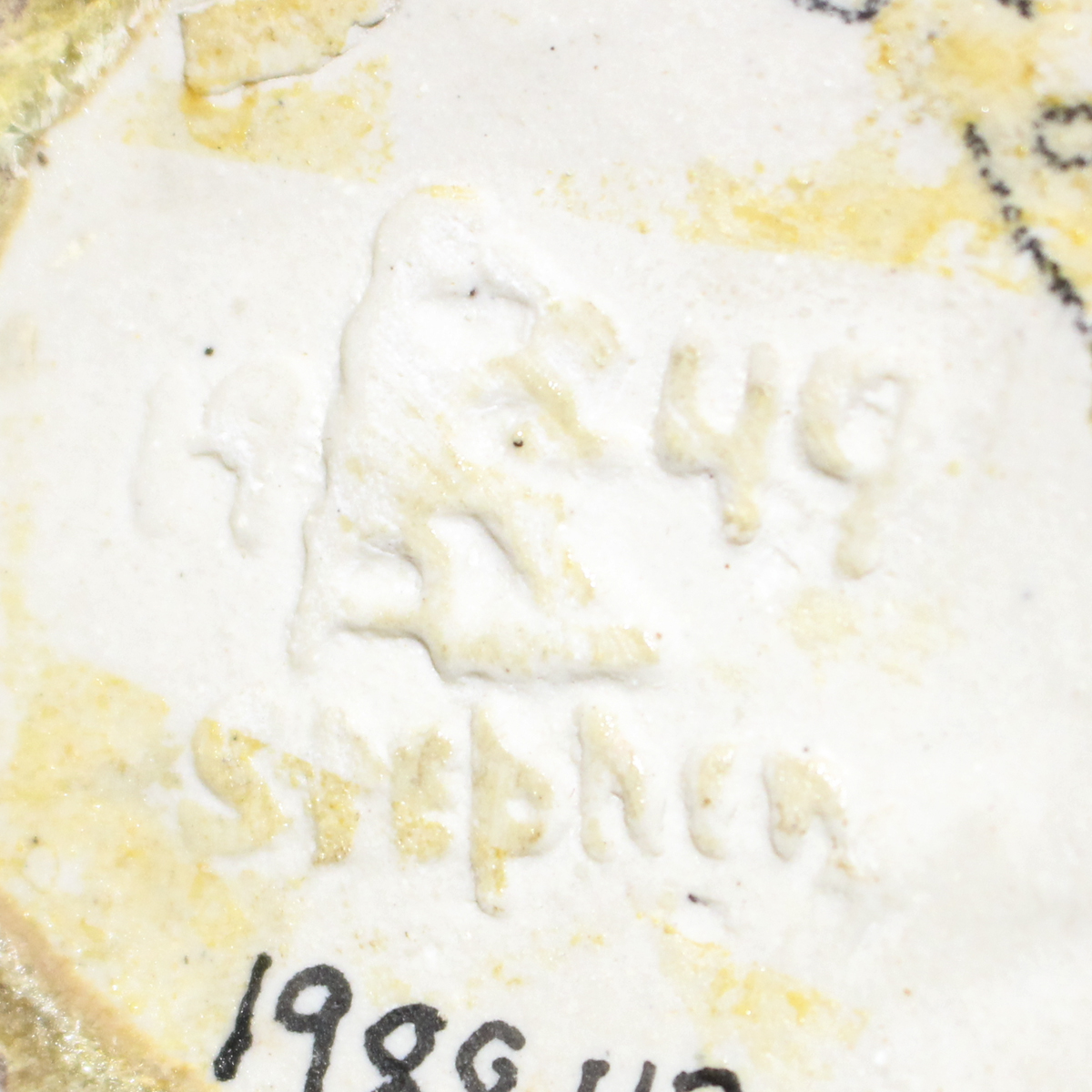
Undated
Illustrated example dated 1959.
stoneware
Illustrated object: Fiddler and the Dog and Westward Ho Bowl.
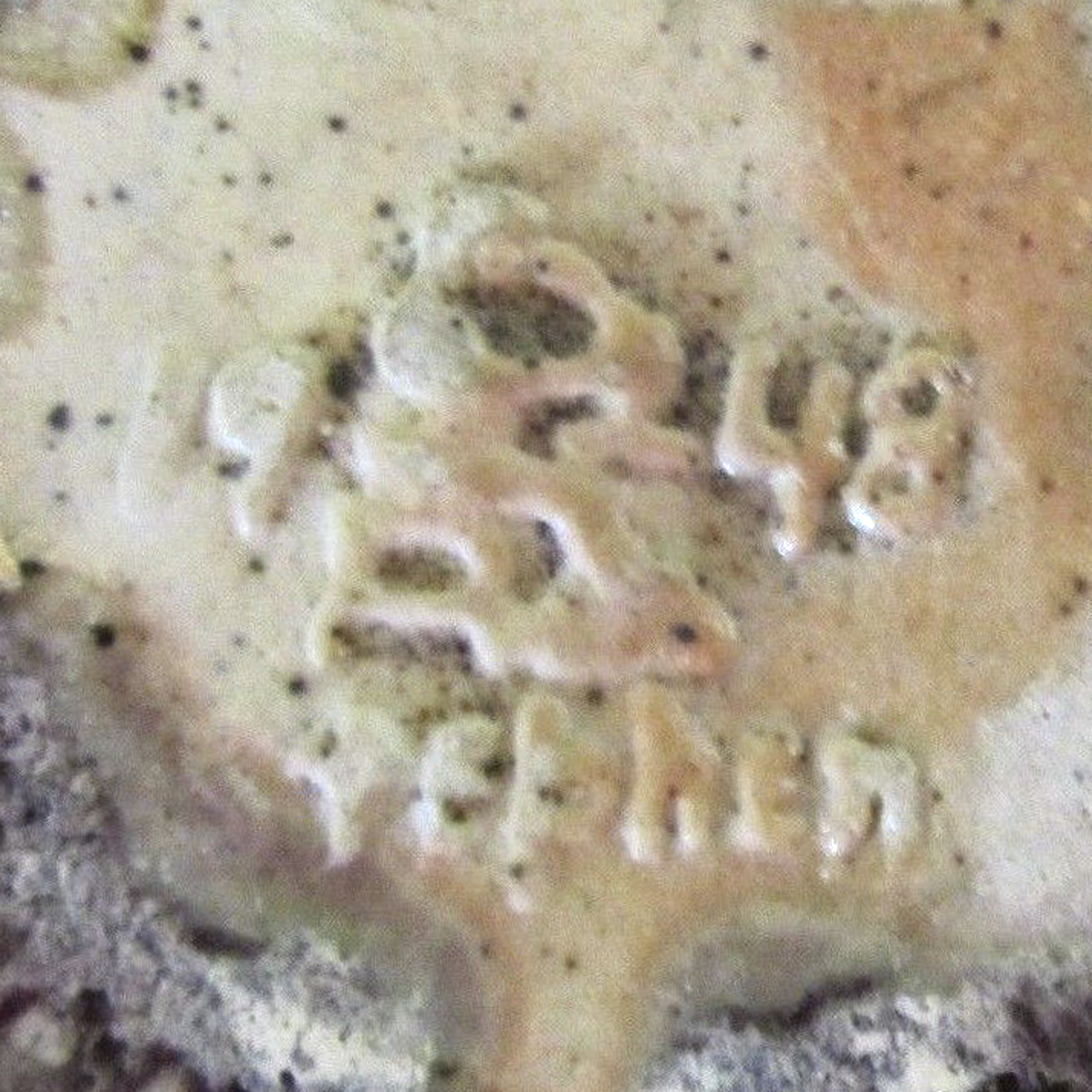
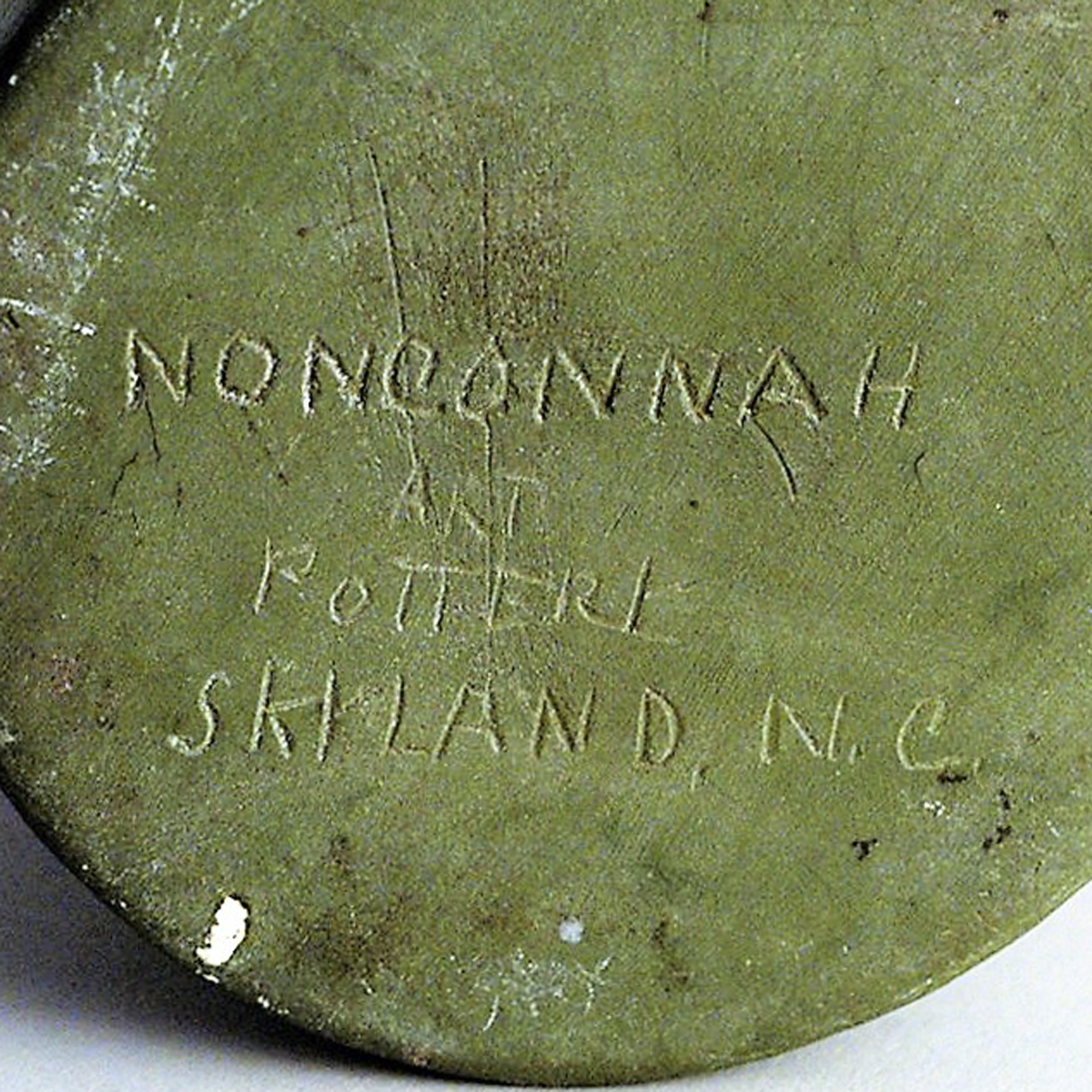
Undated
Illustrated example dated 1915.
stoneware
Illustrated object: Cameo Vase.
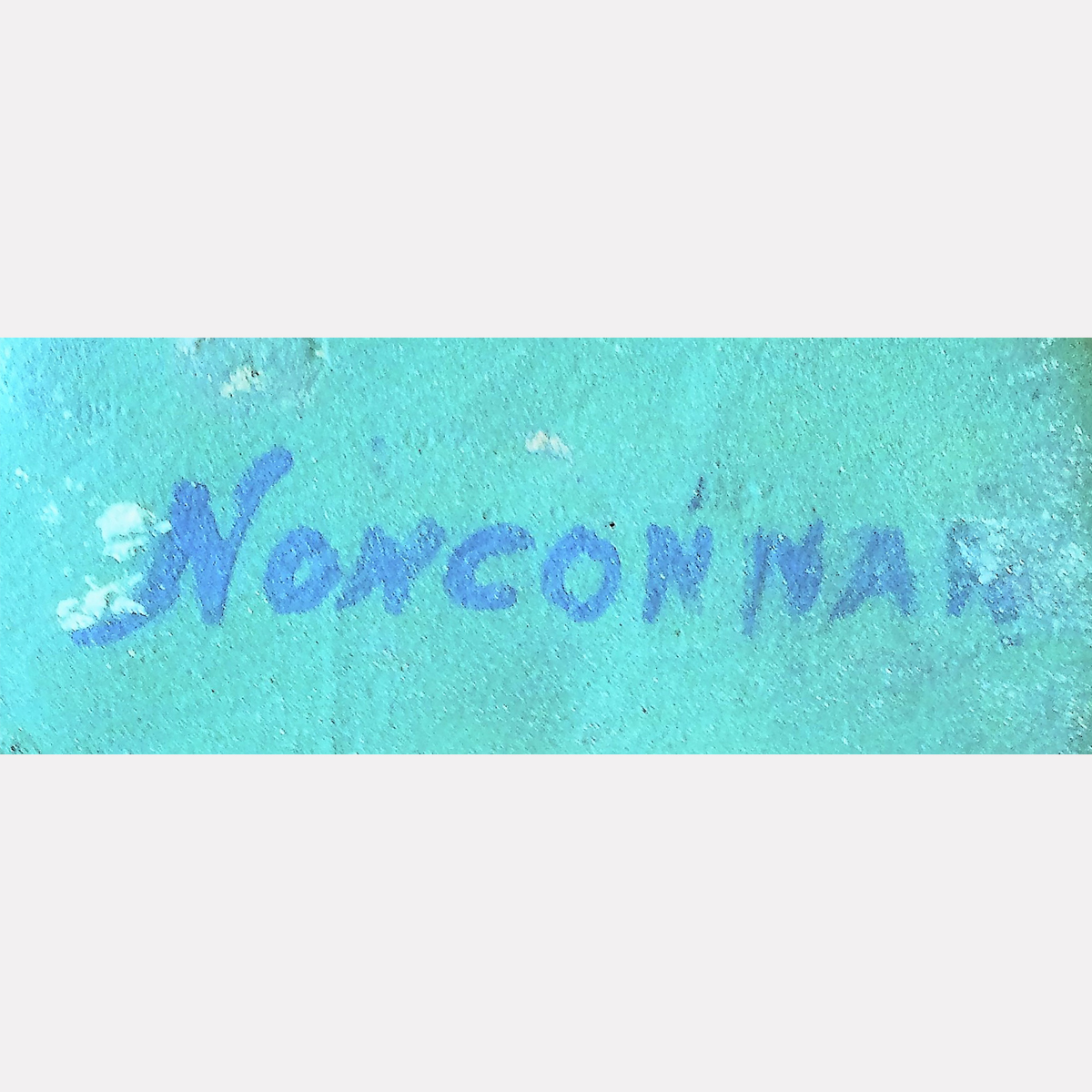
Pisgah Forest Pottery was established at Arden, North Carolina, by Walter Benjamin Stephen in 1926. Stephen had previously worked with his mother, Nellie, at Nonconnah Pottery in Tennessee and later moved to the Asheville area. His North Carolina pottery combined functional vessels with ambitious decorative work, including unusual glazes and raised white cameo scenes.
The cameo decoration was built up in layers of porcelain slip. Covered wagons, log cabins, musicians and domestic activities recalled American folk life and Stephen’s early experiences. Turquoise, pink and crystalline glazes formed other important parts of the range. He joined the Southern Highland Handicraft Guild in 1939, which brought his work into its salesrooms and craft fairs.
Stephen used annual marking plates on much of the pottery, making the impressed potter-at-wheel device a particularly useful feature for collectors. Some products instead carry lettering or a painted signature. Thomas Case and Grady Ledbetter took responsibility for the main pottery as Stephen reduced his workload in 1949. Production continued after his death in 1961; the later pottery closed in 2014.
Also known as: W. B. Stephen · Stephen Pottery · Pisgah Forest Pottery
Stephen’s earlier pottery can share cameo decoration and his name. Look for NONCONNAH or a pre-1926 date rather than assigning every Stephen vessel to Pisgah Forest.
Both can carry pale relief against a coloured ground. Pisgah Forest has Stephen/Pisgah marks and American folk-life subjects; Wedgwood carries its own impressed factory lettering.