
Undated
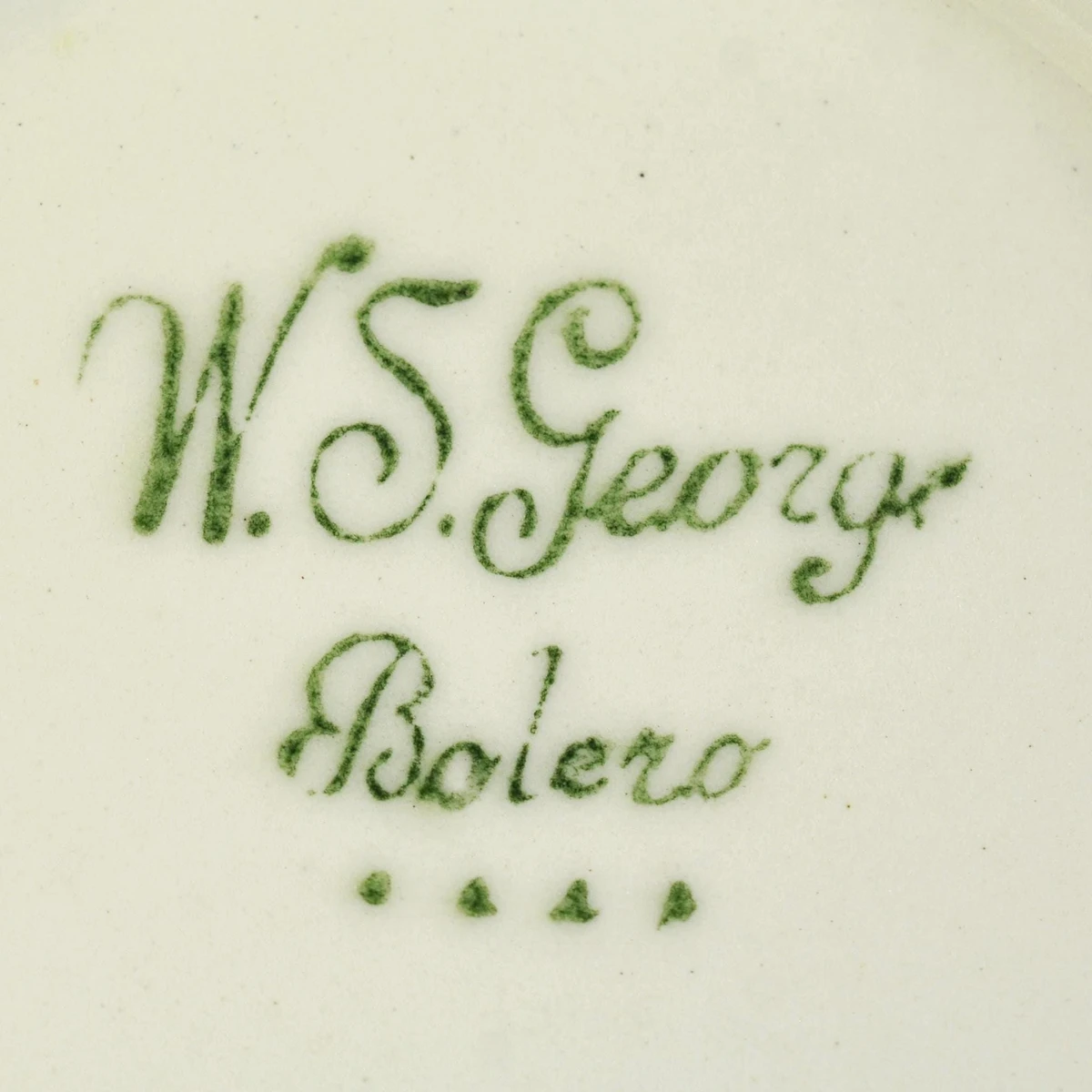
W. S. George / Bolero
Script name with Bolero line beneath. Numbers are not decoded as manufacture dates.
printed · Dinnerware ceramic
Pottery & porcelain
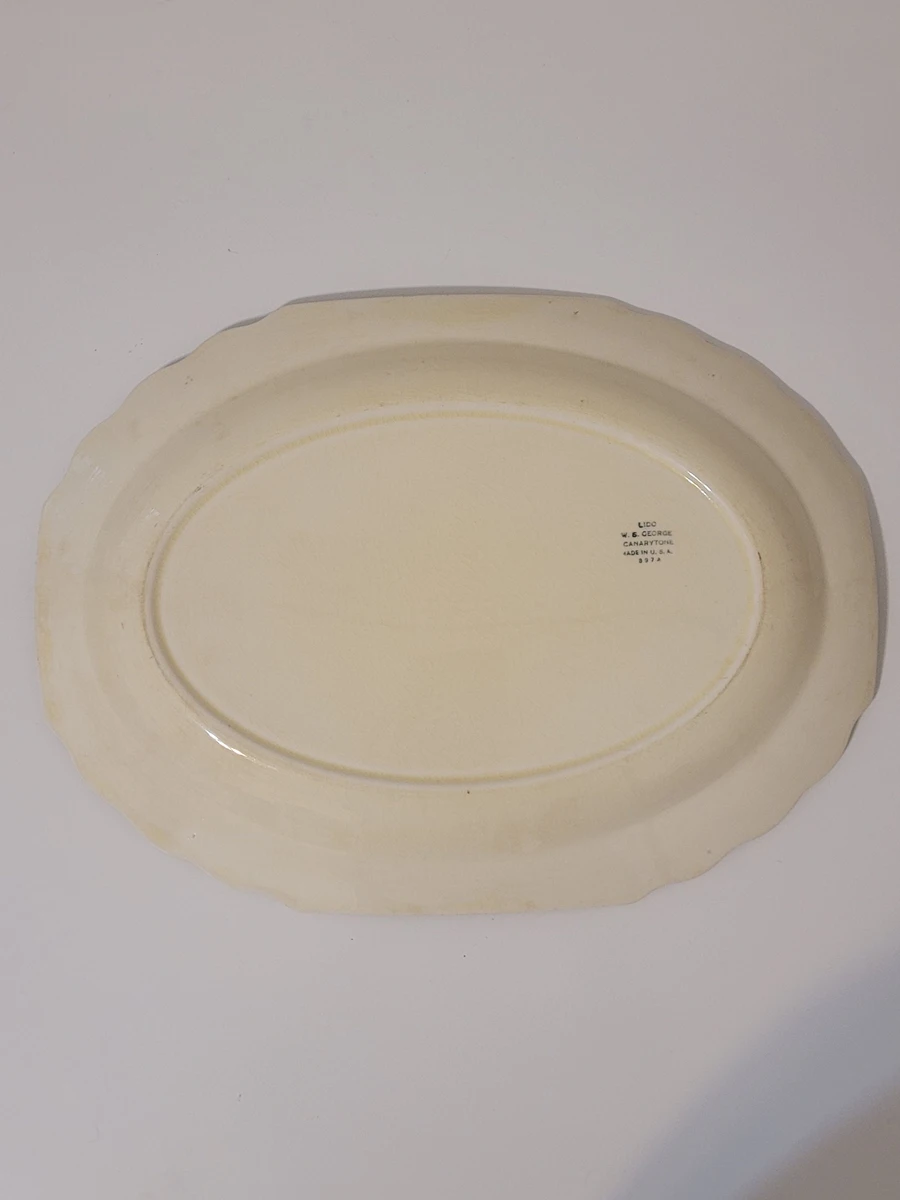
WS George pottery marks include printed “LIDO / W. S. GEORGE / CANARYTONE / MADE IN U.S.A. / 397A” on Dinnerware ceramic.
Acquisition commonly dated 1904, W. S. George name dated 1909 by Lehner-derived archaeological tables. Bankruptcy 1955; liquidation commonly 1959–1960; Pennsylvania histories retain activity into the 1960s.
Undated
Script name with Bolero line beneath. Numbers are not decoded as manufacture dates.
printed · Dinnerware ceramic
Undated
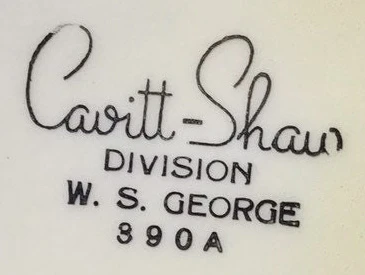
Script Cavitt-Shaw over Division and block W. S. George. Numbers are not decoded as manufacture dates.
printed · Dinnerware ceramic
Undated
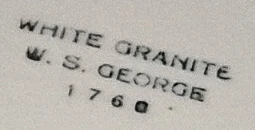
Block White Granite label and full initials. Numbers are not decoded as manufacture dates.
printed · Dinnerware ceramic
Undated
Lido form name and Canarytone body/glaze name in a stacked block stamp. Numbers are not decoded as manufacture dates.
printed · Dinnerware ceramic
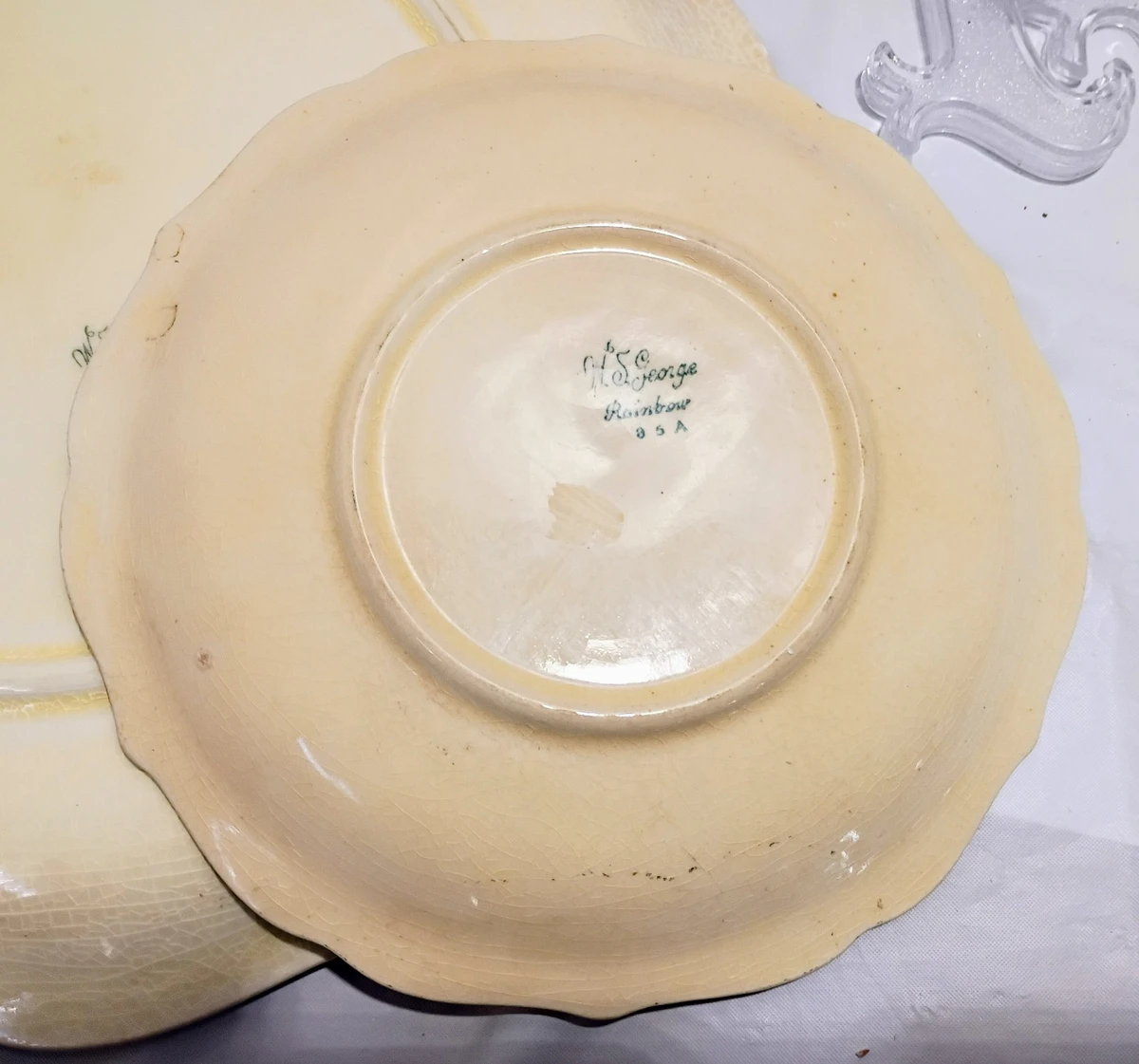
Undated
Script name with Rainbow line beneath. Numbers are not decoded as manufacture dates.
printed · Dinnerware ceramic
W. S. George Pottery Company manufactured American dinnerware in Ohio and Pennsylvania during the first half of the twentieth century. William Shaw George acquired control of an East Palestine pottery in the early 1900s. The business grew into a group with facilities at East Palestine, Canonsburg and Kittanning. Its products included semi-porcelain tableware, hotel china and early toilet ware.
The company offered many dinnerware shapes and decorative lines. Bolero and Lido appear prominently in its backstamps, while Canarytone identifies the pale-colored ware associated with some Lido pieces. Other marks name Rainbow or White Granite. Cavitt-Shaw was identified directly on the pottery as a division of W. S. George. Floral transfers, colored bodies, bands and metallic trim provided different treatments of the company’s table services.
The East Palestine business entered bankruptcy in 1955 and passed into Royal China ownership. Production and corporate winding-up did not end everywhere at the same moment. The Pennsylvania pottery history continued into the 1960s. Complete line names, body, shape and decoration help place surviving pieces within the company’s varied output; a short numeric code alone does not establish a manufacturing year.
Also known as: WS George · William Shaw George · Cavitt-Shaw Division · W. S. George Pottery Company
A separate manufacturer from the same region. A Canonsburg or Keystone stamp is not a W. S. George inscription.
Do not date later collector plates from the chronology of this earlier dinnerware company; check the complete printed publisher and copyright information.