
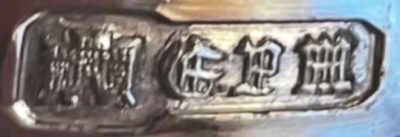
Undated
EPM
Castle and EPM lie on one horizontal line, unlike the stacked version.
stamped · silver-plated base metal
The castle is a company trademark; these are plating marks rather than a British assay-office date group.
Silver
Corbell & co silver marks include stamped “EP NS” on silver-plated base metal. Howard White bought the company from Arthur Corbell in 2001.
References give London foundation in 1946 and U.S. move in 1951. Zoho’s 2021 interview says 74-year-old, implying about 1947; continuing business.
Undated
Castle and EPM lie on one horizontal line, unlike the stacked version.
stamped · silver-plated base metal
The castle is a company trademark; these are plating marks rather than a British assay-office date group.
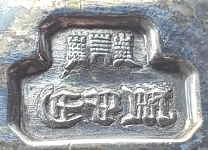
Undated
The castle is stacked above the plating letters instead of appearing in a single horizontal row.
stamped · silver-plated base metal
The castle is a company trademark; these are plating marks rather than a British assay-office date group.
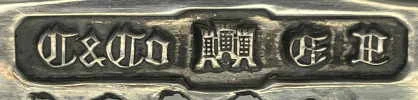
Undated
Full company initials distinguish it from the variants showing only plating letters.
stamped · silver-plated base metal
The castle is a company trademark; these are plating marks rather than a British assay-office date group.
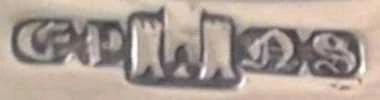
Undated
EP and NS together denote electroplated nickel silver; these letters are not an Edinburgh date code.
stamped · silver-plated base metal
The castle is a company trademark; these are plating marks rather than a British assay-office date group.
Corbell & Company began in London in the mid-1940s and became a supplier of silver objects and reproductions. Arthur Corbell moved to the United States in 1951 and established the American business in Los Angeles. The company expanded its distribution through showrooms in several American cities, offering decorative and domestic hollowware alongside antiques.
Its range includes silver-plated goblets, trays, wine coasters, candlesticks, serving pieces and reproductions of earlier forms. Corbell also trades in English antique silver, Old Sheffield Plate and hotel silver. These different product groups need separate reading: a Corbell reproduction mark identifies the supplying business, while an antique handled by the firm may retain the original maker’s marks. Some marked Corbell pieces were manufactured in Japan and carried a removable country-of-origin label.
Howard White bought the company from Arthur Corbell in 2001. The business later appears in silver references at Scottsdale, Arizona, and continues to serve wholesale and retail customers. Its characteristic three-towered castle occurs with C&Co initials or with plating abbreviations. The historical style of a goblet or candlestick does not make it eighteenth- or nineteenth-century silver; the Corbell marks belong to the later reproduction business.
Also known as: Corbell & Co. · Corbell Silver · Corbell & Company
Corbell’s castle accompanies company initials or plating letters. An Edinburgh silver hallmark is read as a complete assay group with its other symbols, rather than from a castle alone.
Both can have Gothic C&Co initials. Corbell’s three-towered castle and EP grouping distinguish its later reproduction mark from the earlier Sheffield firm’s different punches.