
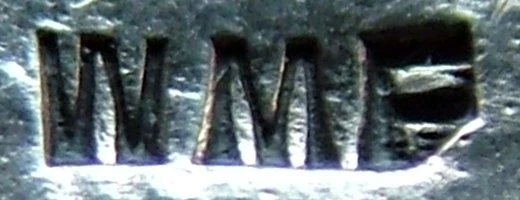
c. 1880–1886
WMF
Plain block initials without an ostrich.
stamped · metal; silver plating depends on accompanying secondary stamps · Geislingen an der Steige, Württemberg
Silver
WMF silver marks are associated with silver-plated cutlery and hollowware from Geislingen an der Steige, Württemberg, Germany.
Predecessor founded 1853; WMF name adopted at the 1880 merger. Continuing brand and manufacturer; historical AG and present GmbH are different legal forms.
c. 1880–1886
Plain block initials without an ostrich.
stamped · metal; silver plating depends on accompanying secondary stamps · Geislingen an der Steige, Württemberg
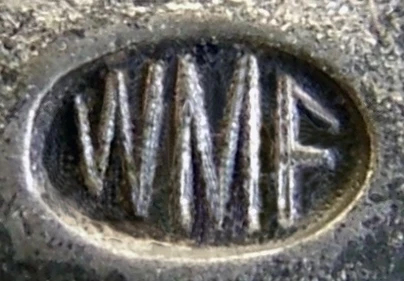
c. 1886–1903
Tall intertwined initials inside an oval; broken F.
stamped · metal; silver plating depends on accompanying secondary stamps · Geislingen an der Steige, Württemberg
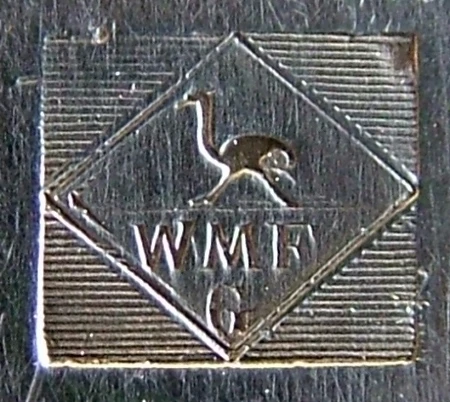
c. 1903–1910
Ostrich and diamond within a fully hatched rectangle.
stamped · metal; silver plating depends on accompanying secondary stamps · Geislingen an der Steige, Württemberg
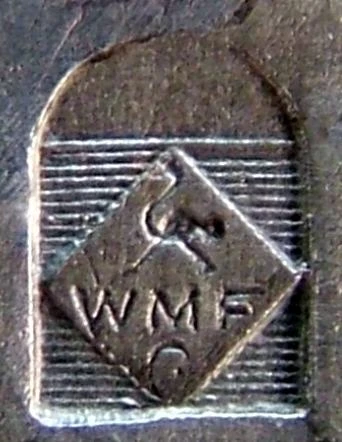
c. 1910–1925
Ostrich diamond within an arch with an unhatched top.
stamped · metal; silver plating depends on accompanying secondary stamps · Geislingen an der Steige, Württemberg
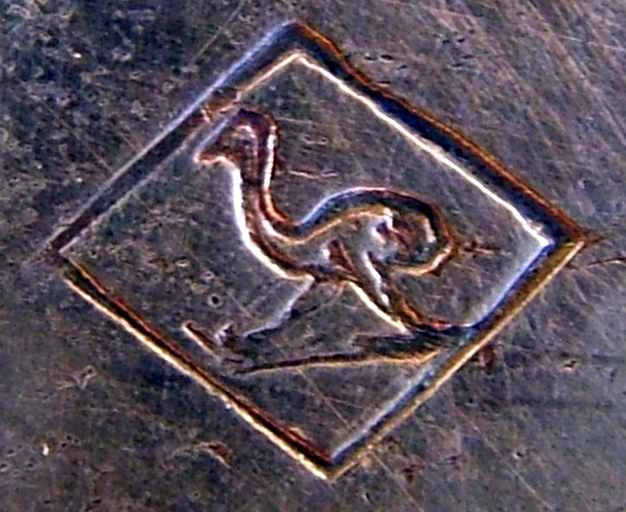
c. 1925–1930
Large round-tailed ostrich in a plain diamond; no initials.
stamped · metal; silver plating depends on accompanying secondary stamps · Geislingen an der Steige, Württemberg
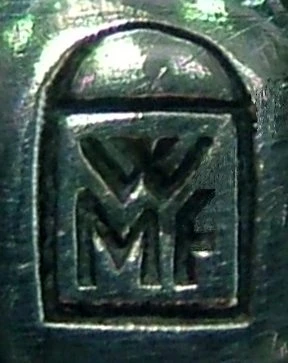
c. 1935–1945
Stacked W above MF inside an unhatched arch.
stamped · metal; silver plating depends on accompanying secondary stamps · Geislingen an der Steige, Württemberg
WMF traces its origins to the metalware factory founded in Geislingen an der Steige in 1853 by Daniel Straub and the brothers Louis and Friedrich Schweizer. The business made table and serving wares, winning recognition at the London exhibition in 1862. After the Schweizer brothers left, it traded as Straub & Sohn. A merger with A. Ritter & Co. of Esslingen in 1880 created Württembergische Metallwarenfabrik, abbreviated WMF.
The company expanded into an international producer of plated tableware and decorative metalwork. Its range included cutlery, tea services, trays, vases and sculptural objects, with glass production added in 1883. Art Nouveau designs became an important part of its output around the turn of the twentieth century. The ostrich and several different arrangements of the WMF initials appeared among its identifying devices.
After the First World War, household goods, coffee machines, glass and cutlery became increasingly important. WMF adopted Cromargan stainless steel for products from 1927. Later production included cookware and equipment for hotels and restaurants as well as domestic tableware. The company continued to use the WMF name while its lettering and logo were revised over time.
Also known as: Württembergische Metallwaarenfabrik · Wurtemberg Electro Plate Co. · Straub & Schweizer · Straub & Sohn · Württembergische Metallwarenfabrik; now WMF GmbH
Early BMF and WMF letter marks can look close. Berndorf uses BMF or BERNDORF and bear devices; WMF’s bird is an ostrich.