
Undated
cast iron skillet gate mark
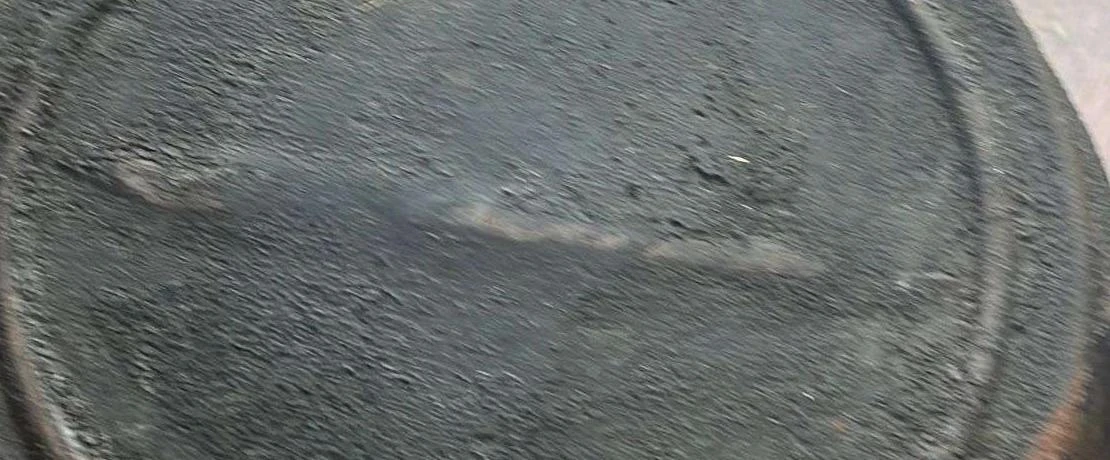
Raised linear gate scar on the underside of a single-pour-spout skillet; the circular heat ring is a separate feature.
Read the stamp
A cast-iron skillet gate mark is a casting scar, commonly an irregular raised line on the underside where molten iron entered the mould. It helps identify a bottom-gating method, but does not by itself name the foundry or give an exact manufacturing year.
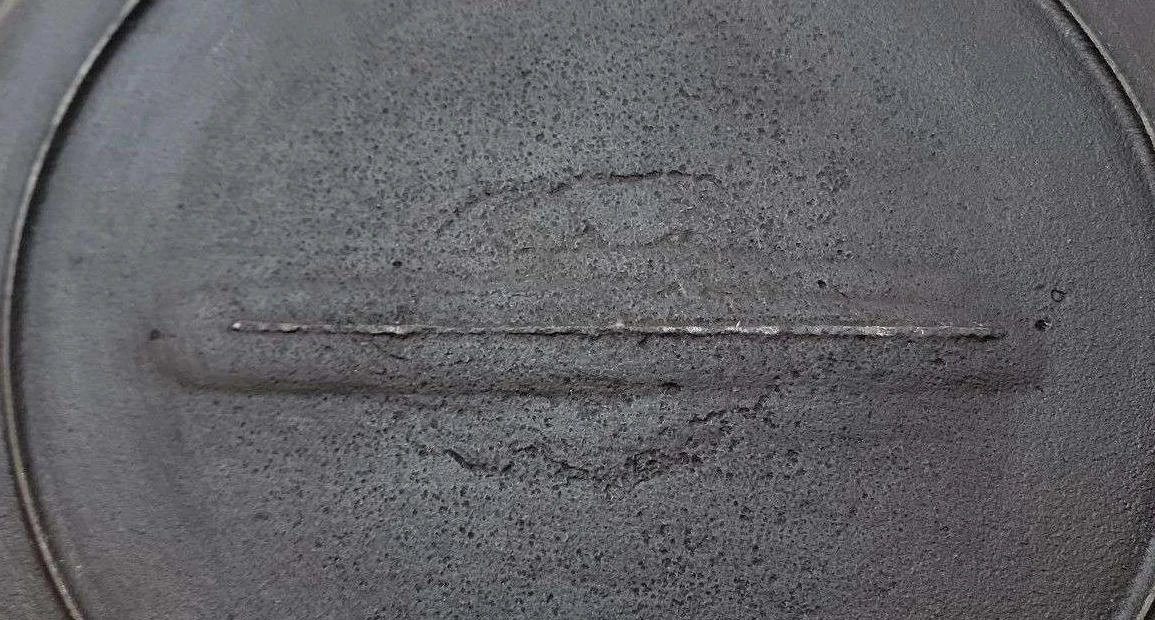
A gate mark is the scar left where molten iron entered a sand mould. On a bottom-gated skillet it commonly appears as an irregular raised line across the outside base. The excess iron was broken away and sometimes ground down after casting. Its width, height and roughness vary. A heat ring is different: it forms a regular supporting ridge around the base. Raised letters, a size numeral and an intentional maker emblem are separate features, even when they appear beside the gate scar.
The sprue is the passage through which iron enters the mould; gates connect the feeding system to the casting. Early bottom-fed cookware can have a small round sprue scar rather than a long line. A later slit-shaped opening leaves the familiar linear gate mark. As foundries adopted side-gating, the entry point moved to the rim or upper edge, where it could be broken off and dressed. A rough patch near the lip can therefore have a different origin from a bottom scar. The visible scar records how the iron was fed into the mould, rather than serving as a trademark.
Bottom gate marks are associated with much nineteenth-century cookware. Foundries increasingly moved gates to the side during the late nineteenth century, but this transition is a production history rather than a universal last year for every foundry. A gate mark alone does not establish an exact year or maker. Many small foundries made unmarked hollowware, and similar shapes circulated widely. Compare the handle attachment, helper handle, pouring spouts, heat ring and any lettering. Retain an anonymous identification when those features do not support a named manufacturer.
A raised casting scar should be examined alongside the pan’s construction. A crack is a separation in the iron; a gate scar is attached excess metal left from filling the mould. Do not turn every straight line into a gate: wear, scratches and other casting features can also cross a base. Photograph the complete underside and a close view of the line so its relief is visible. A cast-in size number is another clue, but it is not automatically the pan’s diameter in inches. The examples show several forms of casting scar.
Undated
Raised linear gate scar on the underside of a single-pour-spout skillet; the circular heat ring is a separate feature.
Undated
A griddle’s irregular underside gate scar differs from a lettered maker stamp.
Undated
Long raised gate scar on the base of number 10 cookware; it does not identify a foundry.
It is the remaining scar where iron entered the mould, often a raised line across the bottom of older cookware.
Both refer to the metal-feeding system. A small round bottom sprue scar and a long slit-gate scar can reflect different arrangements of that system.
Usually it cannot do so alone. Compare the handle, spouts, heat ring and any lettering before naming a foundry.
No single cutoff applies to every producer. Bottom-gating is associated with older production, while adoption of side-gating varied.