
Undated
revere ware markings
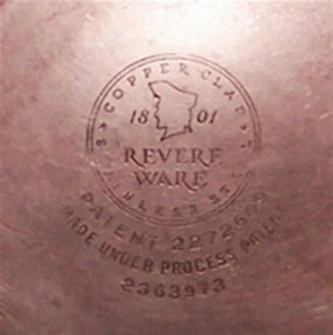
Circular COPPER CLAD STAINLESS STEEL profile with MADE UNDER PROCESS PATENT beneath it; 1801 belongs to the emblem.
Read the stamp
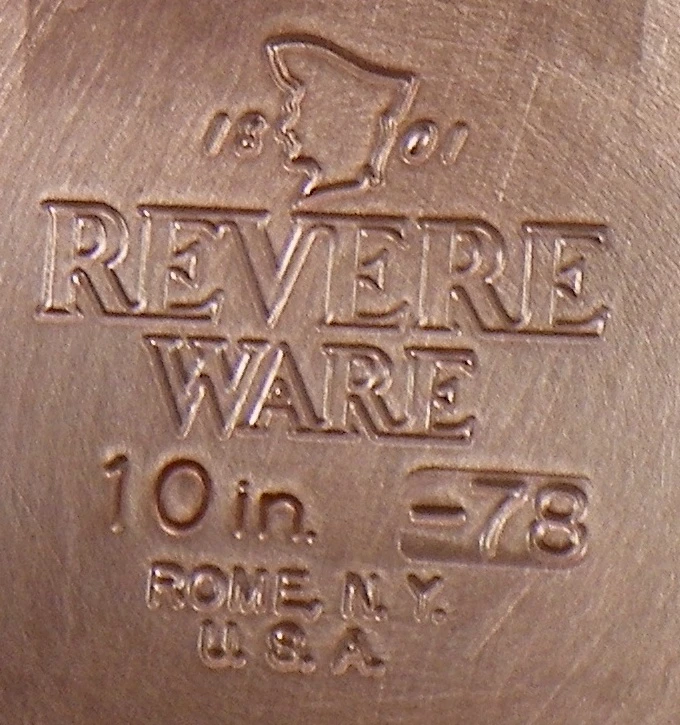
Revere Ware base stamps combine the brand, construction, plant and sometimes size or production year. The 1801 portrait is a heritage trademark date; on a later stamp such as 10 in. -78, the separate -78 identifies 1978 manufacture.
The 1801 beside Paul Revere’s profile refers to his copper-mill heritage. It does not date the pan: the Revere Ware cookware line was introduced in 1939. COPPER CLAD STAINLESS STEEL describes construction, with a stainless-steel cooking vessel and copper cladding outside. Read that wording separately from the portrait, plant name and patent numbers. A visible copper bottom belongs to the cookware’s construction; the complete stamp helps distinguish its production era and product line.
Early examples include a Riding Revere device and patent-pending wording. The familiar circular profile stamp began in 1946 and can include PROCESS PATENT or PAT. PEND. beneath it. The older cookware era ended with construction changes in 1968. Handles provide another comparison: early handles have two screws close together near the pan, whereas the later vintage arrangement places screws at opposite ends. Compare handle and base together, especially if parts have been replaced. Patent numbers identify the protected invention, so the number stamped below the circle is not a serial manufacturing date.
Later profile stamps drop the process-patent wording and add size information. On the photographed Rome example, 10 in. is the skillet diameter and -78 is the production year 1978; 1801 remains in the portrait above. A later inscription such as 89K contains the year 1989 plus a separate letter suffix. Keep the suffix in a transcription; interpret K with the code for that particular product. An undated profile stamp needs its plant wording and construction for a broader period comparison.
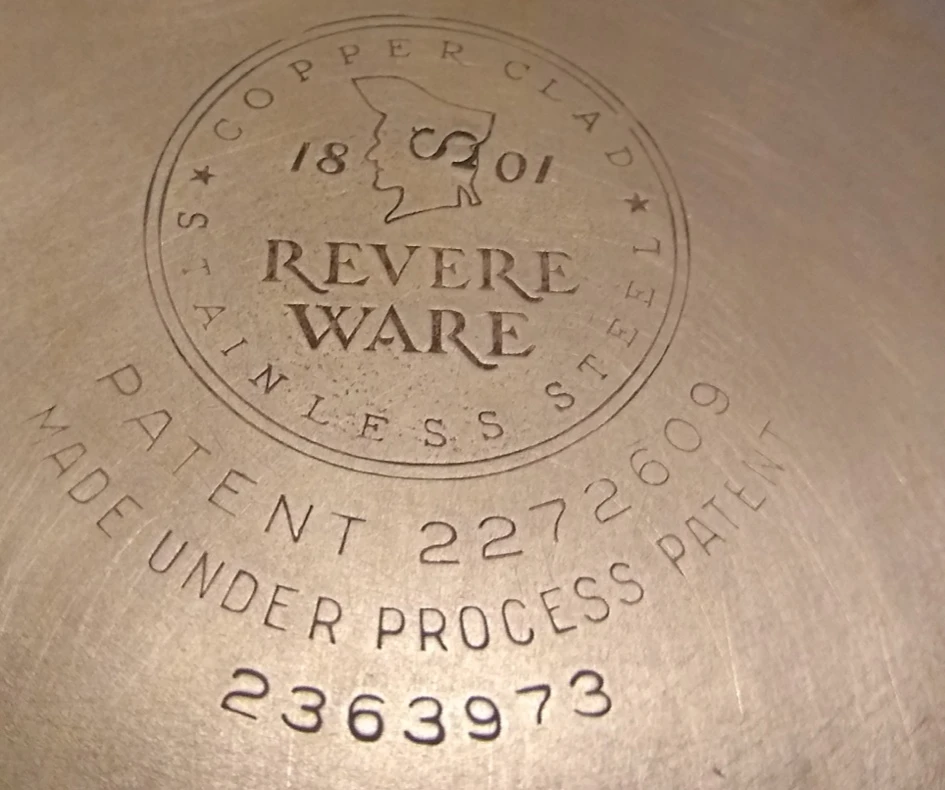
ROME, N.Y., CLINTON, ILL., and RIVERSIDE, CALIF. identify production locations. Rome wording occurs in more than one era, so it is not an automatic early-date stamp. A marked S is another kind of information: the pictured example has an S over the portrait, identifying a factory second. It does not replace the patent wording or turn into a year code. Copy the country, size and every added letter as separate fields when matching a pan. The portrait logo, material description, location and production code answer different parts of its identification.
Undated
Circular COPPER CLAD STAINLESS STEEL profile with MADE UNDER PROCESS PATENT beneath it; 1801 belongs to the emblem.
Undated
Separate S over the profile on a process-patent pan: a factory-second indicator, not a date suffix.
It refers to Paul Revere’s copper-mill history; the cookware line began in 1939.
On the illustrated 10 in. -78 stamp, 10 inches is the size and -78 means 1978. Keep adjacent letters separate; no verified month decoder is supplied for them.
It refers to the patented manufacturing process. The circular process-patent stamp belongs to the older production era rather than one exact year.
The added S on the pictured stamp identifies a factory second.