
Pottery & porcelain
Ct Altwasser marks
Ct Altwasser marks are associated with porcelain and household porcelain from Altwasser, now Stary Zdrój, Wałbrzych.
- Active years
- 1845–1945
- City / region
- Altwasser, now Stary Zdrój, Wałbrzych
- Products
- porcelain, household porcelain, hotel porcelain, table services, decorative porcelain
- Marks
- 27
German Tielsch business 1845–1945; immediate Polish successor retained the Tielsch name to 1952. Later production continued in Wałbrzych.
What to look for
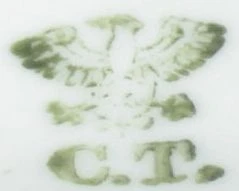
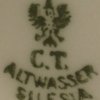
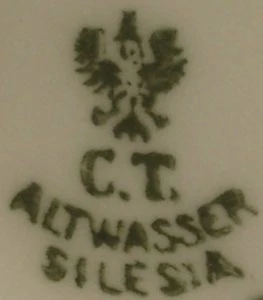
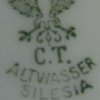
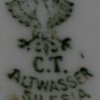
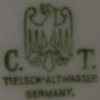
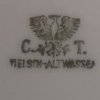
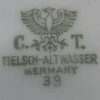
- Read the additions to the eagle: C.T. alone, C.T. with ALTWASSER and SILESIA, and the long TIELSCH-ALTWASSER name are separate formats.
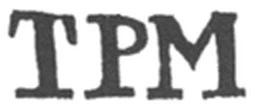
- TPM means Tielsch Porzellan-Manufaktur. Compare the first letter carefully with a KPM mark.
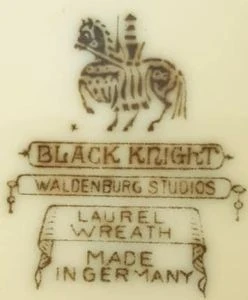
- Black Knight and Waldenburg Studios are export-market wording associated with Tielsch porcelain. The additional LAUREL WREATH panel identifies a line within that marking format.
- Keep postwar MADE IN POLAND or WAŁBRZYCH wording distinct from German-period marks. They refer to the continuing factory under new administration.
- TPM stands for Tielsch Porzellan-Manufaktur. Compare the letters carefully with KPM; eagle imagery occurs at several factories.
- Read Altwasser, Silesia, Germany or Made in Poland in full. Country and place wording separates closely related eagle devices.
- Later German marks can include a two-digit manufacture year. Distinguish that small addition from registration dates and pattern numbers.
- Black Knight with Waldenburg Studios identifies an export line connected with Graham & Zenger; it is not the factory’s corporate name.
Dated marks & timeline
27 marks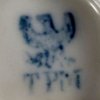


1847
TPM
The overextended lower T serif and TPM distinguish this short-lived stylized eagle from C.T. marks.
printed mark drawing
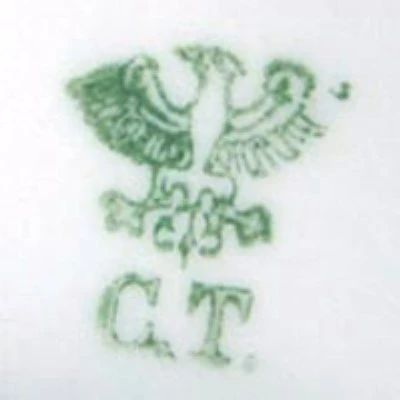
c. 1875–1900
C.T.
Spread eagle stands directly above C.T.; no Altwasser, Silesia or Germany wording.
printed · porcelain


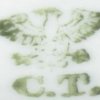

c. 1909–1934
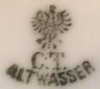
C.T. / ALTWASSER / SILESIA
Eagle above C.T., arched ALTWASSER and a separate SILESIA line.
printed · porcelain
c. 1920–1941
BLACK KNIGHT / WALDENBURG STUDIOS / LAUREL WREATH / MADE IN GERMANY
Mounted knight above banner-like name panels and a LAUREL WREATH product-line panel; no C.T. initials.
printed · porcelain


1931–1939
C. T. / TIELSCH-ALTWASSER
Large eagle separates C and T above a fully written underlined TIELSCH-ALTWASSER name.
printed · porcelain
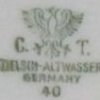
Marks 25–27
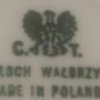

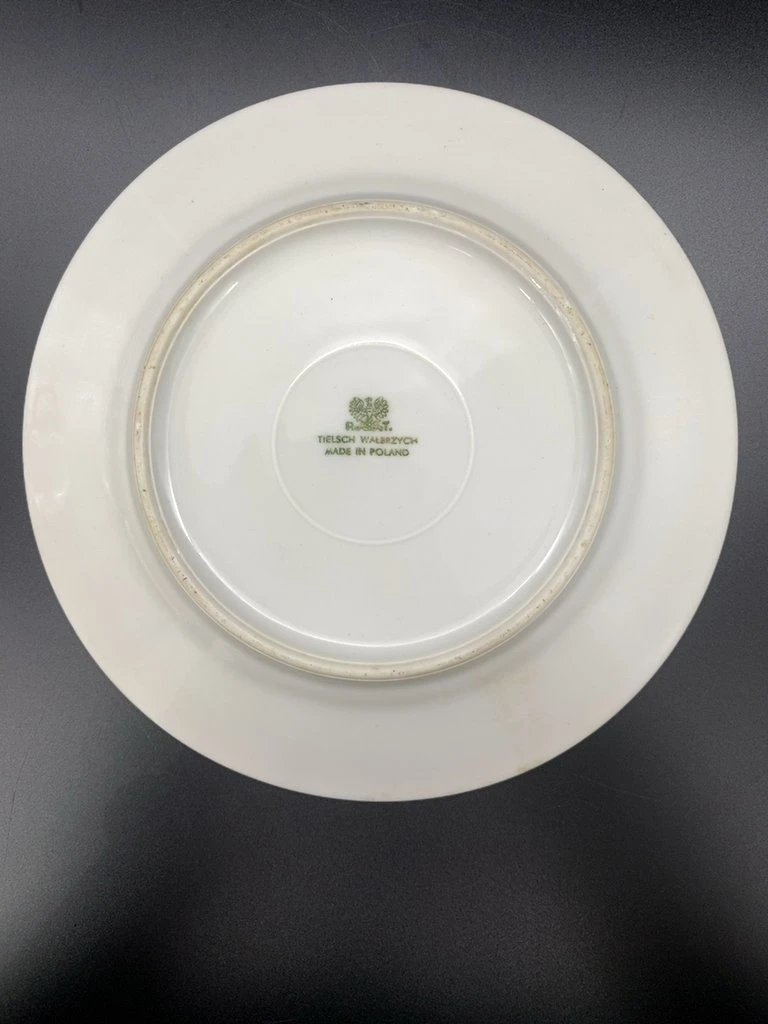
1945–1952
P.T. / TIELSCH WAŁBRZYCH / MADE IN POLAND
Postwar Polish wording and P.T. initials distinguish this from C.T. Altwasser stamps.
printed
About C.T. Altwasser
Carl Tielsch founded his porcelain factory at Altwasser in Silesia in 1845. The settlement is now Stary Zdrój, part of Wałbrzych in Poland. The factory developed a broad range of household, hotel and decorative porcelain, with elaborate tablewares and ornamental pieces alongside everyday forms. Its products won recognition at international exhibitions, including London in 1851 and later exhibitions in Paris, Vienna and Melbourne.
After Carl Tielsch’s death in 1882, his son Egmont continued the business. A second production site opened in 1906, and the firm became known for technical development as well as decoration. In 1917 the family enterprise was converted into a joint-stock company. Financial difficulties following the economic crisis led to its merger with C.M. Hutschenreuther in 1932. Altwasser then operated as a branch of that company.
The marks changed from early TPM initials to a variety of eagles with C.T., followed by versions spelling out Altwasser, Silesia or Germany. Export wares could carry a separate commercial name, including Black Knight with Waldenburg Studios. In 1945 the factory passed to Polish administration, and production continued under transitional Tielsch and later Wałbrzych identities. The historical German maker and its Polish successor therefore share a factory history but have distinct marking periods.
Also known as: Carl Tielsch · Tielsch Porzellan-Manufaktur · TPM · C.T. Tielsch-Altwasser · Black Knight / Waldenburg Studios · C. Tielsch & Co. · C. Tielsch & Co. AG · Polska Fabryka Porcelany Tielsch · Tielsch Wałbrzych · C. Tielsch & Co., founded by Carl Ernst Robert Tielsch
Look-alikes & how to tell them apart
KPM Berlin →
Early TPM initials and eagle devices can resemble KPM. Read the letters and compare the precise eagle, rather than identifying any blue eagle as Berlin porcelain.
C.M. Hutschenreuther and later Arzberg production
Hutschenreuther acquired the Altwasser operation, and related initials were briefly used elsewhere after the war. Read the full location and company wording on the individual piece.
KPM Berlin and F.A. Schumann, Berlin-Moabit →
Early TPM lettering and eagle designs invited confusion with Berlin porcelain marks. Tielsch’s TPM or C.T. initials and later Altwasser wording distinguish the factory.
C.M. Hutschenreuther Black Knight
Black Knight was an importer’s label applied within the Hutschenreuther network. The Waldenburg Studios addition identifies the Tielsch connection; the knight emblem alone is not an exclusive factory signature.