
Pottery & porcelain
Karl ENS porcelain marks
Karl ENS porcelain marks are associated with porcelain and porcelain bird figures from Volkstedt, Rudolstadt, Thuringia, Thuringia, Germany.
- Active years
- From c. 1899
- Country
- Germany
- City / region
- Volkstedt, Rudolstadt, Thuringia, Thuringia
- Products
- porcelain, porcelain bird figures, animal groups, human figures, decorative vases, bowls
- Marks
- 5
Independent factory founded about 1898–1899; nationalized 1972, incorporated into Sitzendorf 1974. Later end of production is not fixed here.
What to look for
- Read the ENS letters within the windmill, not just the crossed vanes. Note the stem, surrounding wording and colour.
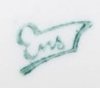
- Compare the KVE monogram and script Ens as separate formats. KVE appears on a vase made about 1910.
- Black-before-1919, green-interwar and blue-postwar are common catalogue groupings, but colour ranges overlap in other accounts. Use the complete model and mark configuration when assigning a date.
Dated marks & timeline
5 marks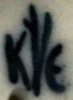
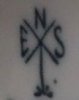
Undated
ENS
black · porcelain
The Old Stuff’s colour scheme assigns black before 1919. Other specialist discussion reports colour exceptions; colour alone does not establish an exclusive date range for this pictured impression.
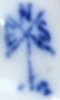
Undated
ENS
blue · porcelain
The Old Stuff’s colour scheme assigns blue after 1945. Other specialist discussion reports colour exceptions; colour alone does not establish an exclusive date range for this pictured impression.
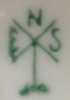
Undated
ENS
green · porcelain
The Old Stuff’s colour scheme assigns green 1919–1945. Other specialist discussion reports colour exceptions; colour alone does not establish an exclusive date range for this pictured impression.
About Karl ENS
Porzellanfabrik Karl Ens was established at Volkstedt, now part of Rudolstadt in Thuringia, near the end of the nineteenth century. The Ens family had earlier connections with other local porcelain businesses, including Triebner, Ens & Co. The separate Karl Ens factory developed a range of decorative porcelain with painted figures, animal groups, vases and bowls.
Bird figures became a particularly recognizable part of its twentieth-century output. Subjects ranged from small garden birds to larger parrots and pheasants, often with detailed modelling and coloured decoration. Other wares included human figures and relief-decorated vessels. A frog-decorated vase made around 1910 carries a blue KVE monogram, showing that the familiar windmill was not the only factory identifier.
The business passed into state ownership in East Germany in 1972 under the name VEB Unterglasurporzellanfabrik. In 1974 its operations became part of VEB Sitzendorfer Porzellanmanufaktur. The windmill with ENS letters appears in several colours, while earlier script and monogram marks provide additional comparisons. Distinguish model and decorator numbers from the factory stamp.
Also known as: Karl Ens Volkstedt · Ens-Porzellan · VEB Unterglasurporzellanfabrik · Porzellanfabrik Karl Ens
Look-alikes & how to tell them apart
Other Volkstedt factories, including Triebner, Ens & Co.
Volkstedt is a porcelain-making place and the Ens family worked in more than one business.
Use the full factory stamp and named company rather than treating Volkstedt or an Ens family association as one continuous maker.
Sitzendorf porcelain →
Related figural porcelain and the later incorporation of Karl Ens production can blur catalogue labels.
Keep an ENS windmill or KVE identification separate from a Sitzendorf factory mark; the 1974 corporate connection does not make every earlier figure Sitzendorf.